
How to Oil a Knife — Protect Your Blade from Rust the Right Way
A knife is only as good as its maintenance routine. You can spend $500 on a blade with the latest super-steel, but if you ignore basic care — specifically, proper oiling — you’ll eventually find rust spots, stiff action, and premature wear. Oiling a knife isn’t complicated, but doing it right makes the difference between a blade that lasts decades and one that deteriorates in months.
Why Knives Need Oil
Steel oxidizes when exposed to moisture and oxygen — that’s rust. Even “stainless” steels stain (it’s right there in the name — stain-LESS, not stain-proof). High-carbon steels like 1095, D2, and M4 are especially vulnerable and can develop surface rust within hours in humid conditions. Oil creates a barrier between the steel and the environment, preventing that oxidation.
Beyond corrosion protection, oil lubricates the pivot mechanism on folding knives. A well-lubricated pivot means smoother deployment, less wear on washers and bearings, and that satisfying drop-shut action everyone loves. Oil also helps protect handle materials — natural woods and leather can dry out and crack without occasional conditioning.
Choosing the Right Oil
Mineral Oil (Food-Safe)
If your knife ever touches food — whether you’re slicing an apple at lunch or breaking down a deer in the field — use food-grade mineral oil. It’s odorless, tasteless, won’t go rancid, and provides good corrosion protection. The downside: it’s relatively thin and needs reapplication more frequently than synthetic options. A large bottle costs under $10 at any pharmacy.
Synthetic Knife Oils
Products like KPL (Knife Pivot Lube), Nano-Oil, and Benchmade BlueLube are purpose-built for knives. They typically contain corrosion inhibitors, have excellent viscosity for pivots, and stay put longer than mineral oil. KPL’s original formula is a 10-weight oil that’s perfect for most folding knife pivots — thin enough to penetrate but thick enough to stay where you put it. These run $10—$20 per bottle on Amazon and last years with normal use.
What to Avoid
WD-40 is not a lubricant — it’s a water displacer and solvent. It’ll strip away existing lubrication and leave you with a sticky, gummy residue. Vegetable oils (olive, canola) will go rancid and gum up your pivot. 3-in-1 oil works in a pinch but isn’t food-safe and can leave a strong smell.
How to Oil a Folding Knife
- Clean first: Oil over dirt just creates grinding paste. Wipe the blade with a microfiber cloth. Use a cotton swab with isopropyl alcohol to clean the pivot area of old oil and debris.
- Apply sparingly: One drop on each side of the pivot is usually enough. More oil doesn’t mean better lubrication — it just attracts more lint and dust.
- Work it in: Open and close the knife 15—20 times to distribute the oil through the bearing or washer system.
- Wipe excess: Run a clean cloth along the blade and handle to remove any oil that’s migrated to surfaces you’ll touch.
How to Oil a Fixed Blade
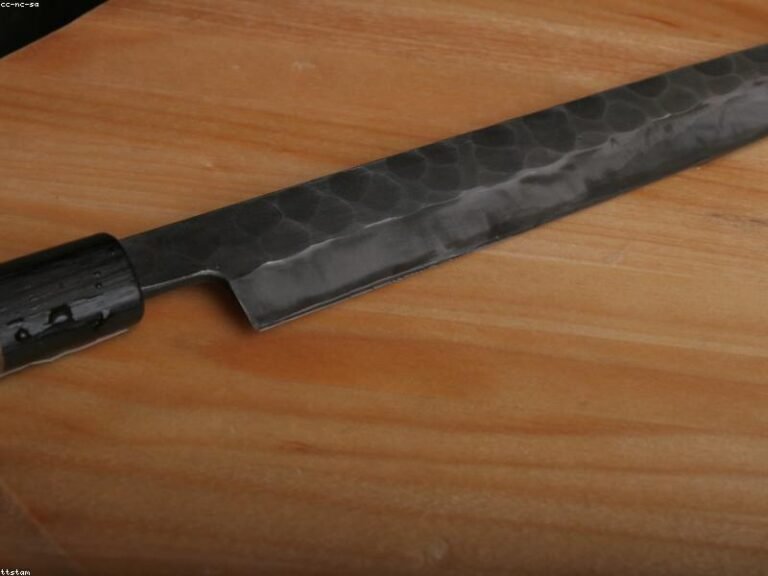
Fixed blades are simpler — you’re mainly protecting the blade from rust. Apply a thin film of oil to the entire blade using a clean cloth. Pay extra attention to the area where the blade meets the handle (the ricasso), as moisture can get trapped there. For storage, a slightly heavier oil like FrogLube (which solidifies into a waxy coating at room temperature) provides excellent long-term protection.
FAQ
How often should I oil my knife? EDC folders: every 2—4 weeks with regular carry. Fixed blades: after every use if food was cut, or monthly during storage. In humid/saltwater environments: weekly minimum.
Can I use gun oil on my knife? Yes. Products like Hoppe’s No. 9, Ballistol, and Break-Free CLP work well. Ballistol is particularly popular because it’s food-safe when dry and has a mild, pleasant scent.
Does DLC coating eliminate the need for oil? DLC (Diamond-Like Carbon) dramatically reduces corrosion risk, but the uncoated edge is still bare steel. You still need to protect the cutting edge. Plus, pivot lubrication is still required for smooth action.
This article may contain affiliate links. If you purchase a product through one of these links, Bladeowl may earn a commission at no extra cost to you. This never influences our editorial independence or which products we recommend.