
Knife Blade Coatings Guide — DLC vs Cerakote vs Stonewash
A knife’s blade coating isn’t just about looks — it’s the first line of defense against rust, reduces glare (critical for tactical applications), and can even improve cutting performance by reducing friction. But not all coatings are created equal. Diamond-Like Carbon, Cerakote, stonewash, and black oxide all have distinct properties that affect durability, maintenance needs, and even how the blade feels when slicing through material. Here’s everything you need to know to choose the right finish for your next blade.
DLC (Diamond-Like Carbon)
DLC is the current gold standard for blade coatings. Applied through Physical Vapor Deposition (PVD), DLC is an amorphous carbon coating with properties approaching those of diamond — hence the name. It achieves a hardness of 2,500—5,000 HV (Vickers), making it dramatically harder than the blade steel underneath.
The PVD process bonds DLC at a molecular level to the blade surface. Unlike paint-like coatings that sit on top of the steel, DLC integrates into the surface layer, making it extremely resistant to peeling and chipping. The coating is typically 1—3 microns thick — thin enough that it doesn’t affect edge geometry, thick enough for real protection.
- Pros: Extreme scratch resistance, excellent corrosion protection, low friction (slick surface), matte black appearance that ages gracefully
- Cons: Expensive ($20—$50 premium on a production knife), can’t be touched up at home, shows fingerprints easily
- Found on: High-end Benchmade models, Zero Tolerance, Chris Reeve Knives, WE Knife
Cerakote
Originally developed for firearms (NIC Industries), Cerakote is a ceramic-polymer composite coating applied via spray and then oven-cured. It’s available in hundreds of colors — from basic black and FDE (Flat Dark Earth) to bright orange, blue, and custom patterns.
Cerakote bonds mechanically to the surface and forms a barrier that’s both abrasion-resistant and chemically inert. It’s thicker than DLC (typically 1—2 mils, or 25—50 microns), which means it CAN affect edge geometry on very thin blades. On the plus side, that thickness provides excellent corrosion protection even in marine environments.
- Pros: Huge color variety, excellent corrosion resistance, thinner/softer Cerakote formulations won’t affect blade action, DIY-applicable with an airbrush and oven
- Cons: Will wear with hard use (especially on high points of the blade and around the pivot), thicker than DLC, can chip if applied too thick
- Found on: Custom knife makers, Microtech, various limited editions
Stonewash and Acid Stonewash
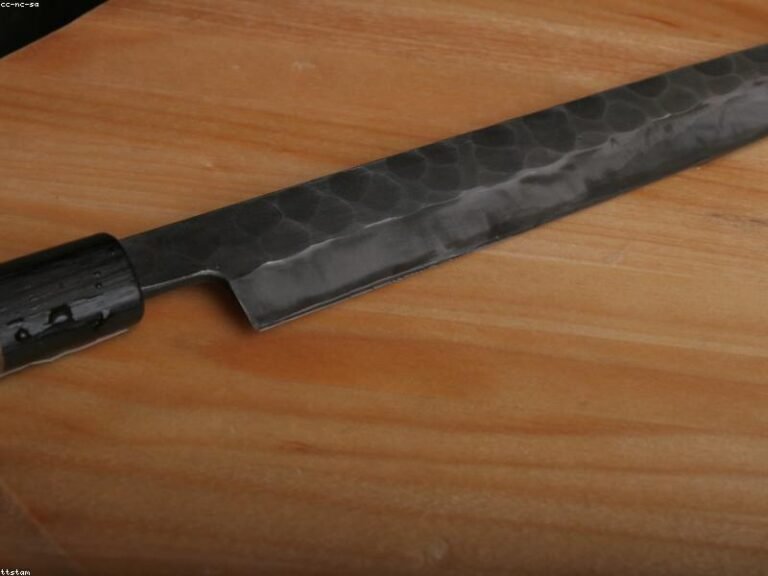
Stonewashing is less a coating and more a surface treatment — but it’s one of the most practical finishes available. The blade is tumbled in a vibratory or rotary tumbler with ceramic media or actual stones, creating a uniform matte finish that hides scratches incredibly well. An acid-wash variant adds a pre-treatment step: the blade is dipped in ferric chloride or similar acid, darkening the steel before tumbling.
The brilliance of stonewash is that new scratches blend in with the existing finish. A DLC-coated blade that gets scratched shows a bright line of bare steel against black. A stonewashed blade that gets scratched just looks… more stonewashed.
- Pros: Hides wear beautifully, no coating to chip or peel, maintains blade thickness tolerances, typically no cost premium
- Cons: Minimal corrosion protection beyond what the bare steel offers, not “tactical” (no glare reduction compared to dark coatings)
Black Oxide and Parkerizing
These are the old-school “budget” coatings. Black oxide is a chemical conversion coating that turns the steel surface a dark gray/black. Parkerizing is a phosphate coating that provides slightly better rust protection. Both are thin, matte, and wear relatively quickly — but they’re dirt cheap to apply, which is why you see them on budget folders and traditional slipjoints.
FAQ
Can I remove a blade coating myself? Yes — paint stripper (for painted coatings), sandblasting, or chemical etching can remove most coatings. Be aware this voids warranties and removes any corrosion protection the coating provided.
Does a coated blade cut differently? Some coatings (especially Teflon-based or DLC) reduce friction and can make the blade feel “slicker” through material. Thick Cerakote can cause slight drag in deep cuts. For most users, the difference is negligible.
What’s best for a hard-use outdoor knife? Stonewash or DLC. Stonewash hides wear from batoning and wood processing. DLC protects against rust in wet conditions. Avoid Cerakote on hard-use blades — it will show wear quickly on high-contact areas.