Edge Retention vs Toughness: Picking Between S30V, S35VN, and S45VN for Your Use Case
S30V, S35VN, and S45VN are close enough in chemistry that people often treat them as interchangeable — “a premium Crucible steel” and leave it at that. In practice the differences between them are real, even if they’re smaller than the gap between, say, a budget stainless and a powder-metallurgy super steel. Knowing where each one sits on the edge-retention-versus-toughness spectrum makes it much easier to pick the right knife for what you actually do with it.
Why These Three Get Compared
All three are Crucible powder-metallurgy stainless steels built around a similar core idea: use vanadium (and in the later two, niobium) carbides to resist abrasive wear, while keeping enough chromium in the mix for real stain resistance. Because they share a lineage, the differences come down to carbide type and alloy balance rather than a completely different approach to the problem. That makes them a genuinely useful set to compare side by side for anyone choosing between folders that use one or another.
If Edge Retention Is Your Priority
S30V still holds its own here. Its higher volume of vanadium carbide gives it strong resistance to abrasive dulling, which is why it remained the benchmark premium steel for years and is still specified on plenty of high-end folders today. If your knife spends its life doing controlled, repetitive cutting — breaking down boxes, food prep, general EDC slicing — and you’re not routinely stressing the edge laterally, S30V’s slightly more brittle carbide structure rarely becomes a practical problem. You get long stretches between sharpenings in exchange for accepting that the edge is a bit less forgiving of abuse.
If Toughness Matters More
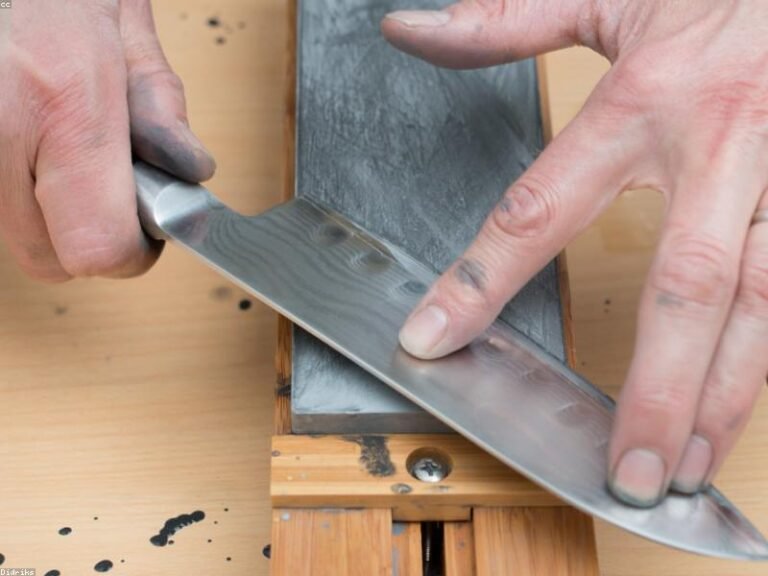
S35VN is the better everyday choice for anyone whose knife occasionally does more than clean slicing — light prying, twisting cuts, or use where the edge might catch something unexpected. The niobium carbides in its structure are smaller and more evenly distributed than S30V’s vanadium carbides, which measurably improves resistance to chipping without giving up much edge retention in return. For a folder that has to be a generalist rather than a specialist, S35VN is usually the safer bet, and it’s also noticeably easier for a home sharpener to bring back to a clean edge on stones.
If You Want Both, With a Premium Attached
S45VN is Crucible’s attempt to push both properties upward at once rather than trading one for the other, along with a real bump in corrosion resistance from its higher chromium content. In practice, that means S45VN knives tend to feel like a slightly more refined S35VN rather than a dramatically different steel — a sensible upgrade if you’re already shopping in that tier and want a bit more margin in every category, particularly if the knife will see wet or humid conditions where the extra corrosion resistance actually gets used.
Matching the Steel to the Job
None of these three steels is the wrong answer for a general-purpose folder — the differences are matters of degree, not categories. But if you had to boil it down: pick S30V when long edge life for controlled cutting is the whole point, pick S35VN when the knife needs to tolerate real-world abuse without complaint, and pick S45VN when you want the best balance Crucible currently offers in this family and are willing to pay for it.
Product Comparison: Real Knives in Each Steel
Reading about carbide chemistry only goes so far. Here’s how the three steels show up in actual production knives, one per steel, so you can see what each tradeoff looks like in a real folder.
- Benchmade Griptilian — S30V. A USA-made drop-point EDC folder that’s been a benchmark for years; good pick if your knife mostly does controlled, repetitive slicing and you want long stretches between sharpenings.
- Spyderco Native 5 — S35VN. A full flat-ground FRN-handled EDC that trades a little edge retention for a meaningfully tougher, easier-to-sharpen blade, better suited to a knife that occasionally does more than clean cuts.
- Spyderco Paramilitary 2 — S45VN. Spyderco’s flagship folder offered in the newest of the three steels, for buyers who want the best balance of edge retention, toughness, and corrosion resistance Crucible currently offers in this family.
This article may contain affiliate links. If you purchase a product through one of these links, Bladeowl may earn a commission at no extra cost to you. This never influences our editorial independence or which products we recommend.