
Folding Knife Lock Types: Pros and Cons of Each
The lock on a folding knife is what keeps the blade from closing on your fingers mid-cut, so it’s worth understanding how the common types actually work before you buy. Each mechanism makes a different tradeoff between cost, strength, ease of use, and long-term reliability.
Liner Lock
A liner lock uses a thin strip of spring-tensioned metal inside the handle that springs sideways behind the base of the blade once it’s fully opened, blocking it from folding closed. It’s inexpensive to manufacture, which is why it shows up across such a wide price range, from budget folders to higher-end knives. The downside is that because the liner is thin, it can develop “lock rock” — a small amount of side-to-side blade play — as the mechanism wears, and a liner lock’s strength depends heavily on how precisely it was machined and fitted at the factory.
Frame Lock
The frame lock works on the same basic principle as a liner lock, but instead of a thin separate liner, a substantial portion of the handle’s actual structural frame flexes over to lock the blade. Because the locking piece is thicker and part of the handle itself rather than a thin insert, frame locks are generally sturdier and hold up to harder use with less tendency to develop play over time. They’re more expensive to produce well, since the frame material and fit need to be precise for the lock to engage consistently.
Back Lock (Lockback)
A back lock uses a spring-loaded bar that runs along the spine of the handle, with a notch that catches a corresponding tooth on the base of the blade when opened. It’s one of the oldest and most trusted mechanisms, known for being very secure against unintentional closing since disengaging it requires deliberately pressing down on an exposed lock release, usually toward the middle or rear of the handle. That security comes at the cost of convenience — releasing a back lock one-handed is awkward compared to a liner or frame lock, since your grip usually has to shift to reach the release point.
Axis / Crossbar Lock
Axis and crossbar-style locks use a spring-loaded bar that sits across both handle scales and slides into a notch on the blade’s tang to hold it open. Because the bar protrudes on both sides of the handle, it can be worked with either hand and from either side, making these among the most ambidextrous lock designs available. They also tend to open and close smoothly with a satisfying, consistent action. These mechanisms are patented under various brand names, so knives using this style of lock will typically point to a specific manufacturer’s implementation of the concept.
Slip Joint
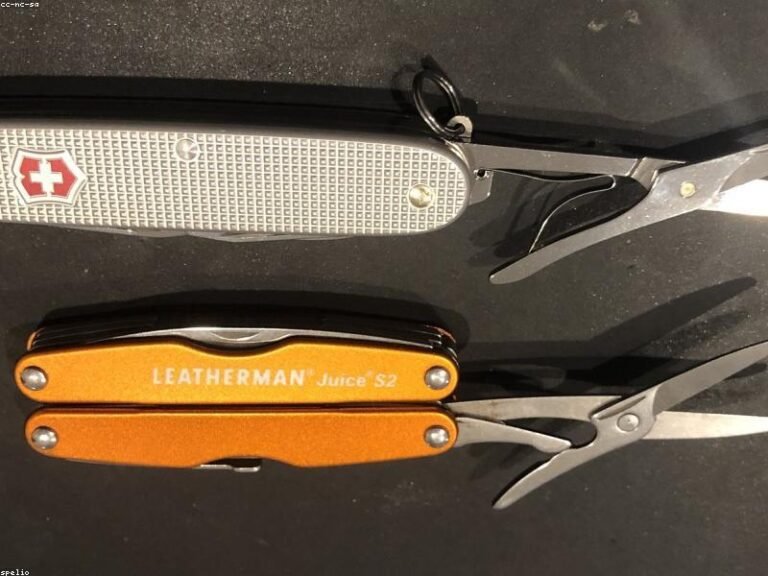
A slip joint, found on traditional pocketknives like classic Case and Swiss Army-style knives, isn’t a true lock at all — it uses spring tension to hold the blade open under normal use, but it will fold closed if enough pressure is applied against the spine. That makes slip joints suitable for light-duty tasks like opening mail or trimming a thread, but not for harder use where the blade could be pushed shut under load. Their appeal is largely traditional: simple mechanics, a classic feel, and often a lower profile in the pocket.
Choosing the Right Lock
There’s no single “best” lock — a back lock’s extra security is worth the one-handed inconvenience for some users, while others prioritize the ambidextrous ease of an axis-style mechanism. Handle a knife in person when you can, work the lock a few times, and judge whether it engages positively and releases the way you’d want it to under real use.
This article may contain affiliate links. If you purchase a product through one of these links, Bladeowl may earn a commission at no extra cost to you. This never influences our editorial independence or which products we recommend.