
Best Kitchen Knife for Beginners — Start Here
If you’re outfitting a kitchen from scratch or replacing knives that have never held an edge, the single most useful purchase you can make is a good 8-inch chef’s knife. Everything else — bread knives, paring knives, boning knives — is a specialty tool. The chef’s knife is the one you’ll reach for on 80% of cutting boards, so it’s worth understanding what actually makes one good before you buy.
Why an 8-Inch Chef’s Knife First
The 8-inch length hits a sweet spot: long enough to break down a chicken or slice a squash in a few strokes, short enough to control comfortably if you have smaller hands or a compact kitchen. Some cooks prefer a 6-inch for tighter control or a 10-inch for more leverage, but if you only own one knife, 8 inches gives you the most versatility. Resist the urge to buy a full block set as your first purchase — most of those knives will sit unused, and the money is better spent on one knife you actually trust.
German vs. Japanese Style: What the Difference Actually Means
You’ll see kitchen knives loosely grouped into “German-style” and “Japanese-style,” and the distinction is about steel and geometry, not just country of origin.
German-style knives (and Western knives built in that tradition) typically use softer, tougher stainless steel and a thicker edge bevel, often ground at a wider angle on both sides. That makes them more forgiving — they resist chipping if you hit a bone or twist the blade slightly, and they’re easier to sharpen with basic tools. The tradeoff is that they don’t hold a razor edge as long between sharpenings.
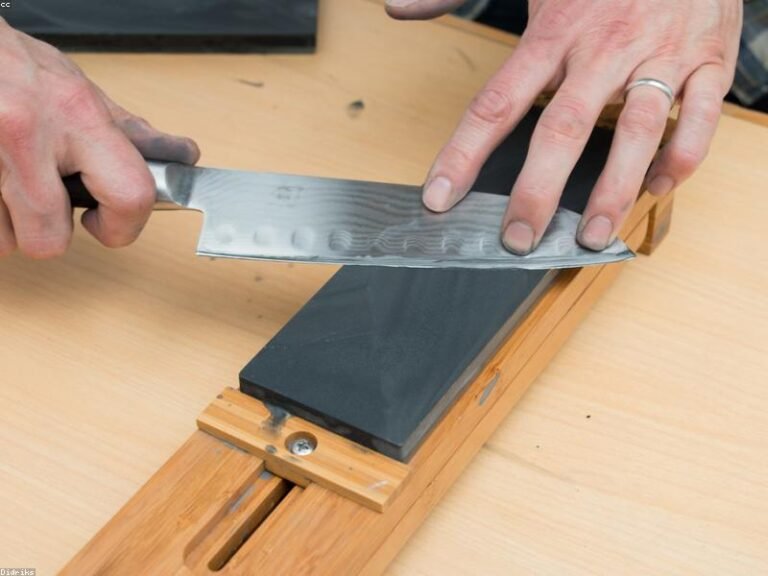
Japanese-style knives generally use harder steel ground to a thinner, more acute edge angle. That thinness is what makes them feel like they’re slicing through food rather than pushing through it, and a hard steel holds that edge longer. The tradeoff is durability — a thin, hard edge is more prone to chipping if it meets bone, a frozen block of food, or a granite countertop, and it typically needs a proper whetstone rather than a pull-through sharpener to maintain well.
Neither style is objectively “better.” A beginner who wants a low-maintenance, mistake-tolerant knife is often happier with German-style geometry. Someone who enjoys the ritual of sharpening and wants the sharpest possible edge for produce and fish will lean Japanese-style.
Weight, Balance, and Handle Comfort
Specs on a box don’t tell you how a knife feels in your hand, which is why handling a knife before buying (or buying from a retailer with an easy return policy) matters more than chasing a specific brand. A few things to check:
- Balance point: Pick the knife up by the handle. A well-balanced chef’s knife feels like it pivots naturally near where your index finger and thumb pinch the blade above the bolster, not handle-heavy or blade-heavy.
- Handle shape: Full-tang handles (where the steel runs the length of the handle) tend to feel sturdier, but a well-made partial-tang handle can be just as durable. Grip it as if you were actually cutting, not just holding it flat.
- Weight: Heavier knives can do some of the cutting work for you through momentum, which some cooks like for chopping. Lighter knives are easier on the wrist for long prep sessions and give you more finesse for delicate slicing.
Budget vs. Premium: Where the Money Actually Goes
A solid entry-level chef’s knife from an established maker will outperform an expensive knife with a bad edge or poor balance. What extra money typically buys as you move up in price is better steel (harder, more edge-retentive, sometimes more corrosion-resistant), tighter fit and finish, and handle materials that age well. For a beginner, it’s smarter to start with a well-reviewed mid-range knife and learn to maintain it properly than to overspend on a premium blade you don’t yet know how to sharpen or care for.
Basic Maintenance Keeps Any Knife Good
The single biggest factor in how a kitchen knife performs over time isn’t the brand — it’s how it’s treated. Hand wash and dry it immediately rather than leaving it in a sink or running it through a dishwasher, which dulls edges and can damage handles. Use a wooden or plastic cutting board rather than glass or stone, which will blunt any edge quickly. Hone the edge regularly with a honing steel to keep it aligned between sharpenings, and have it properly sharpened (or learn to do it yourself on a whetstone) every few months depending on use. A cheap knife that’s kept sharp will outcut an expensive one that’s been neglected.
Top Picks for a First Kitchen Knife
These are widely recognized, well-established chef’s knives that cover the budget-to-premium range for someone building out their first real kitchen knife.
| Knife | What Makes It Notable | Best For |
|---|---|---|
| Victorinox Fibrox Pro 8-Inch Chef’s Knife | A stamped-blade German-style knife that’s a long-time favorite recommendation from culinary schools and professional kitchens for its light weight and grippy handle at a low price. | Best value / most recommended |
| Wüsthof Classic 8-Inch Chef’s Knife | A full-tang, forged German knife with a heavier, more substantial feel and a full bolster — a step up in build quality and durability for a beginner ready to invest more. | Best premium / heirloom-quality option |
| Mercer Culinary Millennia 8-Inch Chef’s Knife | Another stamped, budget-friendly German-style knife commonly used in culinary school kits, with a santoprene handle designed for a secure, slip-resistant grip. | Best budget pick |
| Global G-2 Chef’s Knife | A lighter, Japanese-style chef’s knife with a thinner blade profile and a distinctive one-piece stainless-steel handle, popular with cooks who prefer nimbler knife feel over heft. | Best Japanese-style option |
This article may contain affiliate links. If you purchase a product through one of these links, Bladeowl may earn a commission at no extra cost to you. This never influences our editorial independence or which products we recommend.