
Best Camping Knives for 2026 — Fixed Blades and Folders for the Outdoors
Whether you’re pitching a tent, preparing firewood, or cooking at camp, a reliable knife is the most essential tool in your pack. The best camping knives blend durability, ergonomics, and versatility — and in 2026, the options have never been better. This guide walks you through everything you need to know before buying your next outdoor blade.
Fixed Blade vs Folding Knife for Camping
The first big decision: fixed or folding? Fixed blade knives offer superior strength and simplicity — no moving parts means nothing can break or jam. They’re ideal for heavy-duty tasks like batoning wood, food prep at camp, and processing kindling. The trade-off? They’re bulkier to carry and usually require a sheath.
Folding knives, on the other hand, win on portability. A good locking folder slips into your pocket and handles 90% of camp tasks — cutting cord, opening packages, slicing food. The downside: even the strongest lock can fail under hard use, and dirt and grit can foul the pivot. For serious bushcraft, carry both.
Top 5 Camping Knives for 2026
1. Morakniv Garberg — Best All-Rounder
The Garberg is the definitive bushcraft knife. Full-tang Sandvik 14C28N steel, Scandi grind, and a squared spine for fire steel striking. At around $80-$100, it punches well above its weight class. The polymer sheath with multi-mount system is excellent.
2. Benchmade Bushcrafter 162 — Best Premium Pick
Crucible S30V steel with Benchmade’s heat treat makes this American-made fixed blade a premium choice. The contoured G10 handles feel natural in hand, and the leather sheath is ready for belt carry. Expect to pay $250-$280.
3. ESEE 4 — Best Hard-Use Choice
ESEE’s legendary no-questions-asked warranty says it all. The 1095 carbon steel takes a wicked edge and is dead simple to sharpen in the field. The 4-inch blade is the sweet spot between control and capability. Around $120-$140.
4. Spyderco Paramilitary 2 — Best Folding Option
If you’re going folder-only for ultralight camping, the PM2 is the one. Compression lock, full-flat grind, and your choice of steels (from S45VN to CruWear sprint runs). The oversized opening hole works with gloves. $170-$220 depending on steel.
5. Cold Steel SRK — Best Budget Fixed Blade
The Survival Rescue Knife has been a classic for decades. SK-5 carbon steel, Kray-Ex handle, and Secure-Ex sheath. At $35-$45, it’s unbeatable value. Not the fanciest, but it’ll get the job done every time.
Steel Recommendations for Outdoor Use
For camping, prioritize toughness and corrosion resistance over pure edge retention. Stainless options like 14C28N, AEB-L, and LC200N resist rust in wet conditions. Carbon steels like 1095 and 3V offer incredible toughness but require regular oiling. MagnaCut (see our dedicated guide) hits the sweet spot — nearly stainless with excellent toughness.
What to Look For
- Full tang construction: The steel extends through the entire handle. Non-negotiable for hard use.
- Blade thickness: 3-4mm (0.11-0.16 inches) is ideal — thick enough for batoning, thin enough to slice.
- Blade length: 3.5-5 inches hits the camp sweet spot.
- Sheath quality: A bad sheath is a safety hazard. Look for secure retention and drainage holes.
- Handle material: Rubberized or textured G10 provides grip when wet or wearing gloves.
- 90-degree spine: For striking ferro rods — a rounded spine won’t throw sparks.
Frequently Asked Questions
What size knife is best for camping?
A 3.5 to 5-inch blade covers virtually all camp tasks. Smaller knives struggle with food prep and batoning; larger knives become unwieldy for fine work. If you can only bring one, aim for 4 inches.
Do I really need a fixed blade for camping?
Not always. For car camping or established campsites, a good folding knife is perfectly adequate. For backcountry trips where you might need to split wood or process game, a fixed blade becomes essential. Many experienced campers carry both — a fixed blade on the belt and a folder in the pocket.
How do I maintain my camping knife in the field?
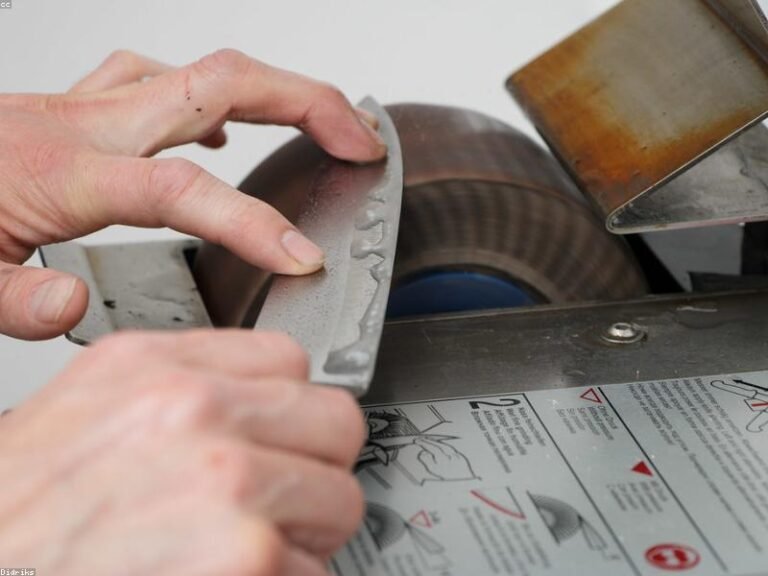
Wipe the blade clean and dry after use, especially before sheathing. A small sharpener like the Fallkniven DC4 or a pocket stone keeps your edge working. For carbon steel, carry a small cloth with mineral oil. Don’t store a wet knife in a leather sheath — it promotes rust.
Serrated or plain edge for camping?
Plain edge. Always. Serrations are great for cutting rope or seatbelts but are terrible for wood carving, food prep, and all the other things you’ll actually do at camp. A well-maintained plain edge does everything a serrated blade can, and more.
Whether you’re a weekend car camper or a backcountry minimalist, the right knife makes all the difference. Pick one that fits your style of camping, learn to maintain it, and it’ll be your most trusted companion in the outdoors.
This article may contain affiliate links. If you purchase a product through one of these links, Bladeowl may earn a commission at no extra cost to you. This never influences our editorial independence or which products we recommend.