Why D2 Remains a Favorite for Budget-Conscious EDC Buyers
Premium powder-metallurgy steels get most of the attention in EDC circles, but D2 has quietly stayed in production for decades and remains one of the most common steels on budget-to-midrange folders. That staying power isn’t nostalgia — it comes down to a genuinely good match between what D2 offers and what a budget buyer actually needs.
Where D2 Actually Comes From
D2 is a high-carbon, high-chromium tool steel, originally developed for industrial die and punch applications rather than cutlery. Its chromium content, generally in the 11-13% range, is high enough that it’s often marketed as “semi-stainless,” meaning it resists corrosion noticeably better than plain carbon tool steels but not as well as true stainless steels like 154CM or S30V. That tradeoff — more corrosion resistance than a carbon steel, less than a full stainless — is part of why it lands so often in the budget-to-midrange tier rather than at the top or bottom of the market.
Wear Resistance Is the Real Draw
D2’s defining trait is its carbide volume. It forms a high percentage of hard chromium carbides in its microstructure, which is what gives it strong resistance to abrasive wear. In practical terms, a D2 blade tends to hold a working edge through a lot of cardboard, rope, and general cutting tasks before it needs a touch-up, which is exactly the kind of performance a daily-carry buyer notices and values. It doesn’t match the edge retention of modern powder steels like S35VN, M390, or CPM-20CV, which pack finer and more evenly distributed carbides through powder metallurgy processing, but D2 outperforms plenty of steels found on knives at its price point.
Why It’s Cheaper to Work With
D2 is produced via conventional ingot metallurgy rather than the powder metallurgy process used for premium modern steels. Powder metallurgy produces a finer, more uniform carbide structure and generally better toughness-to-wear-resistance balance, but it’s a more expensive and specialized manufacturing process. D2’s more conventional production, wide availability, and long manufacturing history all keep raw material and processing costs down, and that savings flows through to the finished knife’s price. For a manufacturer building a knife meant to retail affordably, D2 offers a lot of wear resistance per dollar compared to newer, more exotic alloys.
The Sharpening Tradeoff
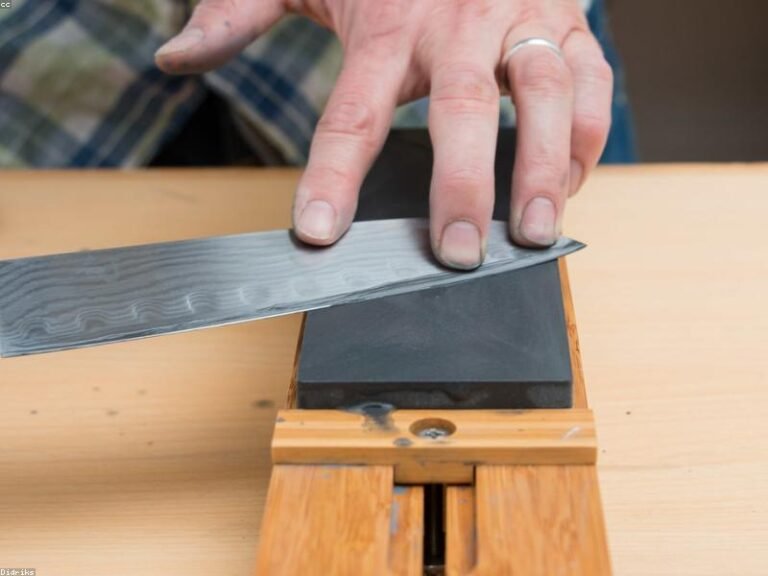
The same carbide density that gives D2 its wear resistance also makes it noticeably harder to sharpen than simpler stainless steels like 8Cr13MoV or 420HC. Those hard chromium carbides resist abrasion from sharpening stones the same way they resist abrasion from cutting materials, so restoring an edge on D2 takes more time and generally benefits from diamond or CBN abrasives rather than standard aluminum oxide or ceramic stones. This is the honest downside of the steel: it rewards you with a long-lasting edge but asks for a better sharpening setup, or more patience, when that edge finally does need attention.
D2 Knives vs Premium-Steel Alternatives
To see the tradeoff in practice, here’s how a couple of well-known D2 folders compare against knives built on pricier powder steels.
| Product | Price Tier | Key Differentiator | Best For |
|---|---|---|---|
| CIVIVI Elementum | Budget-mid (~$50) | D2 blade with ceramic ball bearings and a deep-carry clip | Buyers who want strong wear resistance without the price |
| CJRB Pyrite | Budget (~$45) | D2 drop point in a simple, no-frills liner-lock package | Entry-level buyers wanting D2 performance on a tight budget |
| Benchmade Bugout | Upper mid-range (~$170) | CPM-S30V powder steel in a 1.85oz ultralight build | Buyers wanting easier sharpening and less weight than D2 knives |
| Spyderco Para 3 | Premium (~$170-200) | CPM-S45VN powder steel with a proven compression lock | Enthusiasts wanting finer, more consistent carbide structure |
Why It Keeps Showing Up
Put together, D2 sits in a practical sweet spot for budget EDC: noticeably better wear resistance than entry-level stainless steels, reasonable rust resistance for everyday conditions, and a manufacturing cost that keeps finished knives affordable. The sharpening difficulty is a real cost, but for buyers who sharpen infrequently and mostly want a blade that holds up through daily tasks, that tradeoff has proven worth making for a long time — which is exactly why D2 hasn’t been pushed out of the market despite decades of newer steels arriving with bigger marketing budgets behind them.
This article may contain affiliate links. If you purchase a product through one of these links, Bladeowl may earn a commission at no extra cost to you. This never influences our editorial independence or which products we recommend.