D2 vs 14C28N Steel — Budget Knife Steel Showdown
Walk into the budget knife market and two steels dominate the conversation: D2 and Sandvik 14C28N. They’re the default choices for knives in the $30—$80 range, and for good reason. Both punch well above their price class. But they’re fundamentally different steels with different strengths — and picking the wrong one for your use case means frustration down the line.
The Short Version
| Property | D2 | 14C28N |
|---|---|---|
| Edge Retention | ———— Excellent | ——— Good |
| Corrosion Resistance | —— Semi-stainless | ————— Excellent |
| Ease of Sharpening | ——— Moderate | ————— Very Easy |
| Toughness | ——— Good | ———— Very Good |
| Price Range | $30—$80 | $35—$80 |
Bottom line: D2 holds an edge longer but rusts if neglected. 14C28N is nearly rust-proof, takes a sharper edge, and is much easier to sharpen — but needs more frequent touch-ups.
What Is D2 Steel?
D2 is a tool steel originally developed for industrial cutting dies. It has high carbon (1.5%) and high chromium (12%) content, putting it right at the boundary between “high-carbon” and “stainless.” Officially, it’s semi-stainless — it will resist corrosion better than pure carbon steel but will still rust if left wet or in humid environments.
What this means for you: Your D2 blade will hold a working edge for weeks of regular use. But if you live near the coast, sweat heavily, or tend to neglect maintenance, you’ll see rust spots. A light coat of mineral oil solves this, but you have to remember to do it.
Popular D2 knives: QSP Penguin, Civivi Elementum (D2 version), Sencut Actium, Ontario RAT 1 (D2 version)
What Is 14C28N Steel?
Sandvik 14C28N is a Swedish stainless steel developed specifically for knives. It was originally designed for Kershaw’s assisted-opening knives that needed a steel tough enough to handle the shock of Speedsafe deployment. With 14% chromium and a fine-grain structure, it’s genuinely stainless — you can carry it in sweaty pockets all summer without a spot of rust.
What this means for you: Your 14C28N blade won’t stay sharp as long as D2, but it sharpens back to hair-popping in minutes — even for beginners. It’s also tougher at thin edge geometries, meaning you can run a more acute angle for better slicing without chipping.
Popular 14C28N knives: Kershaw Leek, Civivi Elementum (14C28N version), QSP Penguin (14C28N version), Ruike P801
Real-World Testing: Which One Should You Choose?
Choose D2 If:
- You prioritize edge retention above all else
- You don’t live in a humid or coastal environment
- You’re willing to wipe the blade dry and apply oil occasionally
- You don’t mind spending extra time sharpening when it finally needs it
Choose 14C28N If:
- You want zero rust worries — carry anywhere, any weather
- You’re a beginner sharpener (or just hate sharpening) — 14C28N is one of the easiest steels to sharpen
- You prefer a razor-sharp, acute edge and don’t mind touching it up more often
- You carry in sweaty pockets, near salt water, or in humid climates
The Sharpening Difference
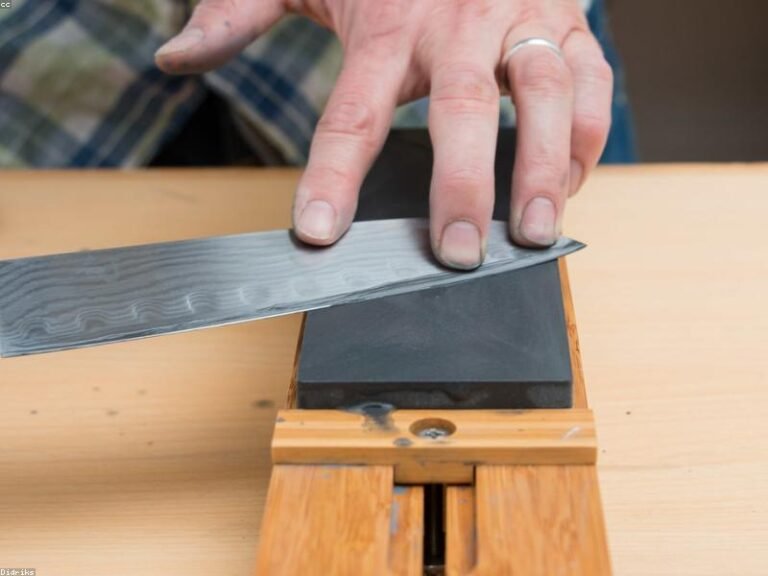
This is where 14C28N really shines. D2 has large chromium carbides that resist abrasion — great for edge holding, frustrating for sharpening. You’ll want diamond stones for efficient D2 sharpening. 14C28N has a fine, uniform carbide structure that sharpens easily even on basic aluminum oxide stones. A beginner can get 14C28N shaving-sharp in 10 minutes. D2 might take twice as long.
Which Knives Come in Both Steels?
The Civivi Elementum is the best-known example — available in both D2 and 14C28N at similar prices. The QSP Penguin has also appeared in 14C28N as an upgrade option. When given the choice, we slightly prefer 14C28N for its user-friendliness, but D2 fans will defend their choice until their edge finally needs sharpening.
Recommended Knives in Each Steel
| Knife | Steel | Notable Trait |
|---|---|---|
| QSP Penguin | D2 | A well-liked budget flipper that shows off D2’s edge-holding at a low price point. |
| Ontario RAT-1 (D2) | D2 | A thick, tough workhorse EDC that leans into D2’s durability for harder use. |
| Kershaw Leek | 14C28N | Slim assisted-opener that popularized 14C28N in the American market. |
| Civivi Elementum (14C28N) | 14C28N | The same well-regarded platform as the D2 version, letting you compare the two steels directly on one knife design. |
Frequently Asked Questions
Will D2 definitely rust?
Not definitely — but it can. If you wipe the blade after use and store it dry, most D2 knives develop only a light patina at most. The problem comes when D2 is put away wet, carried against sweaty skin for hours, or used near salt water. A quick wipe and occasional oil drop prevent 99% of D2 rust issues.
How often do I need to sharpen 14C28N vs D2?
Under the same use, expect to touch up 14C28N every 1-2 weeks of daily use, while D2 might go 3-4 weeks. But the 14C28N touch-up takes 2 minutes on a strop or ceramic rod, while D2 takes a full sharpening session.
Which steel is better for food prep?
14C28N wins for food prep — it’s fully stainless, so no metallic taste transfer, and it takes a finer edge that slices tomatoes and herbs cleanly. D2’s larger carbides give it a slightly toothier edge that’s better for draw cuts through fibrous material.
This article may contain affiliate links. If you purchase a product through one of these links, Bladeowl may earn a commission at no extra cost to you. This never influences our editorial independence or which products we recommend.