Reprofiling a Chipped Edge: When to DIY and When to Send It Out
A chipped edge is different from a dull one, and it needs a different fix. Dulling is gradual wear across the whole edge; a chip is localized damage — a small missing bite out of the edge, usually from impact against something hard like bone, a staple, or a rock. Whether you can fix it yourself with stones at home or need to send the knife to someone with proper grinding equipment comes down to how deep the damage actually runs.
Assessing how bad the chip really is
Look at the chip under good light, ideally with a loupe or strong magnification if you have one. The key measurement isn’t how it looks from the side, but how far up the blade the damage extends relative to the edge bevel itself. A small nick that only interrupts the very apex — the thin line where the two bevels meet — is usually manageable by hand. A chip that extends noticeably up into the primary bevel, especially one that’s wide or has a jagged, uneven profile, means a lot more material has to come off the whole edge to blend it out evenly, since you can’t just fix the chipped spot in isolation without leaving a low point that doesn’t match the rest of the edge. Run a fingernail lightly across the edge (never into it) to feel for the chip’s width, and compare it mentally to the blade’s overall edge width — a chip that’s a small fraction of the blade’s thickness is a different job than one that eats a visible notch out of it.
DIY reprofiling for small chips
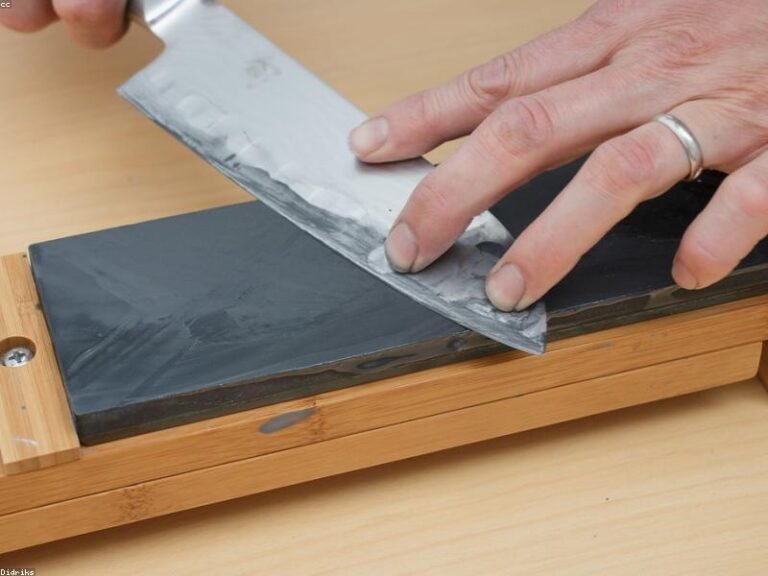
For minor chips, the approach is to work the entire edge down evenly until the low point created by the chip is blended into the rest of the bevel — not to spot-grind just the damaged area, which creates an uneven edge that won’t perform consistently. Start on a coarser stone than you’d normally use for routine maintenance, since you need to remove enough material to bring the whole edge down to meet the bottom of the chip. Maintain a consistent angle and work in even passes along the full length of the blade, checking periodically to see how much of the chip has been ground out. Once the chip is gone and the edge apex runs continuously without interruption, step up through progressively finer stones the way you would for a normal sharpening, finishing with a strop to clean up the new edge. This process removes more steel than a routine sharpening and changes the edge’s width slightly, but it’s a legitimate and common way to deal with small chips.
When it’s time to send it out
Deeper chips are a different story. If fixing the damage by hand would mean removing a substantial percentage of the blade’s edge height, grinding evenly and consistently along the full length by hand becomes difficult, and it’s easy to end up with an uneven bevel or a noticeably thinner section of blade near the repair. This is where professional regrinding — using powered equipment with a controlled, consistent angle — makes more sense, both for getting a clean result and for not risking further damage to the blade through an uneven hand job. It’s also worth sending a knife out if the chip runs into a section with heat-treat variation you’re unsure about, or if the blade is expensive or sentimental enough that you’d rather not risk the outcome. As a rough guide, if fixing it by hand would take you dozens of passes on a coarse stone and you’re not confident you can keep the angle consistent that whole time, it’s usually worth the cost of professional regrinding instead.
Preventing the next chip
Most chips trace back to using a knife for something it wasn’t suited for — prying, contact with hard or unseen material, or excessive edge angle for the task. A thinner edge cuts better but chips more easily; a slightly more obtuse edge trades some cutting performance for durability. Matching edge geometry to how the knife actually gets used prevents more chips than any repair technique fixes after the fact.
This article may contain affiliate links. If you purchase a product through one of these links, Bladeowl may earn a commission at no extra cost to you. This never influences our editorial independence or which products we recommend.