Opinel Brand Spotlight — The $15 French Classic That Belongs in Every Pocket and Kitchen
That $200 “EDC” knife in your pocket is getting showed up by a $15 French picnic knife. And deep down, you already know it. You’ve seen the Opinel before — probably in a kitchen drawer at a rental cabin, or in the hand of someone who actually knows how to cook. That simple wooden handle, the carbone steel blade with its distinctive patina, the Virobloc safety ring that goes click-click when you lock it. It looks like a knife from a fairy tale. And in a world of flippers, thumb studs, bearings, and super-steels, this 135-year-old design from the French Alps is still one of the most useful cutting tools you can own.
Here’s the truth the knife industry doesn’t want you to hear: most people don’t need a tactical knife. They need something that slices food cleanly, opens packages, whittles a stick for the kids, and looks charming rather than threatening when you pull it out at a picnic. Opinel figured this out in 1890 and never stopped making the same knife. Not because they couldn’t innovate — because they got it right the first time.
1890: Joseph Opinel, a Sawmill, and a Knife That Would Outlive Empires
Joseph Opinel was a blacksmith’s son in the Savoie region of the French Alps. In 1890, at the age of 18, he designed a folding knife with a simple wooden handle and a thin carbon steel blade. He made them in his father’s workshop and sold them to local farmers, shepherds, and woodworkers — people who used knives all day, every day, and wouldn’t tolerate a tool that failed.
The design was deceptively simple: a beechwood handle with a slot cut into it, a blade that pivoted on a steel pin, and a rotating metal collar (the Virobloc) that locked the blade open and closed. No springs to break. No complex internal mechanism. Just wood, steel, and physics.
In 1909, Joseph registered the “Main Couronnée” (Crowned Hand) trademark — the hand with three fingers raised in a blessing gesture that adorns every Opinel blade. Legend says the hand was modeled after Saint Jean-Baptiste, the patron saint of the Savoie chapel where Joseph’s workshop stood. By 1939, Opinel was selling over 20 million knives annually. The knife that started in a blacksmith’s shed was now in pockets across Europe, Africa, and Asia — carried by soldiers, artists, and farmers who understood that a good tool doesn’t need to be complicated.
Pablo Picasso carried an Opinel. He used it to carve his sculpting tools. Roger Frison-Roche, the famous French mountaineer, carried one on his expeditions. The Opinel is in the permanent collections of the Museum of Modern Art in New York, the Victoria and Albert Museum in London, and the Musée des Arts Décoratifs in Paris. It’s not just a knife — it’s recognized as one of the 100 best-designed objects in the world by the V&A.
Why a $15 Knife With Wood Handle Beats Your Fancy Folder
Here’s what happens when you actually use an Opinel: you realize how much blade geometry matters and how little everything else does. The Opinel’s blade is 0.045 inches thick at the spine and ground to a convex edge — meaning it’s thin behind the cutting edge without being fragile at the spine. That convex grind is the same geometry used on high-end custom bushcraft knives costing $300+. It slides through tomatoes like they’re made of air. It carves wood with control that tactical folders can’t match. It breaks down cardboard with half the effort of a thick-bladed EDC knife.
The carbon steel (XC90) on the classic models develops a patina over time — a grey-blue oxidation that looks like Damascus steel’s rustic cousin. This patina isn’t a flaw. It’s a protective layer that actually resists further corrosion, and it makes every Opinel unique. Your knife won’t look like anyone else’s after a year of use. That’s not rust. That’s history.
When you sharpen an Opinel — and it sharpens fast, because the carbon steel is at 55-57 HRC and the edge is so thin — it takes an edge that literally shaves hair off your arm in one pass. No expensive sharpening system needed. A few passes on a whetstone, a strop on your jeans, and it’s back to scalpel-sharp in under five minutes. Your super-steel knife might hold an edge longer, but when it finally does go dull, you’re spending an hour on diamond stones to bring it back. The Opinel tradeoff is deliberate: easy sharpening over maximum wear resistance. For a knife you actually use, that’s the right call.
The Opinel Models Worth Owning
Opinel No. 8 — The Goldilocks Knife
The No. 8 is the standard-bearer for good reason. The 3.25-inch blade is exactly the right size — long enough to slice an apple in one stroke, short enough to control for detail work. The 1.6-ounce weight means you forget it’s in your pocket until you need it. The beechwood handle is warm in your hand in a way G10 and titanium never will be — it actually gets grippier when wet, as the wood grain swells slightly. Sand it with 400-grit paper once a year and it feels brand new.
Available in carbon steel (which develops that beautiful patina) or stainless (12C27 Sandvik, which stays bright and requires zero maintenance), the No. 8 has over 9,000 five-star Amazon reviews. That’s not a mass-market marketing push. That’s generations of users reaching the same conclusion independently.
Opinel No. 6 — The Perfect Pocket Companion
At 2.875 inches, the No. 6 blade is legal virtually everywhere and so lightweight (under 1 ounce) that you’ll check your pocket to make sure it’s still there. This is the Opinel for people who think they don’t like carrying a knife — it vanishes in dress pants, shorts, or a clutch bag. The smaller handle fits three fingers comfortably and the reduced blade length makes it utterly non-threatening when you pull it out in public.
Opinel No. 10 — The Kitchen Champion
The No. 10 is where Opinel crosses from pocket knife into legitimate kitchen tool. The 3.94-inch blade handles full-sized food prep — slicing baguettes, breaking down chickens, cubing cheese for a charcuterie board. The rounded handle shape gives you a chef-knife grip when you choke up on it. This is the knife you bring to an Airbnb with a dull knife block, the picnic where everyone else is struggling with plastic utensils, the camping trip where the group “chef” forgot their kitchen kit. For under $20, it replaces an entire drawer of specialty picnic tools.
Opinel No. 12 Explore — The Bushcraft Surprise
If you think Opinels are too delicate for outdoor use, the No. 12 Explore will change your mind. The 4.7-inch 12C27 Sandvik stainless blade with a serrated section handles rope, small branches, and food prep with equal competence. The orange polymer handle has an integrated survival whistle — that 110-decibel signal that could make the difference in a backcountry emergency. The locking ring is oversized for gloved hands. At under $25, this is the Opinel that bushcrafters and hikers should add to their pack as a backup blade.
➤ Opinel No. 12 Explore on Amazon
Opinel Les Forgés 1890 Chef Knife — The Professional Tool
Opinel didn’t stop at folding knives. The Les Forgés 1890 line applies Opinel’s blade geometry expertise to full kitchen cutlery. The 8-inch chef knife is forged from X50CrMoV15 steel (the same steel used in high-end German knives) and features an olive wood handle that develops character with every wash. The full tang construction gives it balance that budget kitchen knives lack. At under $80, this is the chef knife that bridges the gap between the $15 folder and a serious kitchen investment — and it looks stunning on a magnetic strip.
➤ Opinel Les Forgés 1890 Chef Knife on Amazon
Opinel No. 8 vs. the Competition
The Opinel No. 8 doesn’t exist in a vacuum — the simple, affordable traditional-knife category has other well-established players. Here’s how it stacks up against three real direct competitors.
| Knife | Price Tier | Key Differentiator | Best For |
|---|---|---|---|
| Opinel No. 8 | ~$15 | Convex-ground carbon or stainless blade, rotating Virobloc lock, beechwood handle | Buyers who want the thinnest, easiest-sharpening edge in the category |
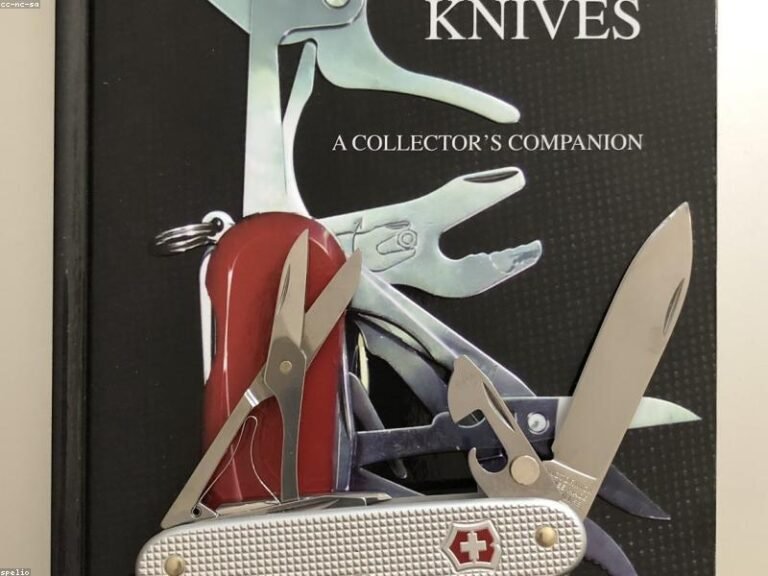
| Victorinox Pioneer | ~$35-45 | Swiss Army sodbuster-style lockback with a bottle opener/screwdriver combo tool | Users who want a bit more utility built into a similarly simple locking folder |
| Case Peanut | ~$40-60 | Traditional two-blade slipjoint with brass bolsters, no lock at all | Traditional-knife collectors and gentle-use EDC where a lock isn’t required |
| Morakniv Companion | ~$15-20 | Fixed-blade Scandi grind, no folding mechanism to maintain | Campers and preppers who want a tougher, non-folding alternative at a similar price |
The Victorinox and Case both cost more than double the Opinel while offering less blade performance for food prep — the Opinel’s thin convex grind is genuinely hard to beat at any price in this category. The Morakniv trades folding convenience for the extra durability of a fixed blade. Check the Victorinox Pioneer on Amazon, the Case Peanut, or the Morakniv Companion.
The Virobloc Lock: 1955 Innovation That Still Works Perfectly
In 1955, Marcel Opinel (Joseph’s son) added the Virobloc safety ring — a rotating metal collar that locks the blade in the open and closed positions. Before 1955, the Opinel was a friction folder — friction kept the blade open, and friction kept it closed. The Virobloc transformed it into a legitimate locking knife without adding complexity.
The genius of the Virobloc is that it’s virtually indestructible. No springs to fatigue. No tiny parts to lose. When you twist that steel ring and feel it seat against the blade tang with a soft metallic thunk, you’re operating a mechanism that hasn’t fundamentally changed in 70 years. Your grandfather’s Opinel locks exactly the same way. Your grandson’s will too.
The Opinel Cooking Hack Nobody Talks About
Here’s something knife reviewers rarely mention: the Opinel’s thin blade geometry and convex grind make it the best folding knife for food prep by a country mile. Most EDC knives have blades 0.12 inches thick or more — they wedge through food, crushing rather than slicing. The Opinel’s 0.045-inch blade and convex grind fall through tomatoes, cheese, bread, and charcuterie. Angle the blade wrong on a tactical folder and you’ll mangle a baguette. The Opinel slides through it like a dedicated bread knife. For picnics, camping meals, and “I’m at the office and this apple needs slicing” situations, there genuinely is no better pocket knife.
Who Should Buy an Opinel?
Everyone. At $15 for a No. 8, there’s no reason not to own one. Put one in your kitchen drawer for quick tasks. Put one in your glove box for picnics. Put one in your camping kit as a food-prep blade. Put one in your desk for apple duty. Give them as gifts — they’re charming, useful, and cost less than a bottle of decent wine.
People who cook. If you’ve ever been at a friend’s house and struggled with their dull kitchen knives, an Opinel No. 10 in your bag solves that problem permanently. It handles 90% of kitchen tasks with better edge geometry than most home chef knives costing 10× as much.
Knife collectors who think they’ve seen everything. You might own knives worth $500 each. An Opinel No. 8 will still make you smile when you sharpen it to hair-popping sharpness in three minutes flat and slice a tomato effortlessly. It’s a reminder that knife design peaked over a century ago — we’ve just been adding features since then.
People who don’t “look like knife people.” Pull out a tactical folder at a dinner party and people notice — not always positively. Pull out an Opinel to slice cheese and bread, and suddenly you’re the person who brought the right knife. The wooden handle and classic lines communicate “I appreciate functional design” rather than “I’m prepared for combat.” In actual use, the Opinel will out-slice most tactical knives on food anyway.
The Modding Community: Make It Yours
The Opinel community has figured out endless ways to customize these knives. Sand and re-shape the handle to fit your hand perfectly. Darken the wood with vinegar and steel wool (a traditional “ebonizing” technique). Force a patina on the carbon blade with mustard patterns. Carve the handle with a wood-burning tool. At $15, you can afford to experiment — buy three and make each one different. An Opinel that you’ve shaped yourself, with a patina that documents every meal it’s helped prepare, is more personal than any $500 mid-tech.
Carbon vs. Stainless: Which Opinel Should You Choose?
The carbon steel (XC90, marked “Carbone” on the blade) delivers sharper edges, easier sharpening, and that beautiful patina — but it requires care. Dry it after use, oil it occasionally, and don’t leave it wet overnight. Think of it like cast iron cookware: a small maintenance ritual in exchange for superior performance.
The stainless (12C27 Sandvik, marked “Inox”) requires zero maintenance. It won’t rust, won’t patina, and stays bright forever. The edge retention is slightly better than carbon, but it takes slightly more effort to sharpen. If you’re the type to rinse a knife and leave it on the drying rack, choose stainless. If you enjoy the ritual of blade maintenance, choose carbon — the relationship is part of the appeal.
The Bottom Line
There’s something profoundly satisfying about a tool that hasn’t changed because it doesn’t need to. In a world of planned obsolescence and aggressive upgrade cycles, the Opinel is a rebellion. It says: this was solved in 1890. You’re welcome.
A decade from now, when your $15 Opinel has been through hundreds of picnics, carved countless sticks for impatient children, sliced enough cheese for a French wedding, and developed a patina that’s uniquely yours — you’ll open it, twist the Virobloc, and feel exactly what Joseph Opinel felt in his Alpine workshop: the quiet satisfaction of a perfectly simple thing, done perfectly.
For less than the cost of a pizza, it belongs in your pocket and your kitchen.
Frequently Asked Questions
Do Opinel knives rust?
Carbon steel Opinels will develop surface oxidation if left wet — but that’s patina, not destructive rust. A light coat of mineral oil or even olive oil prevents problems. If you’ve ever maintained cast iron cookware, carbon Opinels are easier than that. If the idea of blade maintenance annoys you, buy the Inox (stainless) version — it’s the same knife with zero rust concerns.
Are Opinel knives actually sharp out of the box?
Yes — Opinels come sharp from the factory, and because of the thin blade geometry, “factory sharp” on an Opinel is sharper than “factory sharp” on most tactical knives. The convex grind applies force to a smaller contact area, which translates to easier cutting. Many knife enthusiasts touch up the edge immediately (< 5 minutes) to hair-shaving sharpness because the carbon steel responds so quickly to a whetstone.
What size Opinel should I get?
Start with the No. 8 — it’s the standard for a reason. The 3.25-inch blade handles 95% of tasks without being too large for pocket carry or too small for kitchen work. If you want smaller, the No. 6 is a gentleman’s companion. If you want a dedicated food-prep folder, the No. 10 is unbeatable. The beauty of Opinel pricing is that buying all three costs less than one mid-range pocket knife.
BladeOwl is reader-supported. When you buy through our Amazon links, we may earn an affiliate commission. Opinel didn’t pay us to write this — they’ve been selling the same knife for 135 years and don’t need to. We just think everyone should own one.