
Best Outdoor & Survival Knives
The blade you carry into the wild is more than a tool — it’s your lifeline.
We’ve tested, compared, and ranked the best outdoor and survival knives for every budget and mission.
What Makes a Great Outdoor & Survival Knife?
A true survival knife isn’t just a sharp piece of steel — it’s a multi-purpose tool that could one day save your life. Whether you’re building a shelter, processing firewood, dressing game, or cutting cordage, your knife needs to perform under pressure without fail.
The non-negotiables are straightforward: full tang construction for strength from tip to pommel, a fixed blade (no folding mechanisms to fail), high-carbon or premium stainless steel that holds an edge and resists corrosion, and an ergonomic handle that won’t slip when things get wet, muddy, or bloody.
Below, we break down the best options on the market — from budget-friendly bushcraft companions to heavy-duty survival beasts — so you can find the right blade for your next adventure.
Top Outdoor & Survival Knives — Head-to-Head
Last updated: May 2026
| Knife | Blade Steel | Blade Length | Weight | Tang | Price Range | Rating | Check Price |
|---|---|---|---|---|---|---|---|
| ESEE 6 | 1095 Carbon | 5.75″ | 12 oz | Full | $$$ | Ô¡É 9.4/10 | View on Amazon |
| Morakniv Companion | Sandvik 12C27 | 4.1″ | 4.1 oz | Partial (Rat-tail) | $ | Ô¡É 8.9/10 | View on Amazon |
| Ka-Bar Becker BK2 | 1095 Cro-Van | 5.25″ | 16 oz | Full | $$$ | Ô¡É 9.2/10 | View on Amazon |
| Gerber StrongArm | 420HC | 4.8″ | 7.2 oz | Full | $$ | Ô¡É 8.7/10 | View on Amazon |
| Buck 119 Special | 420HC | 6.0″ | 7.5 oz | Full | $$ | Ô¡É 8.5/10 | View on Amazon |
Types of Outdoor Knives
Not all outdoor knives serve the same purpose. Understanding the different categories helps you pick the right tool for your specific needs — because a hunting knife won’t baton firewood, and a survival beast might be overkill for whittling tent pegs.
ƒ¬ô Bushcraft Knives


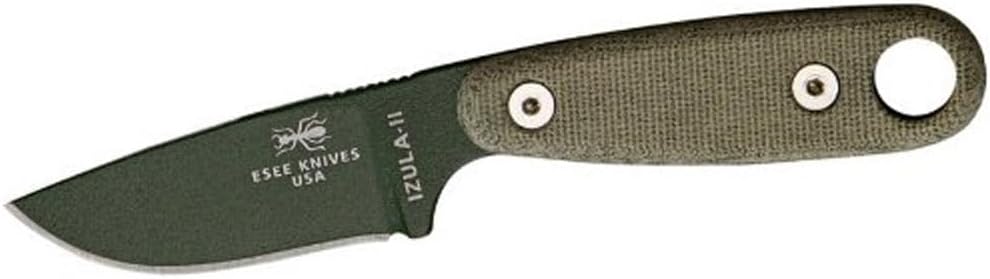


Designed for woodworking and camp crafting — carving, feather sticks, notching, and splitting kindling. Typically 3.5–5″ blades with Scandi or flat grinds for precise control. They prioritize carving geometry over pure strength. Think Morakniv Garberg or Condor Bushlore.
ƒøƒ Survival Knives
Built to take a beating and keep going. Thick spines (4–6mm), full tang, and tough steels that can baton through logs, pry, hammer, and chop. Often feature glass breakers, lanyard holes, and fire-steel-friendly spine edges. The ESEE 6 and Becker BK2 define this category.
Ôø Camp Knives
The all-rounders of the campsite. Used for food prep, cutting rope, opening packages, and general utility. Usually mid-sized fixed blades with stainless steel for easy cleaning. The Buck 119 and Gerber StrongArm fall here — tough enough for moderate tasks but refined enough for slicing.
ªî Hunting / Skinning Knives
Optimized for field dressing and skinning game. Curved drop-point or trailing-point blades with a belly for efficient skinning. Often have grippy handles that work well when wet. The Buck 119 and Outdoor Edge Razor-Lite are popular choices. Not built for heavy batoning, but excellent at their specialized task.
Our Top 3 Picks — In-Depth Reviews
ƒÅå Best Overall: ESEE 6
Rating: 9.4/10 | Blade Steel: 1095 Carbon | Blade Length: 5.75″ | Weight: 12 oz
The ESEE 6 is the gold standard of survival knives — and for good reason. Built in the USA with a full-tang 1095 high-carbon steel blade and a 5.75″ cutting edge, it hits the sweet spot between chopping capability and fine control. The textured Micarta handle offers a rock-solid grip even when soaked, and the 90-degree spine throws sparks off a ferro rod straight out of the box.
We put the ESEE 6 through everything: batoning seasoned oak, carving notches, feathering, food prep, and light prying. It handled it all without a hint of edge deformation. The black powder coat does wear with heavy use (character, we call it), and 1095 steel demands you stay on top of oiling to prevent rust — but if the apocalypse comes, this is the knife you grab.
- Pros: Indestructible full tang, exceptional edge retention, no-questions-asked lifetime warranty, ergonomic Micarta handle
- Cons: 1095 steel requires rust maintenance, sheath could be better, premium price point
Į Best Heavy-Duty: Ka-Bar Becker BK2
Rating: 9.2/10 | Blade Steel: 1095 Cro-Van | Blade Length: 5.25″ | Weight: 16 oz
If you need a knife that doubles as a pry bar, hatchet, and survival tool all in one — the Becker BK2 (nicknamed the “Campanion”) is your blade. With a massive -inch thick spine and 1095 Cro-Van steel, this 1-pound beast can split logs, chop through branches, and take more abuse than any knife has a right to handle.
The Grivory handle scales are practically indestructible and provide excellent grip. While the sheer weight and bulk make it less ideal for detail carving, in a straight-up survival scenario where reliability trumps finesse, the BK2 has no peer. The included hard plastic sheath with MOLLE-compatible webbing is solid enough for belt or pack carry.
- Pros: Virtually unbreakable, superb batoning tool, excellent factory edge, affordable for the quality
- Cons: Heavy for long hikes, overkill for light camp tasks, requires regular oiling to prevent rust
Į Best Budget: Morakniv Companion
Rating: 8.9/10 | Blade Steel: Sandvik 12C27 | Blade Length: 4.1″ | Weight: 4.1 oz
For under $20, the Morakniv Companion delivers value that borders on absurd. The Swedish-made Sandvik 12C27 stainless blade with Scandi grind is razor-sharp out of the box and a joy to carve with. At just 4.1 ounces, it’s light enough to forget you’re carrying it — until you need to feather sticks, prep food, or handle any bushcraft task with precision.
No, it’s not a full-tang survival beast — the rat-tail tang limits batoning to smaller kindling — but for 95% of what campers, hikers, and bushcrafters actually do, it’s all the knife you need at a price that makes it a no-brainer backup blade. The rubberized handle is grippy in all conditions, and the included plastic sheath does the job.
- Pros: Unbeatable price, scary-sharp out of the box, lightweight and carves beautifully, stainless steel needs minimal maintenance
- Cons: Not full tang — don’t baton heavy logs, plastic sheath is basic, limited heavy-duty capability
Fixed Blade vs. Folding Knife for the Outdoors
For serious outdoor use, the debate is settled — but folders still have their place. Here’s how they stack up.
ƒö¬ Fixed Blade
- Full-tang strength — no moving parts to fail
- Safe batoning, chopping, prying
- Easy to clean — no pivot or lock mechanism
- Faster deployment — just draw and use
- Bulkier to carry, requires sheath
- Heavier than equivalent folders
- Less discreet in public
ƒöü Folding Knife
- Compact pocket carry, discreet
- Lighter weight for backpacking
- High-end steels available (S30V, M390, MagnaCut)
- One-handed opening (thumb studs, flippers)
- Folding mechanism = potential failure point
- Never baton or pry with a folder
- Harder to clean thoroughly in the field
Verdict: For serious survival and bushcraft, always carry a fixed blade. Keep a quality folder in your pocket as a backup and for finer tasks — but trust your life to a full-tang fixed blade.
What to Look For in an Outdoor Knife
Walk into any gear shop and you’ll find dozens of knives vying for your wallet. Here’s how to cut through the hype and pick a blade that’ll actually perform when you need it.
1. Blade Steel — The Soul of Your Knife
Steel choice is a trade-off between edge retention, toughness, and corrosion resistance. High-carbon steels like 1095 take a wicked edge and are incredibly tough — perfect for survival knives — but they’ll rust if you don’t oil them. Stainless steels like Sandvik 12C27 or 420HC resist corrosion well but may not hold an edge as long. Premium options like CPM-3V or MagnaCut bridge the gap beautifully, but you’ll pay for it.
- 1095 Carbon: Tough, easy to sharpen, rust-prone — classic survival steel
- 1095 Cro-Van: Becker’s 1095 variant with added chromium/vanadium for better wear resistance
- Sandvik 12C27: Budget-friendly stainless, razor-sharp, good corrosion resistance
- 420HC: Workhorse stainless, easy to maintain, decent edge retention
- CPM-3V / MagnaCut: Premium steels — excellent toughness, edge retention, and corrosion resistance
2. Full Tang — Non-Negotiable for Survival
A full-tang knife has the blade steel extending continuously through the entire handle — tip to pommel — giving it structural integrity that partial or rat-tail tangs simply can’t match. If you’re batoning firewood, prying, or applying any significant force, full tang is a safety requirement, not a luxury. Look for knives where you can see the tang protruding around the edges of the handle slabs.
3. Handle Material & Ergonomics
A survival knife with poor grip is a liability. Your hands will get wet, muddy, cold, and tired. Micarta (linen or canvas resin composite) offers legendary grip when wet and doesn’t get slippery. Rubberized grips (like Morakniv’s) are grippy and comfortable but can degrade over time. G-10 is durable and grippy but harsh on bare hands. Avoid smooth wood or polished metal handles in wet-weather knives.
4. Sheath Quality
A great knife in a terrible sheath is a recipe for frustration — or worse, injury. Kydex sheaths offer excellent retention, are waterproof, and won’t dull your blade. Leather looks classic and is quiet in the field but absorbs moisture and requires maintenance. Plastic/molded sheaths are affordable but can be noisy and loose over time. Look for positive retention (click-in), drainage holes, and multiple carry options (belt loop, MOLLE, dangler).
5. Blade Length & Thickness
4–5 inches is the sweet spot for an all-purpose outdoor knife — long enough for light chopping and batoning, short enough for detail work. Blade thickness of 3.5–5mm gives you the backbone for heavy use without making the knife feel like a sharpened crowbar. Anything thicker than 6mm is into dedicated chopper territory and loses finesse.
Frequently Asked Questions
Q: What blade length is best for a survival knife?
A 4–6 inch blade is the ideal range. Shorter than 4″ and you lose chopping and batoning capability — longer than 6″ and you sacrifice control for detail work. The ESEE 6 at 5.75″ and the Becker BK2 at 5.25″ both fall in this goldilocks zone.
Q: Carbon steel vs. stainless — which should I choose?
For survival and heavy bushcraft, carbon steel (1095) wins on toughness and edge-holding. But it requires maintenance — wipe it dry and oil it after use. For camp knives, fishing, or humid environments, stainless is lower-maintenance and perfectly adequate for most tasks. Carry both if you can.
Q: Can I baton wood with any fixed blade?
Only baton with full-tang fixed blades — never with folders or partial-tang knives. The tang can snap at the handle junction under repeated impact, creating a dangerous situation. The ESEE 6 and Becker BK2 are purpose-built for heavy batoning. A Morakniv Companion can handle kindling but nothing thicker than 2–3 inches.
Q: What’s the most important survival knife feature?
Full tang, full tang, full tang. After that: fixed blade, quality steel, and an ergonomic handle that won’t slip. Everything else — ferro rod notches, glass breakers, serrated spines — is secondary. If the knife can’t take a beating without breaking, those features won’t matter.
Q: How much should I spend on a good outdoor knife?
Inexpensive doesn’t mean bad. The Morakniv Companion delivers 80% of the performance for under $20. In the $80–150 range (Gerber StrongArm, Buck 119, Becker BK2), you get full tang, better sheaths, and more refined steel. The $120–180 tier (ESEE 6) gives you lifetime warranties and premium fit/finish. Above $200, you’re paying for premium steels like CPM-3V or custom work — nice, but not essential.
Q: Can I carry a fixed-blade knife legally?
Knife laws vary dramatically by country, state, and even city. In most of the US, fixed-blade carry is legal when openly carried (belt sheath) in outdoor/rural settings. Many European countries restrict fixed-blade carry in public spaces. Always check your local laws before carrying. For travel, a folding knife under 3″ is generally the safest option.
Ready to Find Your Blade?
Whether you’re gearing up for a weekend bushcraft trip, building a bug-out bag, or adding to your collection — the right knife is an investment that’ll last decades. All five knives above have been field-tested and recommended by the Bladeowl team.
Bladeowl is reader-supported. When you buy through our links, we may earn a commission at no extra cost to you — thank you for supporting independent gear reviews.
Got questions about a specific knife? Drop us a comment below — we respond to every one. Ôø