
Zwilling J.A. Henckels: The 290-Year Legacy of Germany Most Famous Knife Brand
Founded in 1731 — a full 45 years before the American Declaration of Independence — Zwilling J.A. Henckels is one of the oldest continuously operating companies in the world. For nearly three centuries, the Solingen, Germany-based manufacturer has been synonymous with premium kitchen cutlery. From the twin-man logo (Zwilling means “twin” in German) to the iconic red logo, Henckels represents a tradition of craftsmanship that few brands in any industry can match.
A Legacy Forged in Solingen
Solingen, Germany — known as the “City of Blades” — has been a center of cutlery production since the Middle Ages. The city’s strict quality standards, codified in the Solingen Ordinance of 1938, require that products bearing the Solingen name be manufactured within the city and meet rigorous quality benchmarks. Zwilling, as Solingen’s most famous cutlery brand, has been the standard-bearer for these traditions since 1731.
Peter Henckels registered the twin-man logo in 1731, making it one of the oldest trademarks still in use. The logo, depicting two figures from the Gemini zodiac sign, would become recognized worldwide as a mark of quality. Browse Zwilling knife sets on Amazon.
The Product Lines Explained
Zwilling’s product hierarchy can be confusing — the company operates multiple tiers under the same brand umbrella. Understanding the distinctions is crucial when shopping:
Zwilling Pro: The flagship line. Featuring a distinctive curved bolster design that allows for full-edge sharpening (most bolsters block the heel of the blade), the Zwilling Pro series is forged from proprietary special formula stainless steel, ice-hardened using Zwilling’s Friodur process for improved corrosion resistance and edge retention. The POM handles are ergonomic and dishwasher-safe. Pro is the sweet spot of the Zwilling lineup.
Zwilling Four Star: Introduced in 1976, the Four Star line pioneered the seamless synthetic handle — no gaps between handle and bolster for maximum hygiene. The ergonomic handle shape, developed through extensive research, set the template that countless competitors would follow. Four Star remains one of Zwilling’s best-selling lines and a popular choice for wedding registries.
Zwilling Kramer: A collaboration with master bladesmith Bob Kramer, these knives feature a unique wide-profile blade shape inspired by traditional European chef’s knives but refined for modern kitchens. The Zwilling Kramer line uses SG2 micro-carbide powder steel (HRC 63) and is manufactured in Japan — a fascinating fusion of German brand, American designer, and Japanese manufacturing.
Zwilling J.A. Henckels International: This is the entry-level tier, manufactured primarily in Spain and China. The single-man logo (no twins) distinguishes these from the premium Solingen-made lines. They offer decent quality at accessible prices and serve as an introduction to the brand.
Friodur Ice-Hardening: A Technological Edge
Zwilling’s proprietary Friodur process involves cooling the blade steel to approximately -70°C (-94°F) after the initial heat treatment. This cryogenic treatment transforms retained austenite into martensite, resulting in a finer grain structure that improves both corrosion resistance and edge retention. It’s one of the key technologies that differentiate Zwilling from competitors using the same X50CrMoV15 steel.
Zwilling in the Modern Era
Today, Zwilling is far more than a knife company. The brand has expanded into cookware (purchasing Staub enameled cast iron in 2008 and Demeyere stainless steel in 2008), kitchen gadgets, and even personal care products. Yet the heart of the brand remains in Solingen, where master grinders still finish blades by hand using techniques passed down through generations.
A Zwilling knife is not the cheapest option on the market, nor the most exotic. But it represents 290 years of accumulated knowledge about what makes a knife work well, day after day, in real kitchens. For cooks who value reliability, tradition, and no-nonsense performance, Zwilling delivers. Shop the full Zwilling collection on Amazon.
Zwilling vs. Wüsthof: The Eternal Solingen Rivalry
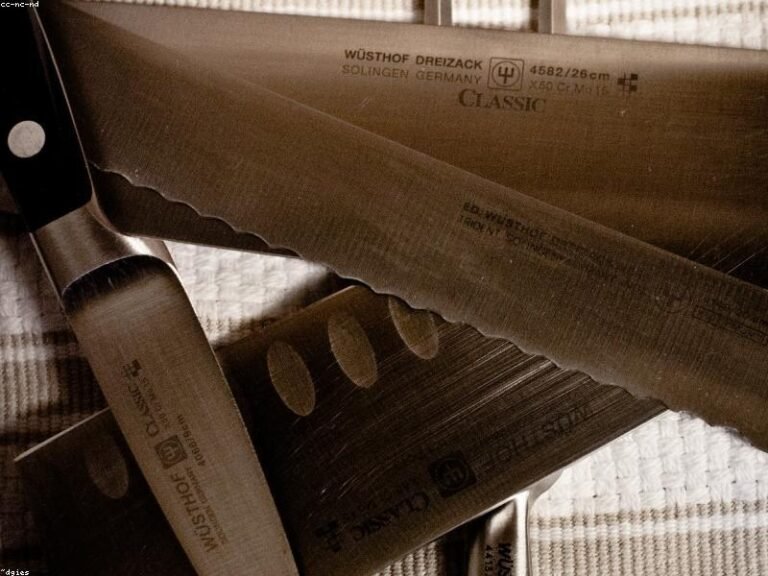
No discussion of Zwilling is complete without addressing its historic Solingen rival, Wüsthof. Both companies produce premium forged knives in the same city, using the same X50CrMoV15 steel, and both trace their heritage back centuries. The differences are subtle but meaningful: Zwilling knives tend to have slightly thinner blade geometry and sharper out-of-box edges, while Wüsthof knives feature heavier blades with a more pronounced bolster. The handles differ too — Zwilling Pro handles have a more pronounced curve, while Wüsthof Classic handles are straighter. Ultimately, choosing between them comes down to personal preference and how each knife feels in your hand. Many professional cooks own both and reach for whichever suits the task. Compare Zwilling and Wüsthof on Amazon.
This article may contain affiliate links. If you purchase a product through one of these links, Bladeowl may earn a commission at no extra cost to you. This never influences our editorial independence or which products we recommend.