Best Pocket Knives for Hiking — Lightweight Options for the Trail
Every ounce matters when you’re on the trail. A good hiking knife needs to be light enough to forget about, capable enough to handle camp tasks, and reliable enough that you don’t have to think about it. Whether you’re a day hiker, a thru-hiker counting grams, or a weekend warrior, the right pocket knife can handle food prep, gear repair, fire starting, and emergency situations without weighing down your pack. Here are the best lightweight pocket knives for hiking in 2026.
What Makes a Great Hiking Knife?
Hiking knives have different priorities than tactical or everyday carry knives. Weight is the number one consideration — anything over 4 ounces starts to feel heavy after 15 miles. Blade length should be practical: 2.5 to 3.5 inches covers almost every trail need without unnecessary bulk. Corrosion resistance matters more than edge retention — trail conditions involve rain, sweat, and humidity, and you might not have time or opportunity to oil your blade daily. The handle should provide positive grip even with wet or cold hands. Finally, a knife that’s easy to deploy and close one-handed is a genuine safety feature when your other hand is occupied with a trekking pole or tent stake.
Top Lightweight Hiking Knives
1. Benchmade Bugout 535 (1.85 oz)
The Bugout is practically the official knife of the ultralight hiking community, and for good reason. At 1.85 ounces, it’s astonishingly light while still offering a 3.24-inch CPM-S30V blade. The AXIS lock is fully ambidextrous and secure, the Grivory handle scales are textured enough for grip without being abrasive, and the deep-carry clip keeps it secure in your pocket or pack. The S30V steel provides good corrosion resistance for trail conditions. Available in multiple colors, including bright options that are easy to spot if dropped. The Bugout strips away everything unnecessary while keeping everything essential — the definition of a perfect hiking knife. Check the Benchmade Bugout on Amazon.
2. Spyderco Para 3 Lightweight (2.4 oz)
If you prefer Spyderco’s ergonomics and the compression lock, the Para 3 Lightweight delivers in a trail-friendly package. The 2.92-inch CTS BD1N blade is fully stainless and surprisingly capable — BD1N holds an edge well and is easy to touch up on a pocket stone. The FRN handle with Spyderco’s signature bi-directional texturing provides grip security that few knives match, even with wet or muddy hands. The compression lock is intuitive and strong. At 2.4 ounces, it’s barely noticeable in your pocket. The full-flat grind slices through food, cordage, and trail materials with authority. Find the Spyderco Para 3 LW on Amazon.
3. Victorinox Swiss Army Hiker (3.5 oz)
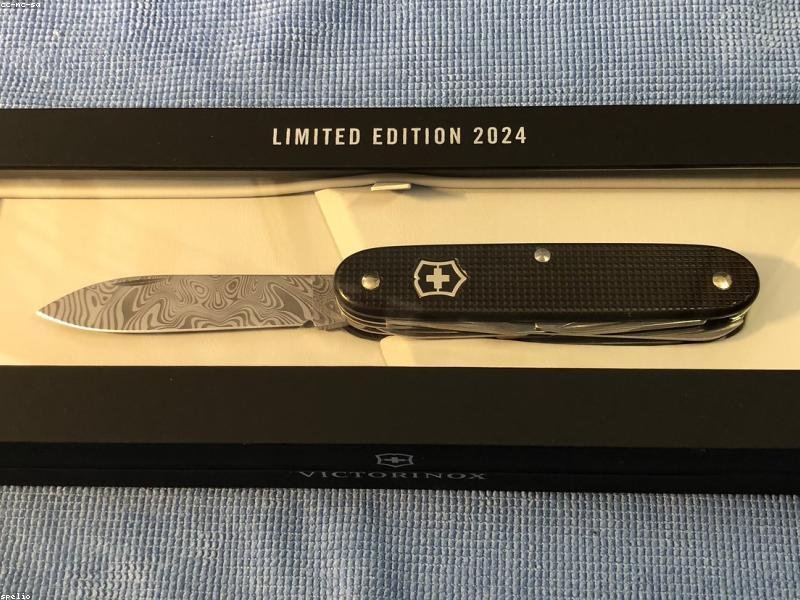
Sometimes one blade isn’t enough. The Victorinox Hiker packs a saw, can opener, bottle opener with screwdriver, awl, and the classic Swiss Army knife blade into a package that weighs just 3.5 ounces. The wood saw is genuinely useful on the trail for cutting small branches for fire starting or emergency shelter, and the awl can punch holes in leather or fabric for gear repair. The stainless steel blade is corrosion-proof and easy to maintain. While it won’t win any one-handed opening contests, the Swiss Army Hiker offers the most versatility per ounce of any knife on this list. It’s also TSA-friendly if you check it in luggage. Check the Victorinox Hiker on Amazon.
4. Opinel No. 8 (1.6 oz)
The Opinel No. 8 is the original ultralight hiking companion — French hikers have carried these simple folding knives in the Alps for over 130 years. At 1.6 ounces, the beechwood handle and carbon steel (or stainless, depending on variant) blade disappear into any pack. The 3.25-inch blade provides surprising utility for its weight. The Virobloc safety ring locks the blade open or closed. Carbon steel versions patina beautifully over time and take an incredibly sharp edge. The slim profile slides easily into a pack pocket. For under $20, the Opinel No. 8 offers performance that knives costing 10x as much can’t match in the weight-savings department. Find the Opinel No. 8 on Amazon.
5. Benchmade Mini Bugout 533 (1.5 oz)
For the gram-counting ultralight enthusiast, the Mini Bugout trims even more weight from an already featherweight design. At 1.5 ounces, it’s one of the lightest locking folding knives on the market. The 2.82-inch blade is slightly shorter than the full-size version but still adequate for trail food prep and general cutting tasks. The AXIS lock, deep-carry clip, and S30V blade steel are all present. If weight is your absolute priority and you can accept a smaller blade, the Mini Bugout is the ultimate hiking knife. Check the Benchmade Mini Bugout on Amazon.
Comparison Table: Lightweight Hiking Knives
| Model | Weight | Blade Length | Steel | Lock | Price Range |
|---|---|---|---|---|---|
| Benchmade Bugout 535 | 1.85 oz | 3.24″ | S30V | AXIS | $160-190 |
| Spyderco Para 3 LW | 2.4 oz | 2.92″ | CTS BD1N | Compression | $120-140 |
| Victorinox Hiker | 3.5 oz | 2.5″ (+ tools) | Stainless | Slipjoint | $30-40 |
| Opinel No. 8 | 1.6 oz | 3.25″ | 12C27 / Carbon | Virobloc | $17-25 |
| Benchmade Mini Bugout | 1.5 oz | 2.82″ | S30V | AXIS | $150-170 |
| Civivi Elementum | 2.9 oz | 2.96″ | D2 / Nitro-V | Liner Lock | $50-65 |
Fixed Blade vs. Folder for Hiking
While this guide focuses on pocket knives, the fixed blade vs. folder debate is relevant to hikers. Fixed blades are stronger and eliminate the failure point of a lock mechanism — if you’re batoning firewood or building shelters, a fixed blade is the right tool. However, fixed blades are typically heavier and require a sheath, adding bulk. For most day hikes and even multi-day backpacking trips, a quality folder handles 95% of trail tasks at a fraction of the weight. If your hiking involves bushcraft or survival scenarios, consider supplementing your folder with a lightweight fixed blade like the ESEE Izula (3.2 oz) or Morakniv Eldris (2.8 oz).
Frequently Asked Questions
Should I carry a separate knife for food prep on the trail?
A single folding knife can handle both food prep and utility tasks if cleaned between uses. However, ultralight thru-hikers often carry a tiny dedicated food knife (like the Opinel No. 6 or a small Victorinox) and a separate utility knife, simply to keep food residues off their primary blade.
Is carbon steel or stainless steel better for hiking?
Stainless steel is generally better for hiking. The corrosion resistance means less maintenance in wet conditions. Carbon steel can rust if left wet in a pack overnight. However, carbon steel is easier to sharpen in the field with basic tools, which is why some bushcrafters prefer it.
Do I need a locking blade for hiking?
Yes, strongly recommended. A locking blade prevents the knife from accidentally closing on your fingers during use — particularly important when you’re tired, using gloves, or working in awkward positions. Slipjoint knives (like the Opinel with the ring unlocked) are less safe for trail use.
What blade shape is best for hiking?
Drop point blades are the most versatile for hiking — the curved belly excels at slicing (food prep, cutting cord) while the strong tip handles piercing tasks. Avoid tanto blades and overly aggressive clip points for general hiking use. A full-flat grind provides the best slicing performance.
This article may contain affiliate links. If you purchase a product through one of these links, Bladeowl may earn a commission at no extra cost to you. This never influences our editorial independence or which products we recommend.