
Titanium vs Stainless Steel Knife Handles — Weight, Feel, and Durability
Metal-handled knives occupy a special place in the knife world. There’s something about the cold, solid feel of a full-metal handle that G-10 and micarta can’t replicate. But when it comes to metal handles, the two dominant materials — titanium and stainless steel — offer very different experiences in your hand and pocket. Understanding the trade-offs helps you choose the right metal for your next knife.
The Physics: Why Titanium Is Lighter
Titanium has roughly 60% the density of stainless steel — about 4.5 g/cm³ vs. 7.8 g/cm³ for most stainless steels. This means a titanium-handled knife is inherently 40% lighter than an equivalent stainless steel handle of the same dimensions. In practice, a titanium frame lock folder like the Chris Reeve Sebenza 31 (3.3 oz) weighs significantly less than a stainless steel frame lock like the Spyderco SpydieChef (3.8 oz) despite having a larger blade. This weight difference is the most immediately noticeable distinction between the two materials. However, titanium’s lower density comes with a trade-off: it’s softer than hardened steel. On the Rockwell scale, Grade 5 titanium (6Al-4V) measures around HRC 36, while hardened stainless steel handles can reach HRC 55-60. This means titanium scratches more easily than stainless steel — pocket wear and snail trails appear faster and more visibly on titanium handles.
Feel in Hand: Temperature and Texture
Temperature: Both titanium and stainless steel feel cold to the touch initially — this is the “thermal shock” of metal handles that some users love and others hate. However, titanium warms to your hand noticeably faster than stainless steel due to its lower thermal conductivity (titanium conducts heat about 10x less efficiently than stainless steel). In cold weather, titanium is more comfortable for this reason. In hot weather, both materials perform similarly.
Texture: Titanium can be finished in ways that stainless steel cannot. The most popular titanium finish is “stonewashed” — a tumbled finish that creates a muted, matte gray surface that hides scratches beautifully. Bead-blasted titanium is grippier but shows scratches more readily. Anodized titanium can display vibrant colors (blue, bronze, purple, green) through voltage-controlled oxidation. Stainless steel finishes are more limited: satin, bead-blasted, stonewashed, and polished. Polished stainless provides a mirror-like shine (think classic Buck 110 bolsters) that titanium cannot replicate.
Durability and Wear Over Time
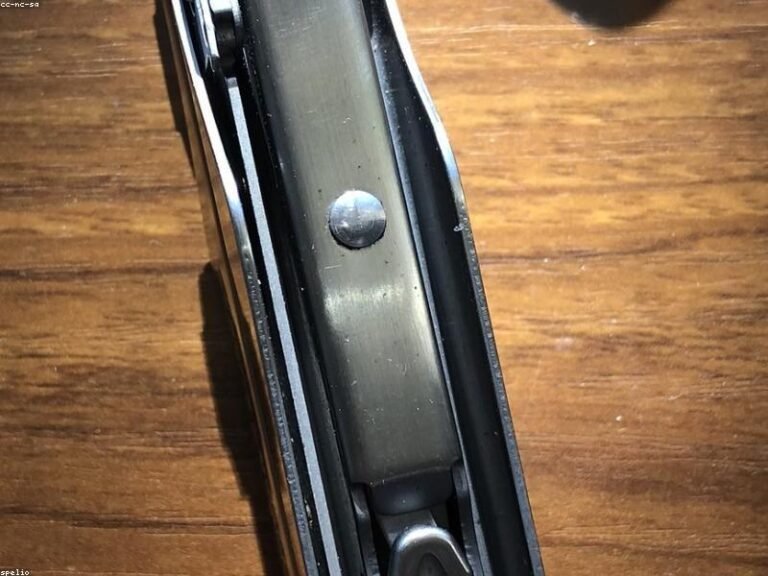
Scratches: Titanium scratches more easily than hardened stainless steel. A titanium handle carried daily for a year will show “snail trails” — fine scratches that form a distinctive pattern. Some consider this a beautiful patina; others find it annoying. Stainless steel handles are harder to scratch but more visible when scratched — a deep scratch on bead-blasted stainless stands out more than a snail trail on stonewashed titanium.
Corrosion: Both materials are highly corrosion-resistant in practical knife use, but through different mechanisms. Stainless steel resists corrosion through chromium content (12%+ chromium forms a passive oxide layer). Titanium resists corrosion through a tenacious oxide layer that forms instantly when exposed to air. Both handle salt water, sweat, and humidity without issue. In extreme environments (prolonged saltwater exposure), titanium has a slight edge — but for practical EDC, both are essentially corrosion-proof.
Structural integrity: Stainless steel handles are stronger in terms of resistance to bending and impact — but this advantage is largely academic since both materials far exceed the forces a folding knife handle will experience in normal use. The real-world difference is that a stainless steel frame lock is less likely to develop lock rock over many years of use, because the lock face (where the blade tang contacts the lock bar) wears more slowly.
Comparison Table: Titanium vs. Stainless Steel Handles
| Characteristic | Titanium (Grade 5 / 6Al-4V) | Stainless Steel (typical knife handle) |
|---|---|---|
| Density | 4.5 g/cm³ | 7.8 g/cm³ |
| Relative Weight | ~40% lighter | Heavier, more “solid” feeling |
| Hardness | ~HRC 36 | ~HRC 55-60 |
| Scratch Resistance | Lower (shows snail trails) | Higher (scratches less easily) |
| Thermal Conductivity | Low (warms quickly in hand) | High (stays cold longer) |
| Finish Options | Stonewashed, bead-blast, anodized | Satin, bead-blast, stonewash, polished |
| Anodization | Yes — vibrant colors via voltage | No — colors require coatings |
| Corrosion Resistance | Excellent | Excellent |
| Cost | $$$ (premium material) | $ to $$ (affordable to premium) |
| Iconic Example | Chris Reeve Sebenza 31 | Spyderco SpydieChef / Buck 110 |
Aesthetic Considerations
Titanium handles develop a distinctive wear pattern over time that’s widely celebrated in the knife community. The “snail trail” patina of a well-carried Sebenza tells stories that factory-fresh knives can’t. Anodized titanium offers colors no other handle material can achieve — from subtle bronze to vivid electric blue. Stainless steel, particularly when polished, delivers a jewelry-like refinement that suits gentleman’s folders and traditionals. A polished stainless bolster on a Buck 110 has an elegance that titanium’s matte gray can’t match. Your preference here is entirely subjective — there’s no right answer, only what appeals to you.
Frequently Asked Questions
Why is titanium more expensive than stainless steel?
Titanium costs more to source, is more difficult to machine (it’s “gummy” and wears cutting tools faster), and requires specialized equipment for anodization. The material cost per pound is 3-5x higher than common stainless steels. These factors compound to make titanium-handled knives significantly more expensive — typically $50-100 more than an equivalent stainless steel model.
Can titanium handles be refinished?
Yes. Titanium handles can be re-blasted (bead-blast or vapor-honed), re-tumbled (stonewashed), or re-anodized by custom knife makers and modification services. This is one of titanium’s advantages — a scratched titanium handle can be restored to like-new appearance. Stainless steel can also be refinished but requires more aggressive methods.
Does the lock face wear faster on titanium frame locks?
Yes, titanium lock faces wear faster than hardened stainless steel lock faces because titanium is softer. Premium manufacturers address this with hardened steel lock bar inserts or carbidized lock faces. The Sebenza 31 and most modern titanium frame locks include these features, effectively eliminating the wear concern. Cheap titanium frame locks without inserts can develop lock rock over years of heavy use.
This article may contain affiliate links. If you purchase a product through one of these links, Bladeowl may earn a commission at no extra cost to you. This never influences our editorial independence or which products we recommend.