
Stamped vs Forged: Why Lighter Kitchen Knives Aren’t Always Worse
There’s a long-standing assumption in kitchen circles that a heavier knife is automatically a better knife, and that stamped blades are a corner-cutting alternative to “real” forged cutlery. That assumption dates back to a time when it was largely true. It isn’t anymore, and understanding why changes how a lighter knife should actually be judged.
Two Different Manufacturing Processes
A forged blade starts as a bar or billet of steel that’s heated and hammered or pressed into shape, typically in a single piece that includes the bolster. A stamped blade is cut – historically punched, today usually laser or water-jet cut – directly from a flat sheet of steel, then ground and finished. Forging generally leaves more material behind, which is where the extra weight and the integrated bolster come from. Stamping uses only as much steel as the blade shape requires, which naturally produces a thinner, lighter knife.
Where the “Forged Is Better” Reputation Comes From
For most of the 20th century, stamped knives really were the budget option, made from softer steel with less attention to grinding and heat treatment, while forging was reserved for a manufacturer’s premium lines. That gap showed up clearly in edge retention and in how the knife felt – thin, flexible stamped blades from that era could feel flimsy in hand. The reputation stuck even as manufacturing caught up.
What’s Changed in Modern Stamped Knives
Steel quality and heat treatment, not the cutting method, are what actually determine how well a blade holds an edge and resists chipping. Modern stamping processes can use the same high-quality steel as forged lines, and precision cutting combined with proper grinding and heat treatment produces blades that perform very well in daily use. A number of respected knife makers now sell stamped lines that use their better steels, specifically because stamping is more consistent and far more efficient to produce at scale, which also keeps prices more accessible without necessarily sacrificing the metallurgy that matters.
The Real Advantages of Going Lighter
Weight isn’t a proxy for quality – it’s a design choice with real tradeoffs. A lighter, stamped blade requires less arm and wrist effort over a long prep session, which matters enormously for anyone doing high-volume chopping, and it also tends to feel faster and more maneuverable for fine work like mincing herbs or scoring fish skin. Forged knives, by contrast, use their extra mass to help power through denser cuts with less effort from the user, and the integrated bolster on many forged designs adds a certain balance point that some cooks prefer for control.
Judging a Knife on Its Own Terms
Rather than treating forged construction as a quality signal and stamped construction as a discount signal, it’s more useful to ask what the steel actually is, how it’s heat treated, how the edge is ground, and how the knife balances in hand for the tasks it will actually be used for. A well-made stamped knife in a good steel will out-cut a poorly heat-treated forged knife every time, and for cooks who value speed and reduced fatigue over heft, a lighter blade isn’t a compromise at all – it’s simply a different, and often better-suited, tool for the job.
Stamped vs Forged: Real Examples
Comparing a well-regarded knife from each category shows the tradeoffs in practice rather than in the abstract.
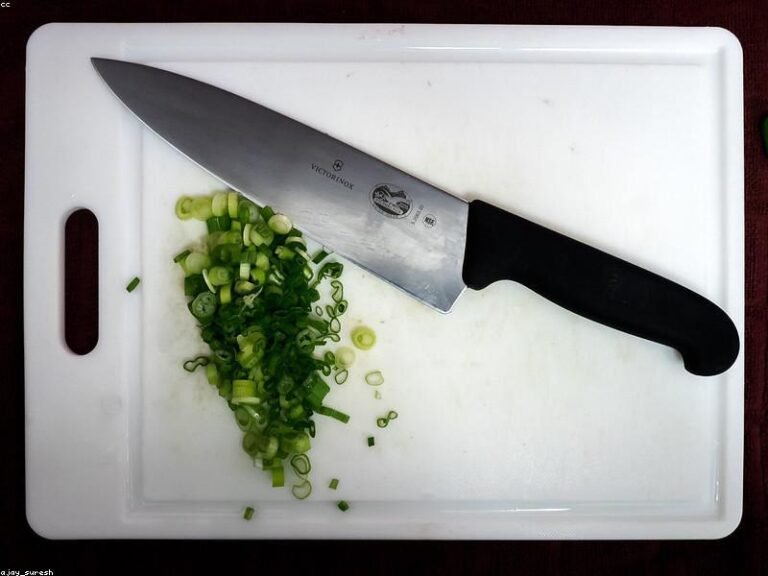
- Victorinox Fibrox Pro 8″ Chef’s Knife (stamped) — Thin, light, and easy to maneuver through long prep sessions. Consistently rated one of the best value knives on the market.
- Mercer Culinary Millennia 8″ Chef’s Knife (stamped) — A textured, slip-resistant handle paired with a light stamped blade favored in culinary schools.
- Wüsthof Classic 8″ Chef’s Knife (forged) — Full bolster, triple-riveted handle, and noticeably more heft — the traditional German benchmark.
- Zwilling Pro 8″ Chef’s Knife (forged) — A forged, full-tang design with a curved bolster built for a classic rocking cut motion.
This article may contain affiliate links. If you purchase a product through one of these links, Bladeowl may earn a commission at no extra cost to you. This never influences our editorial independence or which products we recommend.