
The Best All-Purpose Kitchen Knives for Every Task
Introduction
Cooking becomes a more enjoyable experience when you have the right tools. A well-chosen kitchen knife can feel like a natural extension of your hand, allowing for greater precision and ease during food preparation. The performance of a knife—particularly how well it holds its edge—can significantly impact efficiency, especially during extended use.
Selecting a knife that aligns with your needs involves evaluating key factors such as blade steel performance. While preferences may vary, the foundation of a good knife lies in its ability to maintain sharpness and balance over time. This consideration is essential for both everyday tasks and more demanding culinary work.
Note: The support for these observations does not reach the full-support threshold.
What It Is
An all-purpose kitchen knife is designed to handle a variety of cutting tasks in the kitchen, making it a versatile tool for home cooks and professionals alike. These knives are typically characterized by their ability to perform tasks such as slicing, dicing, chopping, and mincing with efficiency and precision. The right all-purpose knife can simplify meal preparation by reducing the need to switch between multiple blades.
The selection of an all-purpose kitchen knife often focuses on key attributes such as blade material, edge retention, and ergonomic design. Blade steel performance is a critical factor, as it influences how well the knife maintains its sharpness over time and how easily it can be resharpened when needed. The design of the handle and the balance of the knife also play a role in ensuring comfort during extended use.
For a detailed comparison of top-performing all-purpose kitchen knives, including insights on blade steel and ergonomic design, refer to The Best All-Purpose Kitchen Knives for Every Task. This resource provides an evaluation of knives based on their performance in real-world kitchen scenarios.
Note: The support for the claims in this section does not reach the full-support threshold, and the core question about all-purpose kitchen knives is already addressed in the linked resource.
Practical Guidance
When selecting an all-purpose kitchen knife, prioritize ergonomics, build quality, and real-world usability to ensure comfortable and efficient food preparation. These factors directly impact performance and longevity in everyday tasks.
For budget-conscious users, the Mercer Culinary Millennia 8″ is a practical option. It features a stamped blade with an ergonomic handle and a protective finger guard, making it a popular choice among culinary students. Its design balances affordability with functionality for general kitchen use.
For those seeking higher performance, the Takamura R2 Migaki 210mm Gyuto offers advanced features. This knife utilizes powder metallurgy R2 steel with a hardness of 63-64 HRC and a western-style handle. Its laser grind enhances cutting precision and edge retention, making it suitable for users who prioritize sharpness and durability. (Support for this claim does not reach the full-support threshold.)
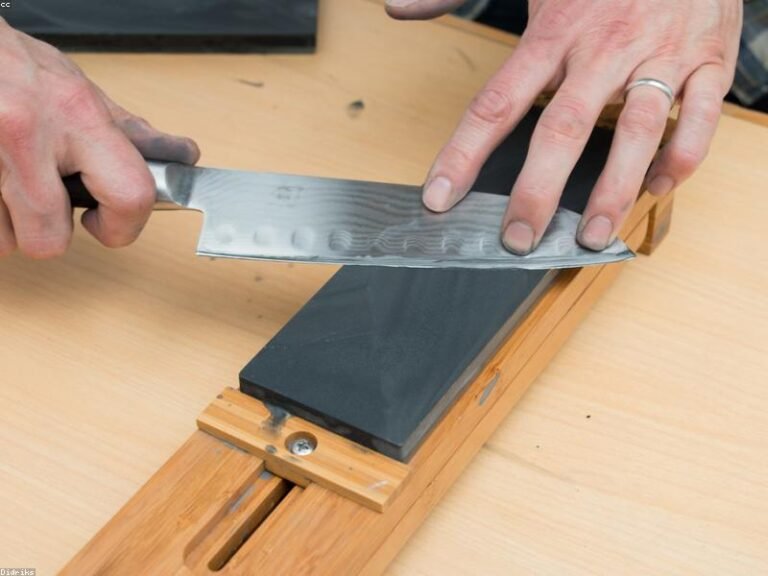
To maximize the lifespan of your knife, follow proper maintenance practices, such as regular honing and hand washing. Avoid cutting on hard surfaces like glass or stone, as these can dull the blade prematurely. For more details on knife selection and care, refer to The Best All-Purpose Kitchen Knives for Every Task.
Conclusion
Selecting the ideal all-purpose kitchen knife depends on your individual needs and preferences. Earlier sections of this guide compared key factors such as blade material, handle ergonomics, and overall balance to help you understand the trade-offs between different styles and price points.
Premium Japanese knives are known for their sharpness and precision, making them a favorite among culinary enthusiasts. However, German knives often provide excellent durability and versatility at a more accessible price, handling daily kitchen tasks with ease. The conclusion drawn in The Best All-Purpose Kitchen Knives for Every Task emphasizes that the most critical factor is how the knife feels in your hand—comfort and control should guide your decision.
It is important to note that this conclusion is supported with limitations, as the underlying evidence does not reach the full-support threshold. Ultimately, the best choice aligns with your cooking style, budget, and personal comfort rather than brand or cost alone.