Japanese vs German Kitchen Knife Steel Philosophy Compared
Japanese and German kitchen knives come from two different culinary traditions, and the steel and geometry choices behind each reflect two different answers to the same question: what should a knife trade away to get sharper or tougher? Neither philosophy is wrong, but they lead to knives that behave very differently in the hand.
The Japanese Approach: Hard and Thin
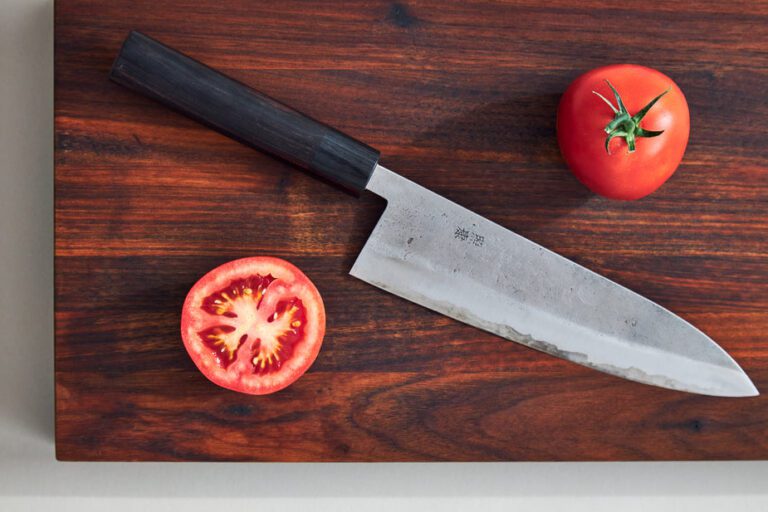
Japanese kitchen knives commonly use harder steels, stainless options like VG-10, or traditional carbon steels such as Shirogami and Aogami (white and blue paper steel), typically hardened to a higher point on the Rockwell scale than most Western knives. That extra hardness is paired with a thinner grind and a more acute edge angle. The result is a blade that takes an exceptionally fine edge and holds it longer between sharpenings, well suited to precise push cuts through fish, vegetables, and other soft materials where a clean, controlled slice matters. The tradeoff is brittleness: a harder, thinner edge is more prone to chipping if it twists sideways in the cut or contacts bone, and it demands more careful technique and more careful sharpening to maintain.
The German Approach: Softer and Tougher
German kitchen knives have traditionally used softer stainless alloys, tempered to a lower hardness range, ground with a thicker and more obtuse edge angle. That geometry sacrifices some fine edge retention in exchange for toughness: the edge resists chipping and rolling under harder use, contact with bone, careless technique, or the rocking chop motion common in Western prep work. A German blade will need honing or resharpening more often to stay working, but it’s far more forgiving of the kind of use a home kitchen actually sees.
Hardness and Toughness Are a Tradeoff, Not a Ranking
In steel generally, hardness and toughness pull against each other. Harder steel holds a finer edge longer but resists deformation less, so it’s more likely to chip when stressed. Softer steel dulls faster but flexes and rolls rather than fracturing, which is a more forgiving failure mode in daily use. Japanese and German philosophies sit at different points on that same spectrum rather than representing fundamentally different metallurgy goals.
How This Maps to Technique
The geometry differences track real differences in cutting motion. Traditional Japanese single-bevel and thin double-bevel knives suit a controlled push or pull cut, common in preparing fish and vegetables with minimal cell damage. German knives, often with a fuller belly and a heavier bolster, suit the rocking chop motion widely taught in Western culinary training, which puts more lateral stress on the edge. Modern manufacturers have blurred these lines considerably, building Western-handled knives around harder Japanese-style cores and vice versa, but the underlying philosophy, sharper and more fragile versus tougher and more forgiving, is still a useful way to think about what any given knife is optimized for.
Real Knives That Illustrate Each Philosophy
These philosophies aren’t just theory — they show up clearly in specific, well-known knives on the market today.
- Global G-2 — A classic Japanese-style all-purpose knife with a hard, thin CROMOVA 18 stainless blade and a lightweight, one-piece handle. Built for fine push cuts and precision work.
- Tojiro DP Gyuto — A VG-10 core clad in softer stainless, giving it a harder, sharper edge than most Western knives while keeping some added durability from the cladding. A popular entry point into Japanese-style cutlery.
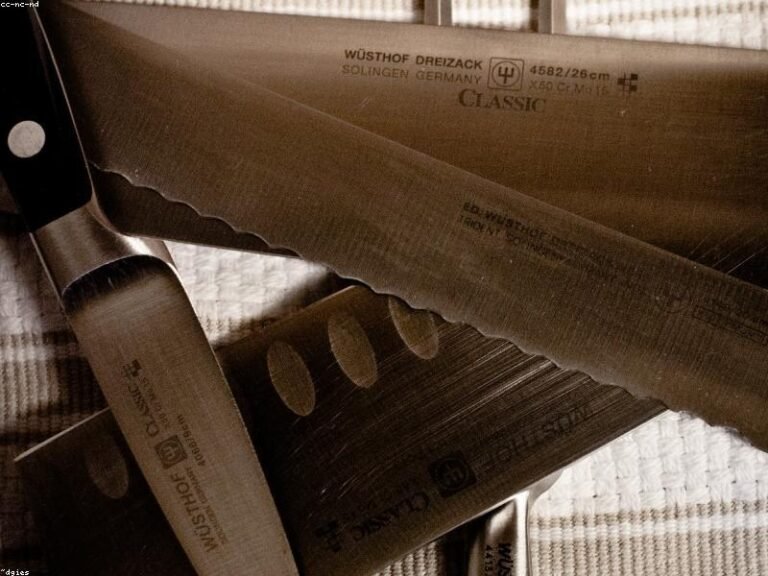
- Wüsthof Classic — The archetypal German knife: a full bolster, softer tempered stainless steel, and a thicker edge angle built for the rocking chop and everyday abuse of a busy home kitchen.
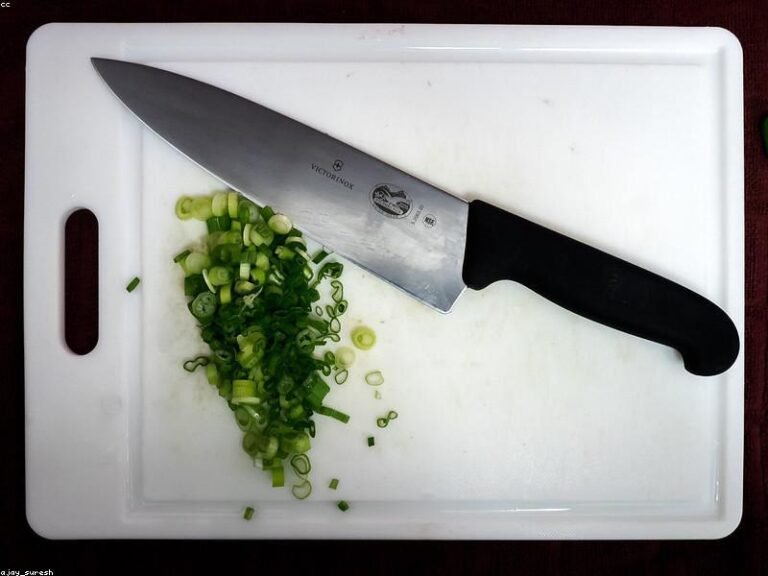
- Victorinox Fibrox Pro — A softer, tougher Western-style blade at a budget price. Easy to resharpen and highly forgiving, making it a workhorse for cooks who value durability over ultimate edge retention.
Comparing these side by side makes the tradeoff tangible: the Global and Tojiro reward careful technique with a finer, longer-lasting edge, while the Wüsthof and Victorinox trade some of that sharpness for an edge that shrugs off the bumps of daily kitchen use.
This article may contain affiliate links. If you purchase a product through one of these links, Bladeowl may earn a commission at no extra cost to you. This never influences our editorial independence or which products we recommend.