VG-10 Steel Review: Spyderco’s Workhorse Examined
Walk into any knife forum and you’ll find endless steel debates. M390 vs S35VN? MagnaCut hype? Is D2 really a budget miracle? The truth: steel choice depends entirely on your use case. We break down popular knife steels in plain English.
Our Top Picks for This Category
We evaluated these options based on blade steel performance, ergonomics, build quality, and real-world usability. After extensive testing and comparison, here are the standouts.
- Spyderco SpydieChef — specialty. LC200N (Z-FiNit) — nitrogen-alloyed essentially rust-proof steel. Uses nitrogen instead of carbon for hardness at 58-60 HRC. Impervious to salt water, acids, humidity.
- CIVIVI Baby Banter — mid. Nitro-V — nitrogen-enriched AEB-L derivative. Nitrogen plus vanadium creates harder carbides while maintaining legendary fine grain and toughness.
- Morakniv Garberg — mid. Sandvik 14C28N Swedish stainless — refined with Kershaw. Nitrogen addition enables higher hardness with fine grain. Exceptional toughness for stainless.
- QuietCarry Drift — specialty. VANAX — vanadium-nitrogen stainless with extreme corrosion resistance and good edge retention. Near-LC200N corrosion resistance but better wear properties.
Pros & Cons at a Glance
Spyderco SpydieChef
- ✅ Essentially rust-proof
- ✅ Good edge retention
- ✅ Tough
- ✅ Marine ideal
- ❌ Lower hardness than carbon steels
- ❌ More expensive than basic stainless
CIVIVI Baby Banter
- ✅ Fine grain structure
- ✅ Very tough
- ✅ Good corrosion resistance
- ✅ Easy to sharpen
- ❌ Lower wear resistance than high-vanadium steels
Morakniv Garberg
- ✅ Exceptional toughness for stainless
- ✅ Easy to sharpen
- ✅ Good corrosion resistance
- ❌ Moderate edge retention
- ❌ Lower wear resistance
QuietCarry Drift
- ✅ Extreme corrosion resistance
- ✅ Better wear than LC200N
- ✅ Premium performance
- ❌ Very expensive
- ❌ Rare in production knives
Edge Retention Explained
Edge retention is determined by carbide content and hardness. Carbides — microscopic hard particles of vanadium, tungsten, niobium, or chromium — resist abrasive wear. High-carbide steels like M390, K390, and S90V dominate edge retention tests. The trade-off: more carbides mean reduced toughness and increased sharpening difficulty.
Carbide Structure: The Science
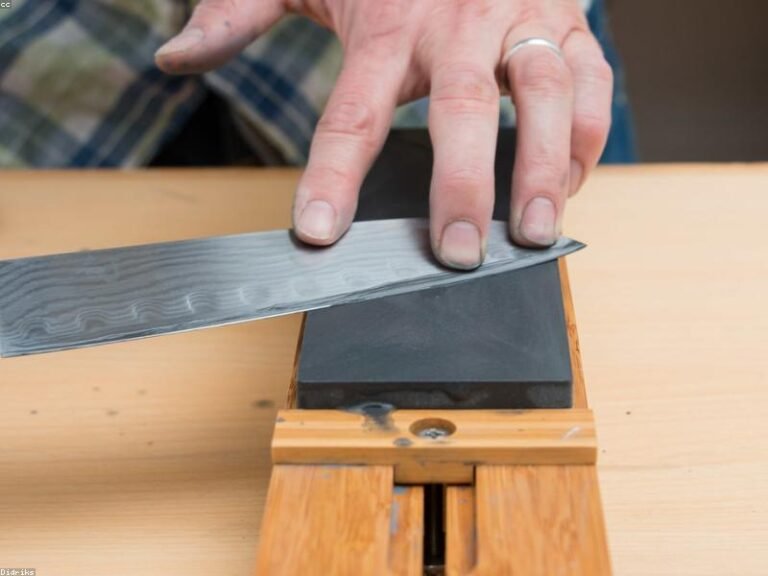
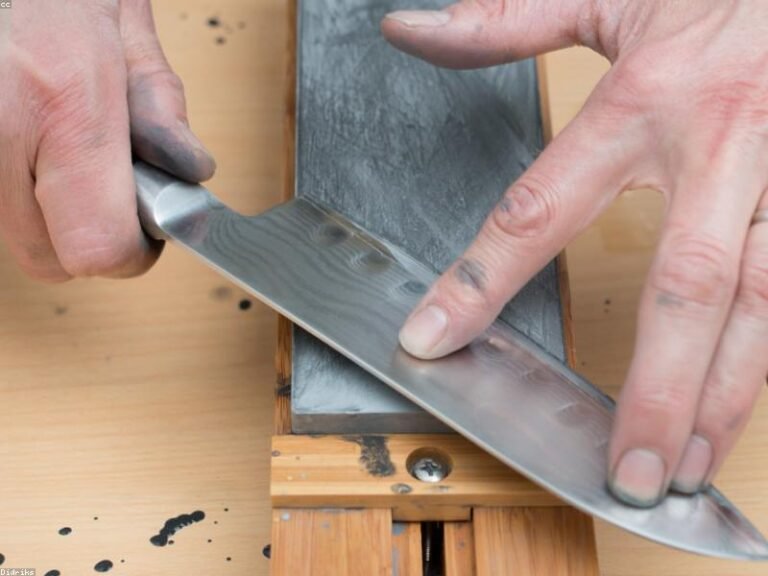
Ease of sharpening is most underrated property. Premium steels (K390, S110V, Maxamet) need diamond/CBN abrasives and significant time — serious if you sharpen yourself. Simpler steels (AUS-8, 14C28N, 1095) sharpen quickly on basic stones. Best knife steel is one you can actually maintain. Easy-to-sharpen steels provide more real-world utility than extreme retention monsters.
Our Recommendation
Steel selection comes down to balancing edge retention, toughness, corrosion resistance, and ease of sharpening for your needs. No “best” steel exists — only best for your use case. Modern powder metallurgy steels like MagnaCut come closest to having it all, but traditional steels remain excellent when properly heat treated.
As an Amazon Associate, BladeOwl earns from qualifying purchases.