How Often Should You Sharpen Your Kitchen Knives? The Honest Schedule Nobody Follows
Nobody follows the sharpening schedule. Not even the people who write them. The “sharpen every 2-3 months” advice you’ve read everywhere? Made up. Imaginary. Based on nothing except someone trying to fill a content calendar. The actual answer depends on your knife steel, your cutting board, your technique, and how much you cook. But once you know the real signals, you’ll never sharpen on a schedule again — you’ll sharpen exactly when your knife tells you to.
Why the “Every 3 Months” Rule Is Costing You Steel
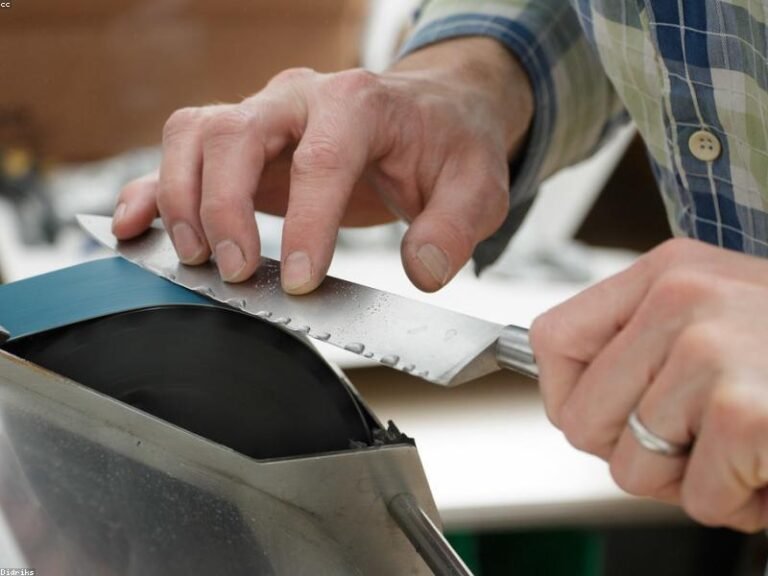
Here’s the ugly truth: If you’re sharpening a German steel chef knife every 90 days on a whetstone, you’re removing steel your knife didn’t need to lose. Soft steel (56-58 HRC) rolls before it dulls. The edge apex bends sideways, so it feels dull but the steel is still there — it’s just pointing in the wrong direction. Hitting a whetstone on a rolled edge is like replacing your tires because the pressure is low.
Conversely: If you’re only honing a VG-10 or SG2 Japanese knife and never actually sharpening it, you’re riding an edge that’s been degrading for months. High-hardness steel doesn’t roll — it wears. The apex gradually rounds over from use, and no amount of ceramic rod work brings back steel that’s already gone.
The right schedule isn’t a date on the calendar. It’s a set of physical tests that tell you exactly what your edge needs — realignment or abrasion.
The 3 Tests That Tell You Exactly What Your Knife Needs
Before you touch a single sharpening tool, run these in order:
Test 1: The Paper Slice (10 seconds)
Hold a sheet of printer paper by one corner. Draw your knife through it at a slight angle. A truly sharp blade bites immediately and glides through — no hesitation, no tearing. A blade that catches, tears, or requires sawing motion? Something needs attention.
If it passes: Your edge is sharp. No action needed.
If it fails: Move to Test 2.
Test 2: The Tomato Skin (15 seconds)
Lay a ripe tomato on your cutting board. Place the heel of your knife on the skin — don’t use a sawing motion, just push straight down. If the edge bites through the skin without squashing the tomato, your edge is aligned and sharp. If the tomato skin dimples before the blade finally breaks through (or doesn’t break through at all), you’ve got a problem.
If it passes: Honing rod. Your edge needs realignment, not sharpening.
If it fails: Move to Test 3.
Test 3: The Nail Drag (5 seconds)
Gently drag the edge across your thumbnail — from spine to edge, never into the edge. A knife that’s truly dull will glide smoothly, offering no resistance because the apex is completely rounded. A knife that still has an apex — even a rolled one — will catch and bite.
If it catches: Your steel is still there. Honing rod, 30 seconds.
If it slides: Actual sharpening required. Whetstone time.
The Real Sharpening Schedule By Steel Type
Assuming daily home cooking (1-2 hours of use), here’s what your actual maintenance rhythm looks like:
| Steel Type | Hone/Rod | Whetstone | Example Knives |
|---|---|---|---|
| German Soft (X50CrMoV15, 56-58 HRC) | Every 2-3 cooking sessions | Every 6-8 weeks | Wüsthof Classic, Zwilling Pro, Mercer Genesis |
| Mid-Range Stainless (AUS-10, 14C28N, 58-60 HRC) | Every 5-7 sessions | Every 3-4 months | MAC Professional, Tojiro DP, Misono UX10 |
| Japanese Premium (VG-10, SG2, 60-64 HRC) | Every 2-3 sessions (ceramic only!) | Every 4-6 months | Shun Classic, Miyabi Kaizen, Takamura R2 |
| Carbon Steel (Aogami, Shirogami, 62-65 HRC) | Every 1-2 sessions | Every 2-3 months | Masamoto, Takeda, Moritaka |
| EDC/Pocket Knife (S30V, D2, 154CM) | Field sharpener as needed | Every 4-5 weeks with heavy use | Benchmade, Spyderco, Zero Tolerance |
Notice the counterintuitive pattern: softer steel needs more frequent honing but less frequent actual sharpening. Harder steel is the opposite — it holds an edge longer but needs its edge actually rebuilt more often because it doesn’t respond to honing.
The Professional Kitchen Reality Check
Walk through any professional kitchen at 4 PM — right before dinner service starts — and you’ll see every line cook running their knife across a honing rod. Not because their knives are dull. Because a knife that’s been through 4 hours of prep has a rolled edge, and 30 seconds on a steel resets it.
Those same cooks send their knives out for professional sharpening every 8-12 weeks. They hone constantly and sharpen rarely. The honing maintains the edge; the sharpening only happens when the edge is truly gone.
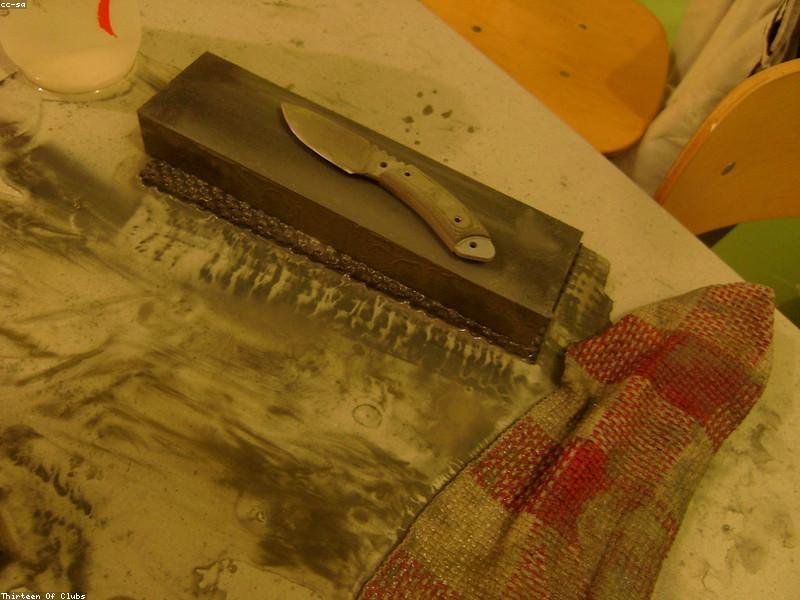
You don’t need a $40 sharpening service. A King 1000/6000 combination whetstone and 10 minutes of your time every few months produces an edge that matches or exceeds what most sharpening services deliver — because you’re taking the time to hit both grits properly, and they’re likely just running it through a belt grinder.
King KW65 1000/6000 Whetstone —
The $15 Tool That Makes You Sharpen Less Often
Remember how German steel rolls before it dulls? A ceramic honing rod — like the Idahone 12-inch — realigns that rolled edge in 15 seconds between cooking sessions. Every time you hone instead of sharpen, you’re preserving blade steel. Over the life of a $120 chef knife, proper honing can reduce your sharpening frequency by 70%. That’s years of additional life, simply because you’re not grinding away steel unnecessarily.
The ceramic rod pays for itself in saved steel, saved time, and saved frustration the very first month you use it. When you feel that edge bite into paper again after 15 seconds of honing — the same edge that was mangling tomatoes 60 seconds ago — you’ll understand why professional kitchens keep a rod closer than their phone.
Idahone 12″ Ceramic Honing Rod —
The Paper Test Habit That Changes Everything
Here’s a 10-second habit that will transform your relationship with every knife you own: before you start cooking, run your main knife through a sheet of printer paper. If it glides through silently, cook with confidence. If it catches, 30 seconds on the ceramic rod. If the rod doesn’t fix it, schedule 10 minutes this weekend for the whetstone.
That’s the entire system. Test. Rod. Stone. Repeat. No calendar dates to remember. No “feel” or intuition required. Just a piece of paper and the right tools.
A Year From Now, Your Knife Tells a Story
When you’re pulling your chef knife through a perfectly ripe heirloom tomato next summer — the blade sinking through the skin with zero pressure, leaving clean edges on slices thin enough to read through — you won’t remember the last time you “sharpened” it. Because the ceramic rod has been doing the heavy lifting all year, and the whetstone visits have been so rare and so effective that they barely register.
That’s not a schedule. That’s a relationship with your tools. And it starts with the paper test, right now, on the knife sitting in your block.
One final thing: the King combination stone I mentioned? It’s been the entry-level gold standard for 40 years for a reason. The 1000-grit side cuts fast enough to establish an edge in under 5 minutes, and the 6000-grit side polishes to a near-mirror finish. For under $30, it’s the tool that makes the entire system work.
BladeOwl.com is reader-supported. When you buy through our links, we may earn a commission at no extra cost to you.