
Best Whittling and Carving Knives for Beginners
Whittling and carving reward patience more than expensive tools, but the right knife makes the learning curve much less frustrating. A blade that’s the wrong shape or too hard to sharpen will fight you on every cut. Here’s what actually matters when choosing your first carving knife.
Fixed Blade, Short Length, Comfortable Grip
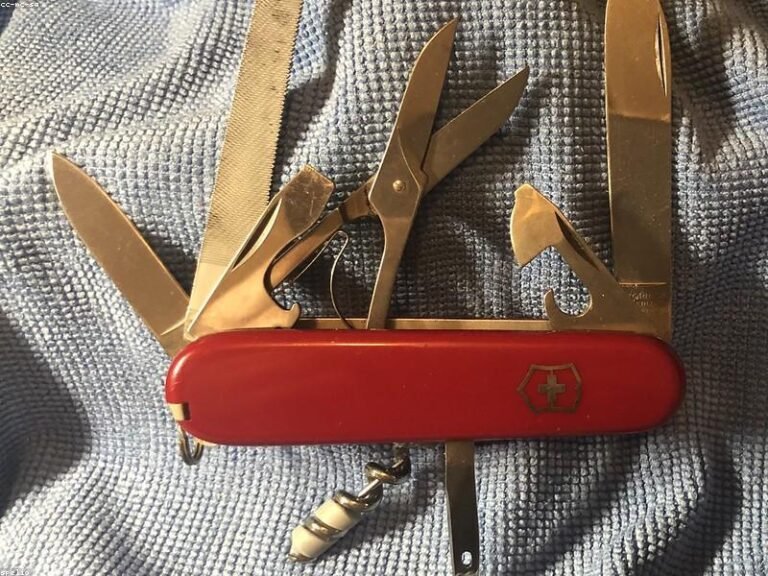
Carving knives are almost universally fixed blades, and for good reason: you need total confidence that the blade won’t shift or fold while you’re pushing it through wood with your thumb close to the edge. A folding mechanism is one more variable you don’t need while learning fine control.
Short blades are the norm, generally in the range of two to three inches. A short blade gives you far more precision than a long one, since you’re making small, controlled paring and detail cuts rather than long slicing strokes. The handle matters just as much as the blade: look for a shape that fills your palm comfortably and lets you choke up close to the blade for detail work without your fingers cramping. A handle that’s too thin or has sharp ridges will become uncomfortable fast during a long carving session.
Common Blade Shapes and What They’re For
- Sheepsfoot blade: A straight edge with a spine that curves down to meet the point, and no sharp point to speak of. This shape is a good general-purpose carving profile because the straight edge is easy to control for roughing out shapes, and the blunt tip reduces the risk of accidental punctures.
- Detail or chip-carving blades: Shorter and often narrower, sometimes with a more acute point, these are built for small, precise cuts — cutting facets, adding texture, and finishing details rather than removing large amounts of wood.
- Hook knife (spoon knife): A curved blade specifically for hollowing out concave surfaces, most associated with spoon carving and bowl work. It scoops wood in a way a straight blade physically can’t, and it’s the one specialty shape worth adding once you move beyond flat whittling into hollow forms.
A single sheepsfoot-style blade is a perfectly good place to start; add a detail blade and a hook knife later as your projects call for them.
Steel Hardness: The Tradeoff You Should Understand
Harder steel holds a sharp edge longer between sharpenings, which sounds like an unambiguous win — but it comes with a real cost. Harder steel is also more difficult and time-consuming to sharpen, especially in the field with basic stones, and it can be more prone to small chips at very thin, acute edge angles if it meets a knot or is twisted under load. Softer steel dulls faster but is quick and easy to bring back to a keen edge with minimal equipment, which matters if you’re carving for hours and want to touch up the edge without stopping for long. Many carvers deliberately choose a moderately hard steel rather than the hardest available, precisely because carving involves constant edge contact with wood grain, knots, and grit, and an edge you can refresh easily in the field is often more useful than one that’s merely durable.
The Strop Is Not Optional
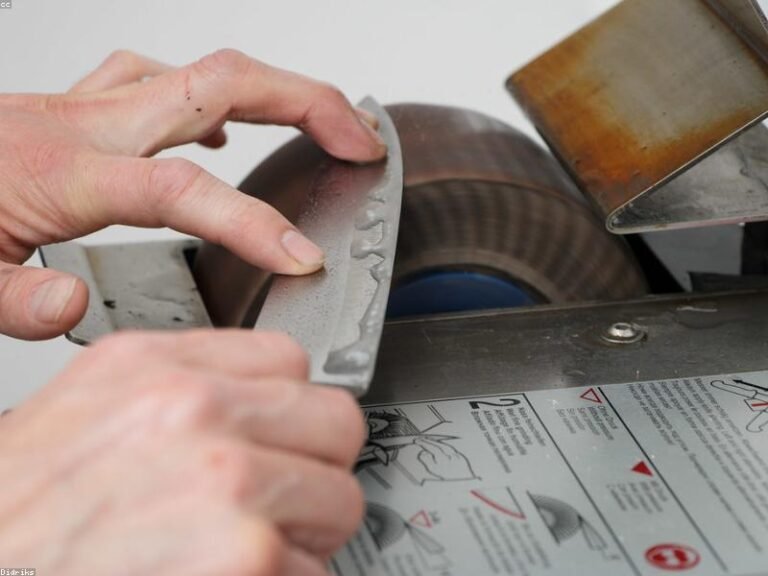
A leather strop, typically loaded with a fine polishing compound, is how carvers maintain a keen edge between full sharpenings. A few passes on a strop after every carving session realigns the edge and removes the microscopic burr that builds up from cutting wood fiber, keeping the knife shaving-sharp far longer than sharpening alone. Skipping the strop is the most common reason a carving knife feels like it dulls quickly — it’s usually not actually dull, just rolled at the very edge, and a strop fixes that in seconds.
Safety Gear Isn’t Overkill
Because carving involves cutting toward your own hands far more than most knife use, dedicated safety gear is standard practice, not a beginner crutch. A cut-resistant glove on the hand holding the workpiece protects against slips, and a thumb guard (a small leather or metal shield) protects the thumb you’ll often use to push the blade through a cut. Experienced carvers still get small cuts occasionally, but consistent use of a glove and thumb guard prevents the vast majority of them, and there’s no downside to wearing them from day one.
Top Picks for Beginner Whittlers
These knives are well established specifically in the whittling and carving community and represent a good spread of styles and budgets for someone just starting out.
| Knife | What Makes It Notable | Best For |
|---|---|---|
| Flexcut Whittlin’ Jack | A two-blade folding knife (roughing blade plus detail blade) made specifically for whittling, with steel that Flexcut hardens and hollow-grinds for carving rather than general EDC use. | Best dedicated whittling knife |
| Morakniv Wood Carving 120 | A simple, inexpensive fixed-blade carving knife with a short, single-bevel blade that’s a common first recommendation in beginner carving guides. | Best value / first knife |
| BeaverCraft C1 Sloyd Knife | From a brand that builds its whole lineup around wood carving, the C1 has a traditional Scandinavian sloyd profile suited to general-purpose whittling. | Best dedicated carving brand option |
| Opinel No.7 | A classic, affordable carbon-steel folder that takes a keen edge easily and is commonly used as an entry point into whittling before buying dedicated carving tools. | Best multi-purpose starter knife |
This article may contain affiliate links. If you purchase a product through one of these links, Bladeowl may earn a commission at no extra cost to you. This never influences our editorial independence or which products we recommend.