Civivi Elementum Review — The Best EDC Knife Under $60? (2026)
The Knife That Defined a Generation of EDC
If there’s one folding knife that has done more to democratize quality EDC than any other in the last decade, it’s the Civivi Elementum. Since its debut in 2019, the Elementum has sold hundreds of thousands of units, spawned dozens of variants, and become the default answer to the question “what knife should I buy for $50?” It’s the knife that convinced budget-conscious enthusiasts that Chinese manufacturing could compete with American and Japanese brands on quality, and it’s the knife that introduced more people to the satisfaction of a well-made pocket tool than anything since the Ontario RAT.
But with so many variants now available — flipper, button lock, fixed blade, different steels, different handle materials — which Elementum is right for you? We’ve owned and carried multiple versions over the years, and here’s our detailed, hands-on breakdown of the Elementum family in 2026.
The Original: Civivi Elementum Flipper (D2)
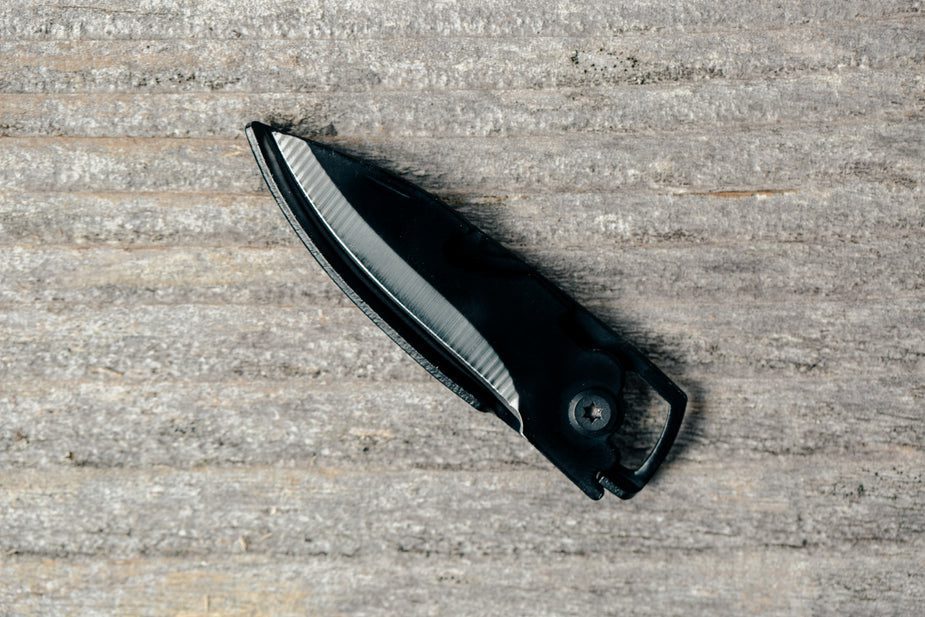
The original Elementum is a flipper-operated liner lock with a 2.96-inch drop-point blade, caged ceramic ball bearings, and G10 or micarta handle scales. It’s the knife that put Civivi on the map, and it remains the reference design against which all budget flippers are measured.
Blade and Steel
The 2.96-inch D2 steel blade is the heart of the Elementum’s appeal. D2 is a high-carbon tool steel with chromium content that puts it right on the border between “carbon steel” and “stainless.” In practice, it’s semi-stainless — it’ll resist light moisture but will rust if left wet or exposed to salt. The trade-off is excellent edge retention and toughness for the price. Civivi’s heat treatment of D2 has been independently tested and consistently lands at 60-61 HRC, which is ideal for this steel — hard enough to hold an edge, not so hard that it becomes brittle.
The blade shape is a versatile drop point with a high flat grind that prioritizes slicing performance. At 0.12 inches thick at the spine with a thin edge geometry, the Elementum glides through cardboard, zip ties, food prep, and everyday cutting tasks with minimal resistance. This is a knife designed to cut, not to be a sharpened pry bar — and we appreciate that focus.
Action and Deployment
The caged ceramic ball bearings give the Elementum a smooth, fast flipper action that rivals knives at twice the price. Out of the box, the detent is perfectly tuned — firm enough to prevent accidental opening, light enough for a satisfying flick. The flipper tab is generously sized and textured, making deployment reliable even with cold or wet hands. After the briefest of break-in periods (maybe 50 cycles), the blade deploys with authority and drops shut with a gentle shake.
One detail that experienced users notice: the Elementum’s detent ball track on the blade tang is notably well-executed. On cheaper flippers, the detent track can develop a groove that makes the action feel gritty over time. On the Elementum, the ceramic detent ball and polished tang interface stay smooth even after thousands of openings.
Ergonomics and Carry
At 2.9 ounces and 0.43 inches thick, the Elementum disappears in the pocket. The deep carry clip (tip-up, reversible for left/right) sits the knife deep enough that only the clip itself is visible. The contoured G10 or micarta handle scales are comfortable in any grip, though the handle is just barely long enough for a full four-finger grip on large hands. If you wear XL gloves, your pinky might hang off the end slightly.
The liner lock is well-executed — easy to access with either thumb, positive engagement with no lock stick, and secure lockup with no blade play in any direction. It’s a simple, proven lock design executed with precision.
Check Civivi Elementum (Flipper) on Amazon →
Civivi Elementum Button Lock – The Fidget-Friendly Evolution
Released in 2022, the Elementum Button Lock (often called the “Elementum II”) replaces the flipper tab and liner lock with a thumb stud deployment and a button lock mechanism. The blade is the same 2.96-inch drop point in D2 (or 14C28N on some variants), but the opening and closing experience is completely different.
The button lock allows the blade to swing freely when the button is depressed — you can flick it open and closed with one hand without touching the blade. This has made the button lock Elementum a favorite among fidgeters and anyone who appreciates one-handed closing. The action is hydraulic and satisfying, with a distinctive “thunk” when the blade seats against the stop pin.
The trade-off: button locks are inherently less secure than liner locks or compression locks when subjected to spine pressure. In normal EDC use, this doesn’t matter — you’re cutting, not batoning firewood. But it’s worth knowing that the button lock Elementum is a cutting tool, not a hard-use blade. We’ve carried one for over a year and never had the lock fail during normal use, but we also don’t use it for anything that would stress the mechanism.
The thumb stud placement on the button lock version isn’t perfect — it’s positioned slightly lower on the blade than ideal, which means your thumb’s arc of travel is shorter than it could be. It’s not bad, it’s just not as intuitive as the flipper on the original. After a few days of carry, your thumb learns the motion and it becomes automatic.
Check Civivi Elementum Button Lock on Amazon →
Civivi Elementum Fixed Blade – The Field Companion
Civivi expanded the Elementum line into fixed blades in 2023, and the result is something entirely different from the folders. The fixed blade Elementum features a 3.47-inch 14C28N stainless steel blade with a full tang, canvas micarta handle scales, and a molded Kydex sheath. It’s essentially a compact bushcraft/utility knife wearing Elementum styling.
The 14C28N steel is a significant upgrade from D2 for a fixed blade. It’s fully stainless (no rust worries in the field), takes a finer edge than D2, and is easier to sharpen. For a knife that might see food prep, wet conditions, and general outdoor use, 14C28N is the right call. The blade stock is thicker than the folders (0.13 inches) for added toughness, and the high flat grind maintains decent slicing geometry.
The handle ergonomics are excellent — the micarta scales are contoured and comfortable, and the forward finger guard prevents your hand from sliding onto the blade during hard use. The Kydex sheath provides positive retention and comes with a Tek-Lok-compatible mounting pattern for belt or pack carry.
If you like the Elementum aesthetic but need a fixed blade for camping, hiking, or outdoor work, this is a solid choice at a reasonable price. It’s not going to replace a dedicated bushcraft knife like the ESEE 4 or Mora Garberg, but at around $65-75, it doesn’t need to.
Check Civivi Elementum Fixed Blade on Amazon →
Elementum Variants at a Glance
| Variant | Blade | Steel | Lock | Deployment | Weight | Price |
|---|---|---|---|---|---|---|
| Original Flipper | 2.96″ Drop Point | D2 | Liner Lock | Flipper Tab | 2.9 oz | ~$55 |
| Button Lock | 2.96″ Drop Point | D2 / 14C28N | Button Lock | Thumb Stud | 2.95 oz | ~$65 |
| Fixed Blade | 3.47″ Drop Point | 14C28N | N/A (Fixed) | N/A | 5.2 oz | ~$70 |
| Mini Elementum | 2.1″ Drop Point | D2 | Liner Lock | Flipper Tab | 1.8 oz | ~$45 |
How the Elementum Compares to the Competition
Civivi Elementum vs. Ontario RAT 2
The Ontario RAT 2 is the Elementum’s closest competitor in price and size. Both are ~$30-55, both have ~3-inch D2 blades (in their upgraded versions), and both are legendary values. The RAT 2 uses phosphor bronze washers instead of bearings, which means a smoother long-term action but a longer break-in period. The RAT 2’s handle ergonomics are slightly better for larger hands thanks to the longer handle and prominent finger choil. The Elementum counters with better fit and finish, a more refined aesthetic, and bearings that provide a more satisfying deployment. They’re both excellent — the RAT 2 is the work truck, the Elementum is the sports sedan.
Check Ontario RAT 2 on Amazon →
Civivi Elementum vs. CJRB Pyrite
The CJRB Pyrite is the button lock competitor at a similar price. The Pyrite has a slightly shorter blade (2.75″) with a more aggressive wharncliffe-style profile, and CJRB’s proprietary AR-RPM9 steel that’s been well-reviewed for its toughness. The Pyrite’s button lock action is slightly crisper than the Elementum’s, and the multiple deployment options (thumb stud, fuller groove, and front flipper-style) make it more versatile for fidgeting. The Elementum wins on handle ergonomics (the Pyrite is noticeably flatter and less contoured) and blade geometry for general EDC tasks.
Common Issues and Nitpicks
After years of owning and using Elementums, here are the honest downsides:
- The pocket clip screws are tiny: The T6 Torx screws that hold the clip are easy to strip if you’re not using a quality driver. We’ve replaced them on two Elementums with aftermarket T8 screws from a hardware kit.
- D2 can rust: It’s not fully stainless. If you live in a humid climate or sweat heavily, wipe the blade down with a light coat of mineral oil every few weeks. The stonewashed finish helps hide minor spotting.
- The original liner lock access cutout: On left-handed carry, accessing the liner lock requires more thumb contortion than it should. The newer button lock version solves this, but the original flipper is right-hand-biased for closing.
- Flipper tab in pocket: On the original model, the flipper tab creates a small protrusion in your pocket that can catch your hand when reaching for keys or phone. It’s minor, but it’s there.
Which Elementum Should You Buy?
Get the original flipper in micarta if you want the classic Elementum experience. The micarta handles develop a rich patina with use, the flipper action is satisfying and reliable, and at $55 it’s one of the best knife values available. This is the knife we hand to friends who’ve never carried a real EDC knife before.
Get the button lock version if you prioritize one-handed closing and fidget factor. The button lock is genuinely more fun to operate, and the ability to close the knife without putting your thumb in the blade path is a genuine safety advantage. If you can find one in 14C28N steel rather than D2, even better — the full stainless steel means less maintenance.
Get the fixed blade if you want an affordable, attractive fixed blade for camping, hiking, or food prep at a campsite. It’s not the best bushcraft knife in the world, but it’s a great all-around outdoor companion that happens to look excellent.
The Final Verdict
The Civivi Elementum earned its reputation the hard way: by being genuinely excellent at a price point where “good enough” is the norm. Whether you choose the original flipper, the button lock, or the fixed blade, you’re getting a knife with thoughtful design, quality materials, and manufacturing precision that would have been unthinkable at this price a decade ago. It’s the knife we recommend to beginners, the knife we keep coming back to after carrying more expensive blades, and the knife that most often generates “wait, how much did that cost?” reactions when non-knife-people use it. Highly recommended.
This article may contain affiliate links. If you purchase a product through one of these links, Bladeowl may earn a commission at no extra cost to you. This never influences our editorial independence or which products we recommend.