Japanese vs German Kitchen Knives: Steel, Sharpness, and Which Style Fits Your Kitchen
If you cook seriously, you have faced this decision: Japanese or German knives? The two traditions dominate the kitchen knife world, and they represent genuinely different philosophies — not just aesthetic preferences but fundamentally different approaches to cutting. Understanding these differences will save you from buying the wrong knife for your cooking style.
The Fundamental Difference: Hardness and Edge Geometry
German knives (Wüsthof, Zwilling, Messermeister) use softer steel, typically hardened to 56-58 HRC on the Rockwell scale. The blades are thicker at the spine, ground to a more obtuse edge angle (around 20-22 degrees per side), and designed with a pronounced belly curve for the rocking-chopping motion that defines Western cooking technique.
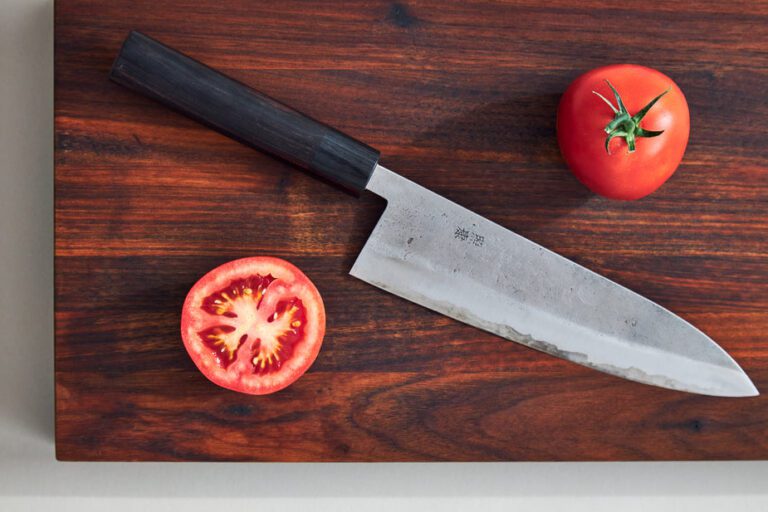
Japanese knives (Tojiro, MAC, Shun, Global, and countless artisan smiths) use harder steel, typically 60-64 HRC. The blades are thinner, ground to a more acute angle (12-16 degrees per side), and designed with flatter profiles suited to push-cutting and draw-cutting. The result is a knife that slices with less resistance but demands more care.
Head-to-Head Comparison
| Characteristic | German Knives | Japanese Knives |
|---|---|---|
| Steel Hardness | 56-58 HRC | 60-64 HRC |
| Edge Angle | 20-22° per side | 12-16° per side |
| Weight | Heavier (240-280g for 8″) | Lighter (160-220g for 210mm) |
| Edge Retention | Good, requires frequent honing | Excellent, holds edge longer |
| Toughness | Very tough, resists chipping | Higher chipping risk |
| Maintenance | Easy, forgiving | Higher, no dishwasher ever |
| Cutting Feel | Robust, authoritative | Precise, laser-like |
German Knives: Strengths and Weaknesses
Why Choose German
German knives are the pickup trucks of the kitchen world — durable, forgiving, and capable of handling abuse that would destroy a Japanese blade. You can rock-chop herbs, split chicken bones (within reason), and cut semi-frozen foods without worrying about chipping the edge. The softer steel rolls before it chips, and a rolled edge comes back with a few strokes on a honing rod. This is why professional kitchens worldwide use German knives: they survive the pace and pressure of restaurant cooking.
The weight of a German knife also works for you. A heavier knife falls through food with less effort on your part. For dense vegetables like butternut squash or celery root, that weight is genuinely helpful. The full bolster on traditional Wüsthof and Zwilling knives provides a finger guard and balance point, though it does make sharpening the entire edge more difficult.
Wüsthof Classic Ikon Chef’s Knife on Amazon →
Where German Falls Short
The softer steel requires more frequent maintenance. You will hone a German knife before nearly every use and sharpen it every few months with regular use. The thicker blade geometry wedges rather than slices through dense foods like large carrots or sweet potatoes. And the edge, while durable, never reaches the screaming sharpness of a well-maintained Japanese knife.
Japanese Knives: Strengths and Weaknesses
Why Choose Japanese
A sharp Japanese knife transforms cooking. The thinner geometry and harder steel produce cuts so clean that herb leaves barely bruise, fish slices remain translucent, and vegetable surfaces stay smooth enough to reflect light. The lighter weight reduces fatigue during long prep sessions. And the edge retention is genuinely superior — a good Japanese knife might go months between sharpenings with proper use and maintenance.
Japanese knives also offer variety that German manufacturers do not match. Beyond the versatile gyuto (Japanese chef’s knife), you have the nakiri for vegetables, the deba for fish butchery, the yanagiba for sashimi, the petty for small tasks. Each shape represents a specialized cutting function refined over centuries.
Tojiro DP Gyuto 210mm on Amazon →
Where Japanese Falls Short
Japanese knives are not forgiving. Twist the blade in a cut, chop through bone, or drop it on a hard floor, and you risk chipping the edge. Hard steel at acute angles is inherently more brittle. You cannot use a traditional honing rod on high-hardness Japanese steel — it will chip the edge. Maintenance requires water stones or ceramic rods, and proper technique matters. Japanese knives also demand immediate cleaning and drying after use — they cannot sit in a sink or go through a dishwasher. The carbon steel variants (Aogami, Shirogami) develop a protective patina but will rust if left wet.
Making the Choice
Choose German if:
- You use a rocking-chopping motion
- You want a tough, forgiving tool
- You are comfortable with regular honing
- You cook dense, hearty foods frequently
- You share your kitchen with others who may not treat knives carefully
Choose Japanese if:
- You push-cut or draw-cut rather than rock-chop
- You value ultimate sharpness and edge retention
- You are willing to learn proper maintenance
- You prepare delicate ingredients (fish, herbs, precise vegetable cuts)
- You enjoy the craftsmanship and tradition behind your tools
Recommended Picks: German vs. Japanese
If you want specific knives to start with, here are two well-regarded options on each side of the divide, from budget to premium.
| Knife | Style | Price Tier | Best For |
|---|---|---|---|
| Victorinox Fibrox Pro 8-Inch | German | Under $50 | Budget entry point into German-style knives |
| Wüsthof Classic Ikon Chef’s Knife | German | $150–$200 | Premium forged German workhorse (linked above) |
| Tojiro DP Gyuto 210mm | Japanese | $50–$100 | Budget entry point into Japanese knives (linked above) |
| Shun Classic 8-Inch Chef’s Knife | Japanese | $150–$180 | Premium Japanese cutting feel with a Western-style handle |
The Hybrid Answer
Many serious home cooks own both. A German chef’s knife for heavy prep, breaking down poultry, and tasks that demand toughness. A Japanese gyuto for precise vegetable work, fish, and the pleasure of cutting with a laser-sharp edge. The two traditions complement each other beautifully, and there is no rule saying you must pick one.
Disclosure: BladeOwl participates in the Amazon Services LLC Associates Program. As an Amazon Associate, we earn from qualifying purchases at no additional cost to you.