Knife Laws in Germany, Austria, and Switzerland — What You Can Legally Carry
Knife laws in the DACH region (Germany, Austria, Switzerland) are complex, sometimes contradictory, and enforced differently across borders that you can cross in minutes. Carrying the wrong knife in the wrong place can result in fines, confiscation, or in severe cases, criminal charges. This guide breaks down exactly what you can and cannot legally carry in Germany, Austria, and Switzerland as of 2026, with practical advice for EDC enthusiasts, hikers, and travelers.
Germany: The Waffengesetz (Weapons Act)
Germany’s knife laws are governed by the Waffengesetz (WaffG), most recently revised in 2020 and further amended in 2024. The law distinguishes between carrying (“Führen”) and transporting (“Transportieren”). Carrying means having a knife accessible on your person; transporting means it’s in a locked container, inaccessible during travel. The distinction is crucial.
Prohibited Knives in Germany
The following knives are completely banned from being carried (even ownership and transport are restricted):
- Automatic knives with blades longer than 8.5 cm (spring-assisted knives where the blade deploys completely automatically). Side-opening and OTF automatics fall under this.
- Butterfly knives (Balisongs) — completely banned from carry.
- Push daggers and any knife designed primarily as a stabbing weapon.
- Gravity knives — restricted.
- Fist knives (knives integrated into knuckle dusters).
What You Can Carry
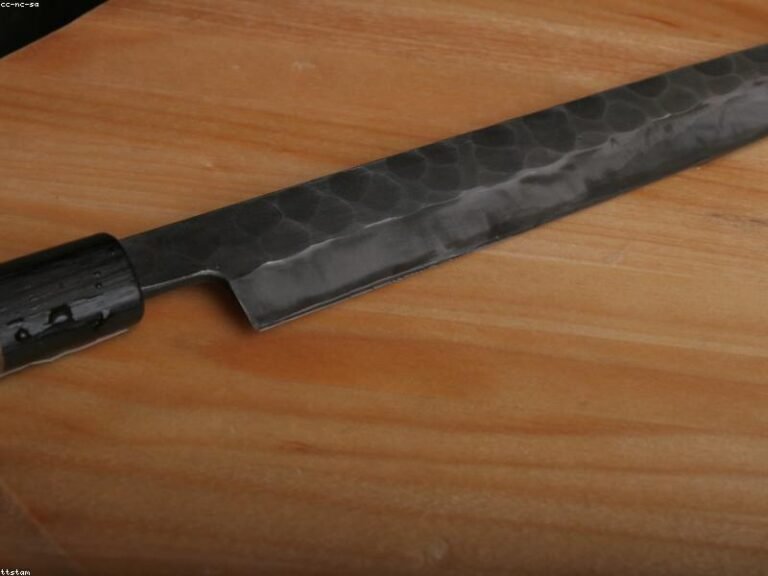
Fixed blades under 12 cm blade length: Legal to carry. Over 12 cm, fixed blades fall under the “dangerous object” category and require a legitimate reason (“berechtigtes Interesse”) such as professional use, hunting, fishing, sports, or cultural tradition. “Self-defense” is explicitly not a legitimate reason.
Folding knives that open with two hands and lock: Generally legal without restriction. The key requirement is “two-handed opening” — no thumb stud, no flipper tab, no opening hole. The classic Buck 110 (nail nick opening) is the quintessential example of a legal German EDC knife.
One-handed opening folding knives that LOCK: Legal to carry, but under the 2024 amendment, they cannot be carried at public events and certain designated zones (train stations, public festivals, public transportation in some states). The legal situation is evolving — some states (Bavaria, Berlin) enforce stricter interpretations.
One-handed opening folding knives that DO NOT lock (slipjoints): Fully legal, no restrictions. The Spyderco UKPK (UK Penknife) is a popular choice that complies with this — one-handed opening via the Spydie hole, but a slipjoint mechanism with no lock.
Weapon-Free Zones (Waffenverbotszonen): Many German cities now designate specific areas (train stations, pedestrian zones at night, public squares) where any knife with a blade over 4 cm is banned. These zones are expanding. Check local signage or city ordinances before carrying in urban areas. Check Germany-legal EDC knives on Amazon.
Austria: Generally More Permissive
Austria’s knife laws (Waffengesetz 1996, §17a) are notably more permissive than Germany’s. The basic principle: a knife is not considered a weapon unless it is designed specifically as a weapon or carried with the intent to use it as one. This means:
- Fixed blades of any length: Generally legal to carry. There is no explicit blade length restriction as there is in Germany.
- Folding knives (locking or slipjoint): Legal regardless of opening mechanism. One-handed opening with a thumb stud, flipper, or opening hole is not restricted.
- Automatic knives: Restricted — generally prohibited from carry unless you have a legitimate professional need. Ownership is permitted.
- Butterfly knives: Prohibited from carry.
- Weapon-Free Zones: Similar to Germany, certain areas may be designated by local authorities. Vienna has been experimenting with weapon-free zones in specific districts at night.
In practice, you can carry a Benchmade Bugout or Spyderco Paramilitary 2 in Austria without legal concern, as long as you’re not at a public event or in a designated restricted zone. The cultural attitude toward knives is also more relaxed — knives are seen as tools, and carrying one for utility is socially accepted. However, fixed blades openly carried (visible on a belt) may draw attention in urban areas even if legal.
Switzerland: The Most Relaxed
Switzerland has the most permissive knife laws in the DACH region, reflecting the country’s cultural relationship with tools and the military tradition (every Swiss soldier keeps their service rifle at home). The Waffengesetz (WG/SR 514.54) governs knife carry:
- Folding knives: All folding knives are legal regardless of length, locking mechanism, or opening method. The Swiss Army Knife is the national symbol of this permissiveness.
- Fixed blades: Legal to carry. No blade length restriction for everyday carry.
- Automatic knives: Legal if the blade opens from the side (not OTF). OTF automatics are restricted but can be carried with a legitimate reason.
- Butterfly knives: Restricted — treated similarly to automatic knives.
- Daggers and push daggers: Prohibited. Symmetrical double-edged blades designed primarily for stabbing are banned from carry.
The key restriction in Switzerland is about intent, not the object itself. Carrying any knife is legal; carrying any knife with the intent to use it as a weapon is illegal. This intent-based approach gives Swiss knife owners significant freedom while allowing law enforcement to address genuine threats. Note that individual cantons may have additional restrictions, particularly in Geneva and Vaud. When attending public events (concerts, festivals, demonstrations), leave all knives at home — event organizers and local police can restrict knives regardless of the federal law.
Cross-Border Considerations
If you travel between these countries, the strictest laws apply where you physically are. A knife legal in Switzerland may be illegal in Germany. Crossing from Austria to Germany with a one-handed locking folder that you’ve carried freely in Vienna could technically violate German law (though enforcement at internal Schengen borders is minimal until you encounter police). The safest cross-border EDC knife for the entire DACH region: a two-handed opening slipjoint or non-locking folder under 8.5 cm blade length. A Victorinox Spartan or Pioneer X is legal in all three countries under almost all circumstances.
Comparison Table: DACH Knife Laws at a Glance
| Knife Type | Germany | Austria | Switzerland |
|---|---|---|---|
| Two-hand opening folder (locking) | Legal | Legal | Legal |
| One-hand opening folder (locking) | Restricted (no events, zones) | Legal | Legal |
| One-hand opening folder (no lock) | Legal | Legal | Legal |
| Fixed blade < 12 cm | Legal | Legal | Legal |
| Fixed blade > 12 cm | Legitimate reason required | Legal (generally) | Legal |
| Automatic / OTF | Banned if blade > 8.5 cm | Banned from carry | Side-opening legal, OTF restricted |
| Butterfly knife | Banned from carry | Prohibited from carry | Restricted |
| Push dagger / fist knife | Banned | Banned / Restricted | Prohibited |
Practical EDC Recommendations for the DACH Region
If you want one knife that’s legal everywhere in Germany, Austria, and Switzerland while still being a capable EDC tool:
- Victorinox Pioneer X / Spartan — The ultimate universal EDC. Legal everywhere, multi-functional, socially accepted.
- Spyderco UKPK (UK Penknife) — One-handed opening, no lock (slipjoint), high-performance S110V or BD1N steel. Legal in all three countries.
- Böker Plus Wasabi — A German-designed slipjoint with modern materials and one-handed opening. Legal everywhere.
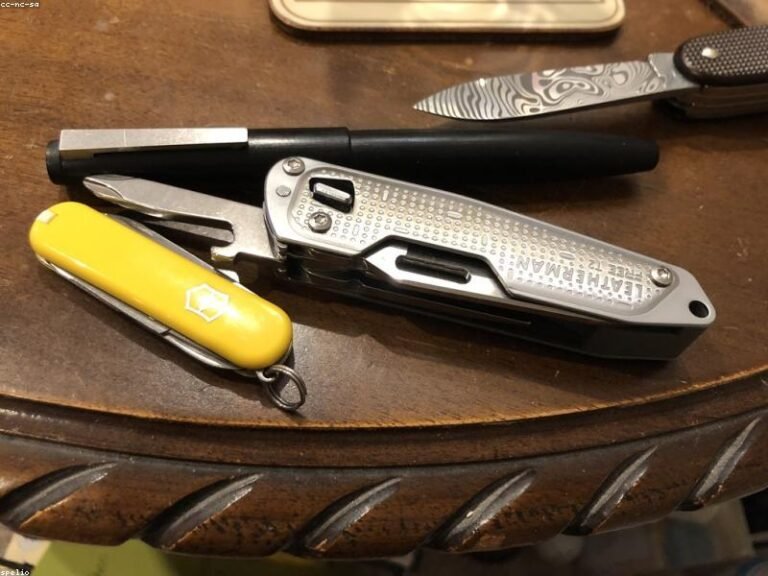
- Victorinox Swiss Tool Spirit — For those who need pliers and tools alongside a blade. The multi-tool context makes it even more socially acceptable.
For outdoor activities (hiking, camping, bushcraft): A fixed blade under 12 cm (e.g., Morakniv Garberg, ESEE Izula) is legal in all three countries. Carry it in your pack, not on your belt, when transiting urban areas — even if legal, a visible fixed blade draws unnecessary attention.
Frequently Asked Questions
What happens if I’m caught with an illegal knife in Germany?
First offense typically results in confiscation and a fine (—100-500). Repeat offenses or carrying in sensitive areas (schools, government buildings, airports) can lead to criminal charges and potentially affect your “Zuverlässigkeit” (reliability assessment), which impacts firearms licenses, security clearance, and certain professions. The 2024 amendments increased penalties for carrying knives at public events.
Is a multi-tool considered a knife under these laws?
Generally yes — the blade on a multi-tool is subject to the same laws as any other knife. However, multi-tools are viewed more leniently by law enforcement because their primary purpose is clearly utilitarian. A Leatherman with a one-hand opening locking blade carried in Germany is technically the same as a dedicated one-hand folder, but in practice, the multi-tool context may lead to more favorable treatment if stopped.
Can I carry a knife on public transportation in Germany?
This is increasingly restricted. The 2024 Waffengesetz amendment allows states to designate public transportation (buses, trams, U-Bahn, S-Bahn) as weapon-free zones. Several states have implemented this for nighttime hours or permanently. A two-handed slipjoint or multi-tool is your safest bet. A locking one-hand opener may be confiscated, especially during increased security periods (New Year’s Eve, major events, Oktoberfest).
Does “legitimate reason” in Germany cover camping?
Yes. Camping, hiking, fishing, hunting, and professional use (trades, forestry, catering) are all accepted legitimate reasons for carrying larger fixed blades. The knife should be carried in a way appropriate to the activity — in a pack while hiking, not on your belt while stopping at a city café on the way to the trailhead. The reason must be genuinely applicable to your current activity.
This article may contain affiliate links. If you purchase a product through one of these links, Bladeowl may earn a commission at no extra cost to you. This never influences our editorial independence or which products we recommend.