Understanding Knife Steel Toughness and Why It Matters
Knife steel is the heart of any blade. Composition, heat treatment, and carbide structure determine edge retention, sharpenability, corrosion resistance, and toughness. Understanding steel helps you make informed decisions. This guide breaks down everything.
Our Top Picks for This Category
We evaluated these options based on blade steel performance, ergonomics, build quality, and real-world usability. After extensive testing and comparison, here are the standouts.
- Spyderco PM2 — premium. CPM-CruWear powder metallurgy tool steel — outstanding toughness with very good wear resistance. Semi-stainless (similar to D2). Tougher than S30V.
- Morakniv Garberg — mid. Sandvik 14C28N Swedish stainless — refined with Kershaw. Nitrogen addition enables higher hardness with fine grain. Exceptional toughness for stainless.
- Spyderco Native 5 Salt — specialty. LC200N in Spyderco”s dedicated Salt series — 100% corrosion proof. Ideal for saltwater fishing, kayaking, and tropical humidity.
- Hogue Deka — premium. CPM-MagnaCut — Dr. Larrin Thomas”s revolutionary 2021 steel. Eliminates chromium carbides, uses vanadium/niobium instead. Unprecedented balance of edge retention, toughness, stain resistance.
Pros & Cons at a Glance
Spyderco PM2
- ✅ Outstanding toughness
- ✅ Very good wear resistance
- ✅ Tougher than S30V
- ❌ Semi-stainless — needs some care
- ❌ Can patina
Morakniv Garberg
- ✅ Exceptional toughness for stainless
- ✅ Easy to sharpen
- ✅ Good corrosion resistance
- ❌ Moderate edge retention
- ❌ Lower wear resistance
Spyderco Native 5 Salt
- ✅ Completely rust-proof
- ✅ Salt water safe
- ✅ Good edge retention
- ❌ Specialty steel — expensive for what you get
Hogue Deka
- ✅ Revolutionary balanced performance
- ✅ Exceptional toughness
- ✅ Excellent stain resistance
- ❌ Very expensive
- ❌ Limited availability
Heat Treatment Importance
Toughness measures resistance to chipping and fracturing — whether your blade chips hitting a staple or rolls on ceramic. Low-alloy steels like 1095, AEB-L, and 14C28N offer best toughness. High-carbide steels sacrifice toughness for wear resistance — M390 chips more easily than 14C28N despite holding edge much longer. Consider your use case.
Toughness: Why It Matters
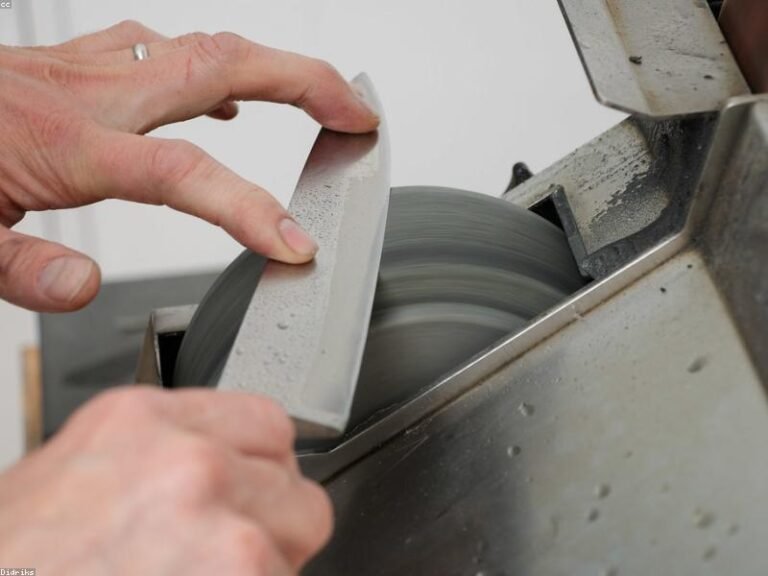
Ease of sharpening is most underrated property. Premium steels (K390, S110V, Maxamet) need diamond/CBN abrasives and significant time — serious if you sharpen yourself. Simpler steels (AUS-8, 14C28N, 1095) sharpen quickly on basic stones. Best knife steel is one you can actually maintain. Easy-to-sharpen steels provide more real-world utility than extreme retention monsters.
Our Recommendation
Understanding knife steel transforms you from casual buyer to informed enthusiast. Steel type is only one factor — geometry, heat treatment, and edge angle play equally important roles. Choose a steel matching your maintenance willingness and needs, and trust reputable manufacturers known for heat treatment expertise.
As an Amazon Associate, BladeOwl earns from qualifying purchases.