Blade Geometry for Chopping: Why Thickness and Belly Curve Matter
Chopping and slicing are mechanically different tasks, and a blade optimized for one is rarely optimized for the other. The two variables that decide how a knife chops are stock thickness and the curve, or belly, of the edge, and understanding why they matter explains a lot about why a kitchen knife makes a poor camp axe and a machete makes a poor paring knife.
Why Thickness Adds Chopping Power
Thicker stock behind the edge, often in the 3/16 to 1/4 inch range or more on dedicated choppers, adds mass and creates a more aggressive wedge shape as the blade drives into wood. That wedge is doing the same job an axe head does: splitting fibers apart as it’s forced through, converting swing momentum into a widening path behind the edge. Thin stock lacks that wedging action. It will cut on contact, but under the repeated impact of chopping it tends to bind in the cut, flex, or in worse cases take edge damage from the shock it wasn’t built to absorb.
Why Belly Curve Matters
A pronounced curve along the cutting edge, commonly called belly, concentrates the force of a swing onto a smaller contact patch at the moment of impact. This is the same principle behind a kukri’s forward-curved profile or a machete’s swept edge: as the blade arcs through a swing, the curved section meets the material first and takes the full force there rather than spreading contact along a long straight edge. A straight-edged blade distributes that same swing force over more length, which reduces the bite per strike.
Convex Grinds and the Chopping Edge
Many chopping blades pair that thickness and curve with a convex grind, where the bevel rounds smoothly from spine to edge rather than meeting at one or two flat facets. A convex edge keeps more steel supporting the cutting edge itself, which resists rolling or chipping under the lateral stress of splitting wood fibers, while still tapering enough to shed material as it passes through the cut.
The Slicing Contrast
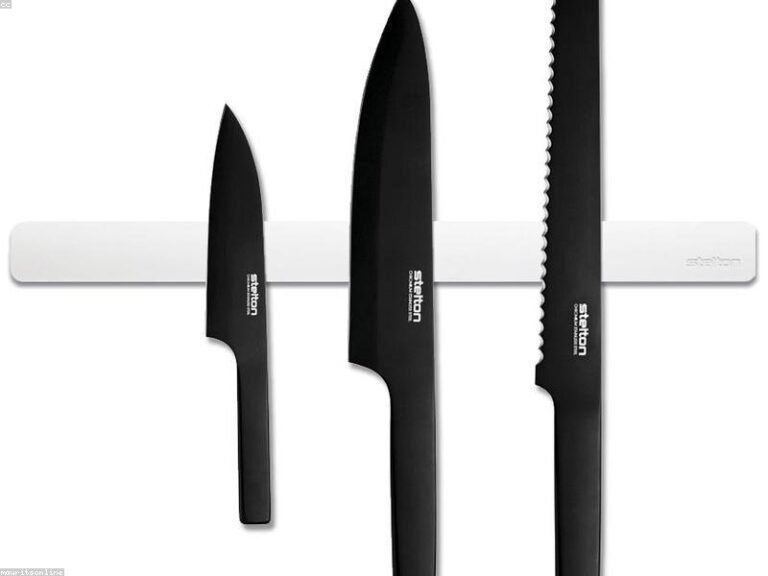
Slicing-oriented blades, whether a kitchen knife or a fine EDC blade, go the opposite direction on every axis. Thin flat or hollow grinds taper sharply behind the edge, minimizing friction and drag through push or draw cuts on soft material. That thinness is precisely what makes them poor choppers; the edge that glides through a tomato would deform or roll under a baton strike or a hard swing into a log.
Knives meant to do both jobs, like a general-purpose camp knife, land in the middle: moderate thickness, a slight belly, enough geometry to chop passably without losing the ability to make finer cuts. Purpose-built choppers, axes, kukris, machetes, push further toward mass and curve, deliberately trading away fine slicing control for raw chopping efficiency. Neither approach is wrong; they’re answers to different questions about what the blade is actually being asked to cut.
This article may contain affiliate links. If you purchase a product through one of these links, Bladeowl may earn a commission at no extra cost to you. This never influences our editorial independence or which products we recommend.