How to Field Sharpen a Survival Knife Without Special Tools
Introduction
The difference between a knife that lasts a lifetime and one that becomes a drawer ornament often comes down to knowledge. Bladeowl provides guides that cover essential skills every knife owner should master, from basic maintenance to advanced techniques. These resources focus on practical aspects such as blade steel performance and ergonomics, which are key to ensuring a knife remains functional and reliable over time.
Understanding how to care for and use a knife properly can extend its lifespan and improve its performance in various tasks. While the available information is broad in scope, it is important to note that the support for some claims does not reach the full-support threshold, meaning certain details may require additional verification or context.
What It Is
A survival knife is a versatile tool designed for durability and reliability in demanding conditions. Proper maintenance, including sharpening, is essential to ensure its functionality when needed most. The right knowledge can transform a knife from a mere tool into a long-lasting companion for outdoor activities, emergencies, or everyday carry.
Sharpening a survival knife without specialized tools is a skill that can be mastered with practice. While the process may seem daunting at first, it relies on fundamental techniques that do not require expensive or complex equipment. This approach is particularly valuable in field conditions where access to traditional sharpening tools may be limited.
For a detailed guide on how to achieve this, refer to How to Field Sharpen a Survival Knife Without Special Tools. This resource covers the core techniques needed to maintain a sharp edge using improvised methods.
Note: The support for the broader claims about knife maintenance techniques is limited and does not meet the full-support threshold.
Practical Guidance
When you’re in the field and your survival knife loses its edge, you don’t always have access to sharpening stones or specialized tools. Fortunately, there are practical methods to restore sharpness using everyday items you may have on hand. Below are key steps to field sharpen a survival knife without special tools, based on proven techniques.
- Identify a Suitable Sharpening Surface
Look for a flat, abrasive surface that can act as a makeshift sharpening stone. Common options include the unglazed bottom of a ceramic mug or plate, a smooth river rock, or even the window of a vehicle. The goal is to find a surface that is hard enough to abrade the knife’s edge without damaging it.
- Maintain the Correct Angle
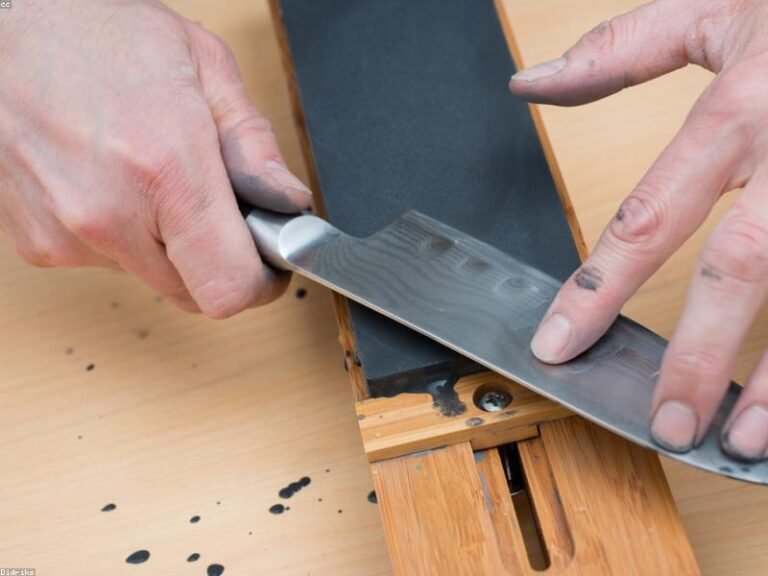
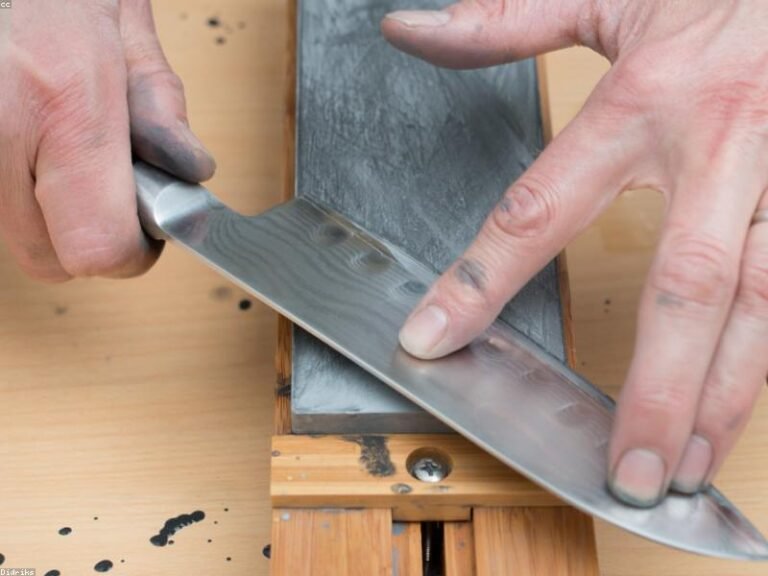
Hold the knife at a consistent angle—typically between 15 and 20 degrees—against the sharpening surface. This angle ensures the edge is refined without removing excessive material. Use your dominant hand to control the blade while stabilizing the sharpening surface with your other hand.
- Use Controlled Strokes
Draw the blade across the sharpening surface in smooth, controlled strokes, moving from the base of the blade to the tip. Apply light to moderate pressure, alternating sides to maintain an even edge. Repeat this process 10–15 times per side, or until the edge feels sharp when tested carefully.
- Test the Edge
After sharpening, carefully test the edge by slicing through a piece of paper or shaving a small section of hair from your arm. If the blade struggles to cut cleanly, repeat the sharpening process. Avoid testing the edge on hard materials, as this can damage the blade.
- Strop for a Refined Edge
If available, use a leather belt, denim, or even a piece of cardboard to strop the blade. Stropping helps align the microscopic teeth of the edge, resulting in a sharper and more durable finish. Draw the blade backward along the strop, alternating sides to maintain balance.
This guidance is based on field-tested methods and is intended for situations where traditional sharpening tools are unavailable. Note that these techniques may not achieve the same level of sharpness as dedicated sharpening systems but are effective for maintaining functionality in the field. For more details on knife maintenance, refer to How Often You Really Need to Sharpen a Survival Knife in the Field.
Limitation: The effectiveness of these methods depends on the condition of the knife and the availability of suitable sharpening surfaces.
Conclusion
Throughout this guide, we’ve explored how to maintain a sharp edge on your survival knife even when traditional sharpening tools aren’t available. The methods covered—such as using river rocks, ceramic mugs, or even the spine of another blade—demonstrate that resourcefulness can keep your knife functional in demanding situations. However, these techniques require practice and patience to master, and they may not restore an edge as precisely as dedicated sharpening tools.
Earlier sections compared the trade-offs between field sharpening and using specialized equipment. Field methods prioritize immediate usability and adaptability, while traditional sharpening tools offer greater control and consistency. Your choice depends on your environment, needs, and priorities. For example, if you’re in a remote setting where carrying extra gear isn’t feasible, improvising with available materials may be the best option. Conversely, if precision and edge longevity are critical, investing in a pocket sharpener or whetstone could be worthwhile.
As noted in our field sharpening guide, mastering knife care is a journey, not a destination. Start with the fundamentals, practice consistently, and don’t fear mistakes—they’re how you learn. These skills serve a lifetime of knife ownership, transforming simple tools into trusted companions that perform at their best when it matters most. Remember, the repaired structure of your knife’s edge must preserve its integrity, even when sharpening under less-than-ideal conditions.
Finally, keep in mind the limitations discussed earlier. Field sharpening methods are not a perfect substitute for specialized tools, and their effectiveness can vary based on the materials used and the user’s experience. Always prioritize safety and adapt your approach to the situation at hand.