EDC Knife Lock Types Explained — Liner Locks, Frame Locks, Axis Locks, and More
You find the perfect EDC knife. Great steel, comfortable handle, perfect blade shape. You click “buy.” Then, three weeks later, you’re in the ER because the lock failed while you were cutting zip ties.
It sounds dramatic, but lock failure is one of the most common causes of knife-related injuries — and it almost always comes down to choosing the wrong lock type for your use case (or buying a poorly made version of the right one).
The locking mechanism is the most important safety feature on your folding knife. It’s the difference between a reliable tool and an accident waiting to happen. Yet most buyers pick a knife based on looks and steel, completely ignoring the lock.
Let’s fix that. Here’s every major EDC knife lock type, explained in plain English — with pros, cons, and which knives do each one best.
Liner Lock — The Industry Standard
How It Works
- Civivi Elementum Button Lock — Everything great about the Elementum, now with a fidget-friendly button lock.
- Kizer Cormorant — Multiple deployment methods (flipper, thumb hole, front flipper) combined with a button lock. The ultimate fidget machine.
- Pro-Tech Malibu — The knife that reignited the button lock craze. Aluminum handle, CPM-20CV blade, and a buttery button. Hard to find, worth the hunt.
Other Lock Types Worth Knowing
Tri-Ad Lock (Cold Steel)
Cold Steel’s Tri-Ad lock is a reinforced back lock on steroids. It adds a stop pin that absorbs and redirects force away from the lock spring. Cold Steel’s infamous lock strength tests (hanging hundreds of pounds from the handle) consistently show the Tri-Ad lock outperforming every other design. If you want a folding knife you can abuse like a fixed blade, get something with a Tri-Ad lock.
Try it on: Cold Steel Recon 1
Shark Lock (Demko Knives)
Andrew Demko (the engineer behind the Tri-Ad lock) created the Shark Lock — a sliding bar on the spine that you pull back with your finger. It’s incredibly strong, fully ambidextrous, and allows drop-shut action. The Demko AD20.5 has become a cult favorite, and it’s easy to see why.
Ball Bearing Lock (Spyderco)
Spyderco’s ball bearing lock uses a spring-loaded ceramic ball bearing that wedges between the blade tang and a ramp. It’s smooth, strong, and ambidextrous. If you’ve used a Manix 2, you know how satisfying the *thwack-thwack* sound of that ball bearing lock is.
Slipjoint (Non-Locking)

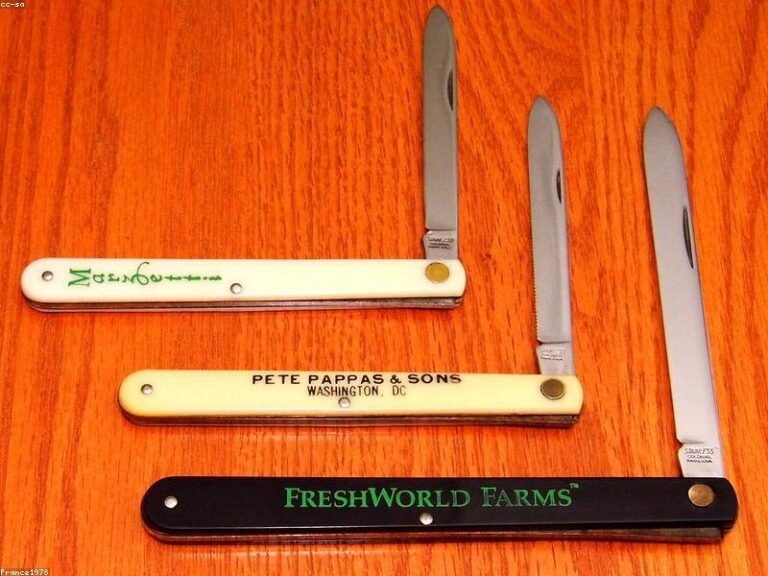
Slipjoints don’t lock at all — they use spring tension to hold the blade open (and closed). They’re legal everywhere in the world (including the UK, where locking knives are restricted), and they’re the most “socially acceptable” knife design. The downside is obvious: no lock means you need to be more careful about how you cut. If you apply pressure in the wrong direction, the blade can close on your fingers.
Try it on: Opinel No. 8 (collar lock), Victorinox Cadet (slipjoint)
Comparison Table: Lock Types at a Glance

| Lock Type | Strength | Ambidextrous | One-Hand Close | Fidget Factor | Best Example |
|---|---|---|---|---|---|
| Liner Lock | No | Yes | Spyderco Tenacious | ||
| Frame Lock | No | Yes | ZT 0450 | ||
| Axis Lock | Yes | Yes | Benchmade Bugout | ||
| Compression Lock | No* | Yes | Spyderco PM2 | ||
| Back Lock | Mostly | With practice | Spyderco Dragonfly 2 | ||
| Button Lock | Yes | Yes | Civivi Elementum Button Lock | ||
| Tri-Ad Lock | No | With practice | Cold Steel Recon 1 |
*Compression locks are typically right-handed, but Spyderco makes left-handed PM2s.
Which Lock Type Should YOU Choose?
Let’s make this simple:
- For general EDC on a budget: Liner lock. The Spyderco Tenacious or Ontario RAT 2 give you reliable lockup without breaking the bank.
- For premium feel and hard use: Frame lock. The ZT 0450’s titanium frame lock is a tank with a tuxedo.
- For ambidextrous use and fidget factor: Axis lock. The Benchmade Bugout combines serious cutting performance with the most fun lock mechanism available.
- For maximum safety and fidgeting: Compression lock. The PM2’s lock is arguably the safest and most satisfying mechanism in production knives.
- For absolute strength above all else: Tri-Ad lock. Cold Steel’s Recon 1 can take abuse that would destroy lesser folders.
- For legal compliance everywhere: Slipjoint. An Opinel No. 8 or Victorinox Cadet won’t raise eyebrows anywhere on Earth.
The Bottom Line
Lock type matters more than most buyers realize. A poorly executed liner lock on an otherwise great knife can be a liability. A well-made compression lock can make you forget you’re even carrying a folding knife — it just works, every time, with zero drama.
My advice: Try different lock types. You might think you’re a frame lock person until you fidget with an Axis lock for five minutes. Or you might assume the back lock is outdated until you handle a Spyderco mid-back lock and realize refinement matters more than category. The best lock is the one you enjoy operating — because if you hate closing your knife, you’ll reach for it less.
What’s your preferred lock type? Got a strong opinion? Drop by our contact page and let us know.
Frequently Asked Questions
Which lock type is the absolute strongest?
By objective testing (including Cold Steel’s infamous weight-hanging torture tests), the Tri-Ad lock takes the crown. It’s essentially a reinforced back lock with a stop pin that absorbs force, and it consistently outperforms liner locks, frame locks, and Axis locks in static load tests. For sheer folding-knife abuse tolerance, nothing beats it. Runner-up: the Spyderco compression lock, which wedges between hard surfaces rather than relying on spring tension alone.
Can a liner lock fail?
Yes — but usually only on poorly made knives or when abused. Cheap liner locks can slip under spine pressure (pressing down on the back of the blade). A quality liner lock from Spyderco, Civivi, or Ontario with proper lock face geometry and early engagement is extremely reliable. The failure mode is almost always user error (twisting the blade while cutting something tough) or wear on a knife that’s been heavily used for years without maintenance.
Is the Axis lock patent still active?
No. Benchmade’s patent on the Axis lock expired in 2016, which is why virtually every major knife brand now offers some version of a “crossbar lock.” Benchmade still holds the trademark on the term “Axis Lock” and their execution remains the best in the business, but you can now get crossbar-lock knives from SOG (XR Lock), Kershaw (DuraLock), Hogue (ABLE Lock), and even budget brands like Ganzo.
What’s the safest lock for a beginner?
The compression lock (Spyderco PM2/Para 3) and Axis lock (Benchmade Bugout) are both extremely beginner-friendly because your fingers never cross the blade path when closing. With a liner lock or frame lock, your thumb must move into the blade’s closing path to disengage — which requires attention. The compression lock and Axis lock let you close the blade without putting your fingers in the danger zone, making them safer for new knife users.
Do all knife locks wear out over time?
All mechanical mechanisms wear, but a quality lock will outlast the rest of your knife. Liner locks and frame locks gradually travel further across the blade tang over years of use — this is normal and why you want early lockup. Axis lock omega springs are the most common failure point; they can break with heavy fidgeting. Back locks tend to develop slight vertical play. Compression locks and Tri-Ad locks have the fewest documented wear issues. With proper maintenance and realistic expectations, most locks will serve you for decades.
Disclosure: BladeOwl is a participant in the Amazon Services LLC Associates Program. As an Amazon Associate, we earn from qualifying purchases. This comes at no extra cost to you and helps support our knife reviews and buyer’s guides.