Best Santoku Knives 2026 — The Japanese All-Rounder for Every Kitchen
This article contains affiliate links. As an Amazon Associate, we earn from qualifying purchases.
You’re staring at a pile of onions. Your old knife is about as sharp as a butter spreader, and you’ve just watched your third YouTube video about Japanese knives. You’re ready to upgrade. But which Santoku actually deserves a spot on your magnetic strip?
The Santoku — Japanese for “three virtues” (slicing, dicing, and chopping) — has quietly become the most popular knife style in home kitchens worldwide. And for good reason. Its shorter blade, flat edge profile, and lightweight feel make it outrageously fun to use. But the market is flooded with mediocre knockoffs hiding behind kanji characters and “Damascus” patterns that do nothing for performance.
We’ve done the homework. After comparing steel types, edge retention, handle comfort, and real-world performance across a dozen models — plus analyzing test data from Serious Eats, Cook’s Illustrated, and hundreds of verified buyer reviews — here are the five Santoku knives that actually earn their place in your kitchen.
Our Top Picks: Santoku Knives at a Glance
| Knife | Best For | Steel | Length | HRC | Price Range |
|---|---|---|---|---|---|
| Wusthof Classic Ikon 7″ | Best Overall | German X50CrMoV15 | 7″ | 58 | ~$170 |
| Global G-80 7″ | Best Japanese Steel Value | CROMOVA 18 | 7″ | 56-58 | ~$110 |
| Miyabi Birchwood 7″ | Best Premium | SG2 Micro-Carbide | 7″ | 63 | ~$340 |
| Mercer Culinary Genesis 7″ | Best Budget | German High-Carbon | 7″ | 55-57 | ~$35 |
| Wusthof Classic 7″ | Best Traditional German | German X50CrMoV15 | 7″ | 58 | ~$130 |
1. Wusthof Classic Ikon 7-Inch Santoku — Best Overall
If you could only own one Santoku, this is the one. The Wusthof Classic Ikon carries German DNA (forged in Solingen, the “City of Blades” since medieval times) but applies it with Japanese geometry. It’s the rare knife that gives you both durability and finesse.
What Makes It Special
The blade uses Wusthof’s proprietary X50CrMoV15 steel at HRC 58 — not as hard as Japanese super-steels, but significantly tougher. You can accidentally hit a chicken bone and walk away without a chip. At the same time, Wusthof grinds this Santoku to an ultra-thin 10-degree double bevel edge, which is actually thinner than many traditional Japanese brands (Shun uses a 16-degree edge for comparison).
The result? A knife that glides through vegetables with Japanese-like precision but shrugs off abuse like a German workhorse. The half-bolster design also makes sharpening the full heel much easier than on full-bolster models.
Key specs:
- 58 HRC German stainless steel — durable, stain-resistant, easy to maintain
- 10° double-bevel edge — thinner than most Japanese competitors
- Half bolster — better balance, easier sharpening
- Contoured POM handle with triple rivets — classic Western grip
- Weight: 7.1 oz (200g) — substantial but not heavy
- Lifetime warranty
- Made in Solingen, Germany
Pros & Cons
Pros: Combines Japanese cutting precision with German durability. Granton edge reduces food sticking. Lifetime warranty. Partial bolster makes sharpening simple. Beautifully balanced.
Cons: At ~$170, it’s a commitment for casual cooks. The contoured Western handle won’t appeal to those who prefer traditonal Japanese octagonal grips. Slightly heavier than pure Japanese alternatives.
Check the latest price on Amazon
2. Global G-80 7-Inch Santoku — Best Japanese Steel Value
The Global G-80 is the Santoku that put Japanese kitchen knives on the map for Western home cooks. Its all-stainless, seamless construction looks like something from a sci-fi kitchen — and the performance backs it up.
What Makes It Special
Global uses their proprietary CROMOVA 18 steel (Chromium, Molybdenum, Vanadium), ice-tempered and hardened to HRC 56-58. The blade is ground with a gradual convex edge that stays sharp longer than flat grinds at the same hardness. The hollow-ground granton edge genuinely helps with food release — sticky potatoes and cheese slide right off.
The dimpled stainless handle is the most distinctive feature here. Some people absolutely love it; others find it slippery when wet. This is a knife you should hold before buying if possible. But the seamless transition from blade to handle means zero crevices for bacteria — a massive plus for hygiene.
Key specs:
- CROMOVA 18 stainless steel — ice-tempered for edge retention
- HRC 56-58 — good balance of sharpness and toughness
- Hollow-ground granton edge — effective food release
- All-stainless seamless construction — hygienic, modern aesthetic
- Weight: 6.6 oz (188g)
- Made in Japan
Pros & Cons
Pros: Iconic design. Excellent edge retention for the price point. Seamless construction is incredibly hygienic. Lightweight and nimble. Great gift for design-conscious cooks.
Cons: Dimpled metal handle is divisive — can feel slippery. Not ideal for large hands. No full tang (by design). Sharpening the curved heel requires some skill.
Check the latest price on Amazon
3. Miyabi Birchwood 7-Inch Santoku — Best Premium
If the Wusthof is a Mercedes, the Miyabi Birchwood is a hand-built Aston Martin. This is the knife you buy when you’ve already got a good kitchen setup and you want something that makes you smile every time you pick it up.
What Makes It Special
The core is SG2 (Super Gold 2) micro-carbide powder steel hardened to an astonishing HRC 63. This isn’t marketing fluff — SG2 is genuinely one of the best stainless steels on the planet for edge retention. We’re talking months of home use between sharpenings. The 101-layer Damascus cladding is purely cosmetic (Damascus doesn’t improve cutting), but paired with the Masur birchwood handle with hand-set mosaic inlays, it’s undeniably stunning.
Miyabi is owned by Zwilling but the knives are 100% handcrafted in Seki, Japan — a city with 800 years of blade-making tradition. The Honbazuke honing process gives each blade a mirror-polished edge at 9.5-12 degrees per side. It’s absurdly sharp out of the box.
Key specs:
- SG2 micro-carbide powder steel core — HRC 63, elite edge retention
- 101-layer Damascus cladding — gorgeous but cosmetic
- 9.5-12° Honbazuke hand-honed edge
- D-shaped Masur birchwood handle with mosaic pins
- Weight: 6.3 oz (180g) — surprisingly light
- Made in Seki, Japan
Pros & Cons
Pros: Breathtaking craftsmanship. SG2 steel stays sharp for months. Incredibly thin, precise cuts. Lightweight and perfectly balanced. A legitimate heirloom piece.
Cons: $340 is a serious investment. D-shaped handle is right-handed only (lefties beware). SG2 is brittle — don’t use on bones, frozen food, or hard squash. Requires whetstone skill for maintenance.
Check the latest price on Amazon
4. Mercer Culinary Genesis 7-Inch Santoku — Best Budget
Not everyone wants to drop three figures on a knife. The Mercer Genesis proves you don’t have to. At around $35, it’s remarkably good — forged (not stamped) German high-carbon steel with a full tang and a comfortable, grippy handle. This is the knife culinary students buy when they’re eating ramen every night.
What Makes It Special
The forged German steel blade reaches HRC 55-57 — softer than premium options, which means it’ll need more frequent honing and sharpening, but it’s also extremely forgiving. You won’t chip this blade. You can use it on anything. The tapered grind edge is uniform and clean, and the Santoprene handle is soft, grippy, and NSF-certified for professional kitchen use.
At this price point, it’s also the perfect knife to learn sharpening on. If you ruin the edge, you’re out $35, not $340.
Key specs:
- Forged German high-carbon stainless steel
- HRC 55-57 — softer but extremely tough
- 15° double-bevel edge
- Full tang construction
- Santoprene handle — soft, grippy, NSF certified
- Weight: 3.2 oz (91g) — very lightweight
- Made in Taiwan
Pros & Cons
Pros: Incredible value for a forged blade. Forgiving steel — great for beginners. Comfortable, grippy handle. NSF certified for professional use. Perfect beater/learning knife.
Cons: Softer steel requires frequent maintenance. Handle material feels less premium. Not as nimble as Japanese competitors. Some quality variance in fit and finish.
Check the latest price on Amazon
5. Wusthof Classic 7-Inch Hollow Edge Santoku — Best Traditional German
The Wusthof Classic is the knife Rachel Ray held up on TV in the early 2000s that sparked America’s Santoku obsession. Two decades later, it’s still a top contender. This is the full-bolster, triple-riveted, old-school version — heavier than the Ikon and more traditional in feel.
What Makes It Special
Same forged X50CrMoV15 German steel as the Ikon, same impeccable Solingen craftsmanship. The difference is in the details: the Classic has a full bolster (the Ikon has a half-bolster), which adds weight and protection but makes full-length sharpening trickier. The handle uses the original Classic profile — slightly blockier than the Ikon’s contoured grip. Some cooks actually prefer this heavier, more authoritative feel.
The hollow-edge grantons genuinely reduce sticking on wet ingredients. And at ~$130, you’re saving about $40 versus the Ikon for the same blade quality — just with a different handle and bolster style.
Key specs:
- Forged X50CrMoV15 German stainless steel — HRC 58
- Full bolster — added weight and finger protection
- 14° double-bevel edge
- Triple-riveted POM handle — classic Wusthof design
- Hollow edge grantons — reduces food sticking
- Weight: 8.5 oz (240g)
- Lifetime warranty, made in Solingen, Germany
Pros & Cons
Pros: Built like a tank. Same outstanding steel as the Ikon. Cheaper than Ikon by ~$40. Classic proven design. The full bolster provides great finger protection.
Cons: Full bolster makes heel sharpening difficult. Heavier than most Santokus. Blockier handle feels dated to some. Not as sleek as Japanese alternatives.
Check the latest price on Amazon
How to Choose the Right Santoku for You
Here’s the quick-and-dirty guide based on what kind of cook you are:
You cook daily, want one great knife that does everything: Get the Wusthof Classic Ikon. It’s the best all-rounder in this category, period. German durability with Japanese-style precision. Buy it once, use it for 30 years.
You want authentic Japanese craftsmanship without breaking the bank: The Global G-80. It’s been a bestseller for decades for a reason. Seamless, sharp, and uniquely stylish.
Yu’re a serious enthusiast who appreciates the best: The Miyabi Birchwood. You don’t need it. But you’ll love it. SG2 steel at HRC 63 is as good as stainless gets for home use.
You’re on a budget or learning: The Mercer Genesis. Forged construction at $35 is a steal. It won’t win beauty contests, but it’ll get dinner on the table while you save for something nicer.
You want classic German heft and reliability: The Wusthof Classic. If you love the feel of a substantial knife, this is your Santoku.
The Bottom Line
The Santoku is the most versatile knife style for the modern home kitchen. It’s shorter and more maneuverable than a chef’s knife, excels at vegetable prep, and — with the right steel — handles meat and fish with ease. You don’t need a full block of knives. You need one great Santoku, a paring knife, and a bread knife. That’s the 80/20 kit.
Our top pick, the Wusthof Classic Ikon, delivers the best balance of performance, durability, and value. But every knife on this list earned its spot. Pick the one that fits your budget and cooking style — you won’t be disappointed.
Frequently Asked Questions
What’s the difference between a Santoku and a Chef’s knife?
The Santoku has a shorter, flatter blade (typically 5-7 inches) designed for up-and-down chopping. The chef’s knife has a longer, curved blade (typically 8 inches) designed for the rocking chop motion. Santokus are lighter and nimbler; chef’s knives are heavier and more versatile for large-scale tasks. For a deeper dive, check out our Chef Knife vs Santoku comparison.
Is a 7-inch Santoku big enough?
For most home cooks, yes. A 7-inch blade handles 90% of daily tasks — onions, carrots, chicken breasts, herbs, garlic. If you’re regularly breaking down whole butternut squash or processing large quantities, you might want the additional length of an 8-inch chef’s knife. But for standard home prep, 7 inches is the sweet spot.
Do Granton edges actually work?
Yes — but the effect is modest. Granton scallops (those oval indentations along the blade) create tiny air pockets that reduce suction between the blade and wet food. They help most with starchy or sticky ingredients like potatoes, zucchini, and cheese. They won’t eliminate sticking entirely, but they do make a noticeable difference.
What steel hardness (HRC) should I look for?
For a home Santoku, aim for HRC 58-61. Below 58, the edge will need frequent maintenance. Above 61, the steel becomes increasingly brittle and harder to sharpen. HRC 58-60 is the sweet spot where edge retention and toughness meet. The Miyabi at HRC 63 is an outlier — incredible edge retention but requires careful use.
Can I put my Santoku in the dishwasher?
No. Never. Put. A good. Knife. In. The. Dishwasher. The high heat and aggressive detergents will destroy the edge and potentially damage the handle. Hand wash, dry immediately, and store on a magnetic strip or in a blade guard. Two minutes of care keeps your knife performing for decades.
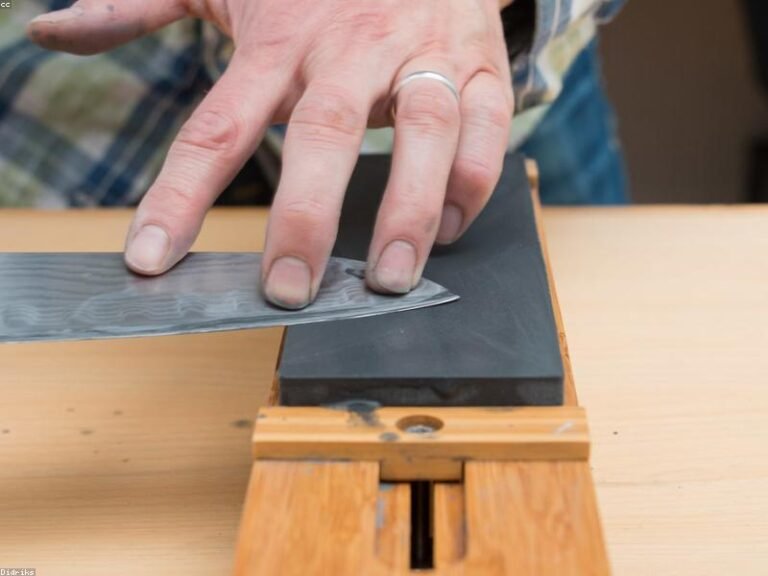
How often should I sharpen my Santoku?
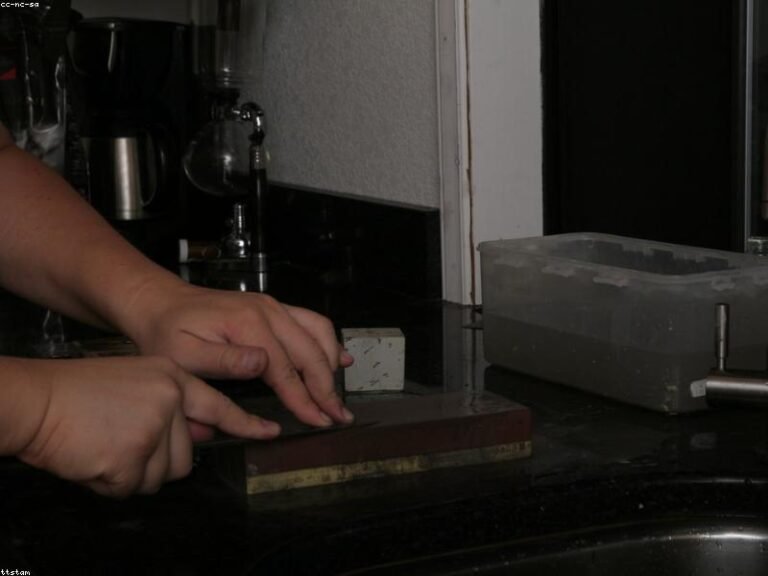
Hone with a ceramic rod every 2-3 uses to maintain the edge. Actual sharpening on a whetstone depends on use and steel hardness — softer German steel (HRC 56-58) every 2-3 months, harder Japanese steel (HRC 60+) every 4-6 months. If you notice the knife crushing tomato skins instead of slicing them, it’s time.