Best Knives for Backpacking and Thru-Hiking 2026
Every ounce matters on a thru-hike, and the knife you carry is one of the easiest places to shed weight without sacrificing real utility. Backpackers and thru-hikers tend to converge on a very different style of knife than bushcrafters or EDC enthusiasts, and understanding why will help you avoid packing a blade that’s heavier and more capable than the trail actually demands.
Weight Is the Deciding Factor
Thru-hikers obsess over base weight for good reason — small savings across dozens of pieces of gear add up to a meaningfully lighter pack over hundreds or thousands of miles. A knife that feels negligible in a drawer at home can feel unjustifiable on a scale next to your food bag and shelter when you’re counting grams. This is why the category skews heavily toward ultralight fixed blades with skeletonized or minimal handles, and slim, simple folding knives with thin steel and minimal hardware. A knife that weighs a fraction of an ounce more than necessary won’t make or break a trip on its own, but the mindset of trimming unnecessary weight everywhere is exactly what separates a comfortable long-distance pack from a punishing one.
Why Blade Length Stays Small
Many experienced thru-hikers carry blades in the 2-3 inch range, and sometimes smaller, which surprises people used to bushcraft or hunting knife sizing. The reasoning is practical: trail knife tasks are dominated by small, precise jobs rather than heavy chores. Opening food packaging, slicing cheese or a summer sausage, cutting moleskin or tape for blister care, trimming cordage, and minor gear repairs almost never require more than a couple of inches of edge. Batoning firewood or heavy carving is rare on most thru-hikes, especially on trails where campfires are restricted or where hikers rely on stoves rather than fires for cooking. A smaller blade also means a lighter, more compact knife overall, reinforcing the weight savings rather than fighting against them.
One Tool, Several Jobs
Because pack weight discourages carrying redundant gear, a thru-hiking knife typically needs to cover several roles at once rather than excelling narrowly at one. Food prep is the most frequent use case on most trail days. Gear repair — trimming a frayed strap, cutting cord for a quick fix, opening stubborn packaging — is the next most common. A basic first aid role, like cutting tape, moleskin, or clothing in an emergency, rounds out the core use cases. None of these individually demand a large or specialized blade, which is exactly why a small, simple knife handles the full spread competently instead of a large knife that’s overbuilt for most of what actually happens on trail.
Folder or Fixed Blade?
Both styles have a following on trail. A minimalist fixed blade skips the weight and complexity of a locking mechanism entirely and is essentially bomb-proof for its size, but it requires a sheath, which adds a small amount of weight and bulk back. A slim folding knife saves sheath weight and tucks neatly into a pocket or pack pocket, but you’re relying on a lock holding up over months of dust, grit, and repeated use. Neither choice is wrong — many hikers pick based on personal preference for carry style rather than any meaningful performance gap at this size and use case.
Real-World Ultralight Knife Comparison
These four widely-carried options span the weight and design spectrum discussed above, from a keychain folder to a minimalist fixed blade.
| Knife | Price Tier | Key Differentiator | Best For |
|---|---|---|---|
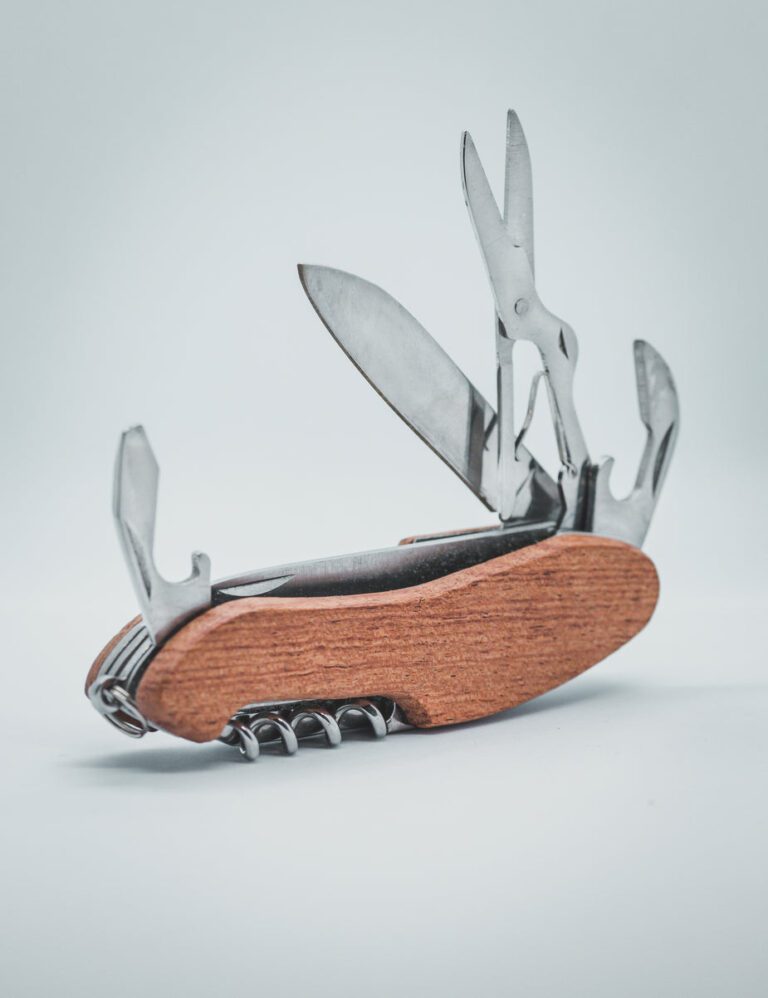
| Victorinox Classic SD | ~$25-30 | 0.7 oz keychain multi-tool with scissors, screwdriver, and a small blade | Ounce-counters who want a backup blade plus basic repair tools in one |
| Opinel No. 06 | ~$12-15 | Featherweight beechwood-handled folder with a locking Virobloc ring | Hikers who want a simple, non-locking-anxiety folder for food prep and cordage |
| Benchmade Bugout | ~$140-160 | 1.85 oz premium folder with S30V/S90V steel and an axis lock | Thru-hikers who want a “buy it once” ultralight folder and don’t mind the price |
| Morakniv Companion | ~$15-20 | Full-tang fixed blade with sheath, no lock to fail, sub-4 oz total weight | Hikers who prefer a fixed blade’s simplicity and durability over a folder |
None of these four break 2 ounces except the Morakniv (still under 4 oz with its sheath), and all four handle the core trail tasks — food prep, gear repair, basic first aid — without the bulk of a bushcraft-sized blade. Check the Victorinox Classic SD on Amazon, the Opinel No. 06, the Benchmade Bugout, or the Morakniv Companion.
The Takeaway
The best thru-hiking knife is usually the smallest, lightest one that still comfortably handles food prep, minor repairs, and basic first aid needs. Resist the urge to pack a bushcraft-sized blade “just in case” — on the trail, that extra size and weight is far more likely to be dead weight in your pack than a tool you actually reach for.
This article may contain affiliate links. If you purchase a product through one of these links, Bladeowl may earn a commission at no extra cost to you. This never influences our editorial independence or which products we recommend.