The 10-Item Survival Loadout — Why Your Knife Is Priority #1
Picture this: you’re three miles from the trailhead. The weather turned an hour ago — rain that wasn’t in the forecast, temperature dropping faster than you expected. Your phone is dead. The sun sets in two hours. You’ve got what’s in your pack and nothing else.
What’s the one item you cannot afford to be without?
I’ve asked this question to search-and-rescue professionals, survival instructors, military veterans, and indigenous guides across three continents. The answer is never “a satellite phone” or “a GPS beacon” — because electronics fail, get wet, and run out of batteries. The answer is always the same: a knife.
The wrong knife in the wilderness isn’t inconvenient — it’s dangerous. A dull or broken blade means you can’t build shelter when the temperature drops. Can’t process firewood when everything is wet. Can’t signal for help, prepare food, or defend yourself. Your knife is the tool that creates every other tool. It’s the foundation that everything else is built on.
Below is the complete 10-item survival loadout I’ve refined through years of backcountry testing — with your knife as priority number one, because without it, the other nine items are just dead weight.
1. Fixed-Blade Knife — Your Primary Survival Tool

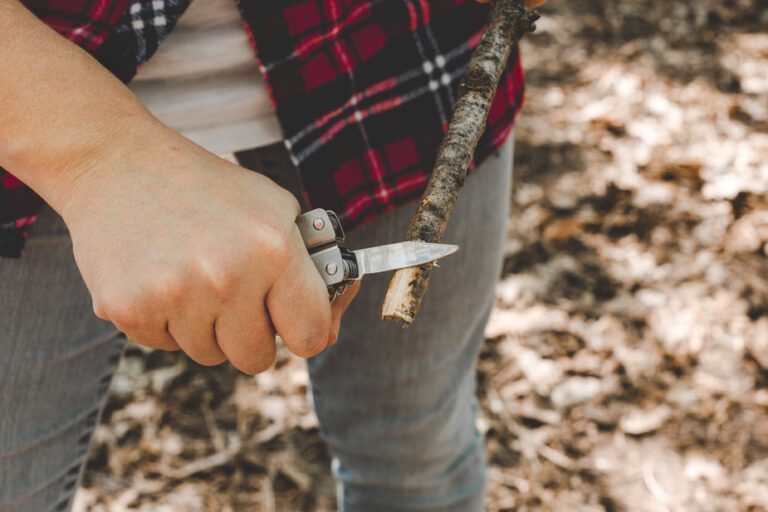
If you take nothing else from this article, take this: your knife is priority #1. With a good knife, you can build shelter, process firewood, create tinder, carve tools, prepare food, and signal for help. Without one, you’re reduced to your bare hands — and bare hands don’t split wood, cut cordage, or field-dress game.
What you’re looking for: Full tang, 4-6 inch blade, comfortable handle for extended use. Carbon steel (1095, SK-5) throws better ferro rod sparks and field-sharpens easier. Stainless (14C28N, Sandvik) shrugs off moisture. Both work — pick based on your environment.
Budget pick: Morakniv Garberg (B01MTEM59R, ~$65). Premium pick: ESEE 4 or 5 (~$120-160). Can’t-go-wrong pick: Gerber StrongArm (B00GEEWUDE, ~$55). The Mora Companion HD at $20 works too — it’s not full tang, but the Scandinavian grind is so efficient that you rarely need to abuse it hard enough for tang failure to matter.
Grab the handle of a well-made survival knife. Feel how the textured grip locks into the creases of your palm. Hear the solid, authoritative click as it seats into its sheath. That weight on your belt is confidence you can hold onto.
2. Ferrocerium Rod — Fire When Everything Is Wet
Lighters run out of fuel. Matches get wet. A ferro rod — that orange-handled magnesium stick you’ve seen in every survival kit — throws 5,500°F sparks regardless of weather, altitude, or how many times you dropped it in a puddle. Pair it with your knife’s spine (that’s why the Garberg has a ground-flat 90-degree spine) and you can start a fire in a monsoon.
A $10-15 ferro rod (like the Light My Fire Army model) paired with your knife is more reliable fire insurance than a $50 weatherproof lighter. Learn to use it before you need it — there’s a technique to directing sparks into tinder that takes practice.
3. Metal Water Container — Purify, Boil, Carry
You can survive three days without water. You can survive three weeks with contaminated water that gives you dysentery — and you’ll wish you hadn’t. A single-wall stainless steel bottle or cup (not double-wall insulated — you can’t boil in those) lets you purify water by boiling. It’s a container, a pot, and a purification system in one. Nalgene’s stainless bottle or a simple titanium cup work beautifully.
4. Emergency Shelter — Hypothermia Kills Faster Than Starvation
Exposure is the number one killer in wilderness emergencies, not predators or starvation. A simple emergency bivvy bag (SOL Escape Bivvy, ~$40) or a heavy-duty contractor bag and a mylar blanket (combined cost under $10) can be the barrier between your body heat and a cold night that doesn’t end well. Your knife processes the branches for your shelter frame — this is the waterproof layer that keeps your dry insulation actually dry.
5. Paracord — 550 Pounds of Possibility
Fifty to one hundred feet of genuine 550 paracord (rated for 550 pounds) is shelter lashing, a bow drill string, a fishing line (use the inner strands), a tourniquet, a gear repair kit, and a hundred other things. Don’t buy the decorative stuff — get mil-spec with seven inner strands. Your knife processes the lengths you need, stripping the outer sheath from the inner cordage as required.
6. Fire-Starting Tinder — Because Finding Dry Tinder in the Rain is a Nightmare
Cotton balls soaked in petroleum jelly. Vacuum-sealed dryer lint. Commercial tinder tabs. Something that lights instantly from a ferro rod spark and burns long enough to ignite your kindling. Without this, you’re trying to ignite damp twigs directly from sparks — and losing that battle while your fingers go numb. Your knife creates the feather sticks and shavings that take the flame from tinder to fire.
7. First Aid Kit — Because “Toughing It Out” Has a Body Count
Here’s where most survival loadouts get too tactical and forget the thing that actually gets people: bleeding, infection, and shock. A compact trauma kit with a tourniquet (learn to use it), hemostatic gauze, pressure bandage, antiseptic wipes, and basic medications (antihistamines, pain relief, anti-diarrheal) weighs under a pound. It’s the piece of gear you hope you never use and the one you’ll thank yourself for having.
8. Reliable Light Source — Darkness Multiplies Every Problem
A headlamp keeps your hands free for knife work at night — which is when you’ll need the knife most if you’re building emergency shelter. A simple AAA-powered headlamp (like the Petzl Tikkina) with spare batteries costs less than $25. Avoid phone-as-flashlight thinking — your phone has more important work to do (like not being dead).
9. Navigation Aids — Map, Compass, and the Skill to Use Them
GPS is wonderful until: (a) batteries die, (b) signal disappears in dense canopy or deep canyons, (c) you drop it in a stream. A paper topographic map of your area and a basic baseplate compass weigh almost nothing and never need charging. Learn to orient a map and take a bearing. It’s a skill that takes one afternoon to learn and lasts a lifetime.
10. Multitool — Redundancy and Precision
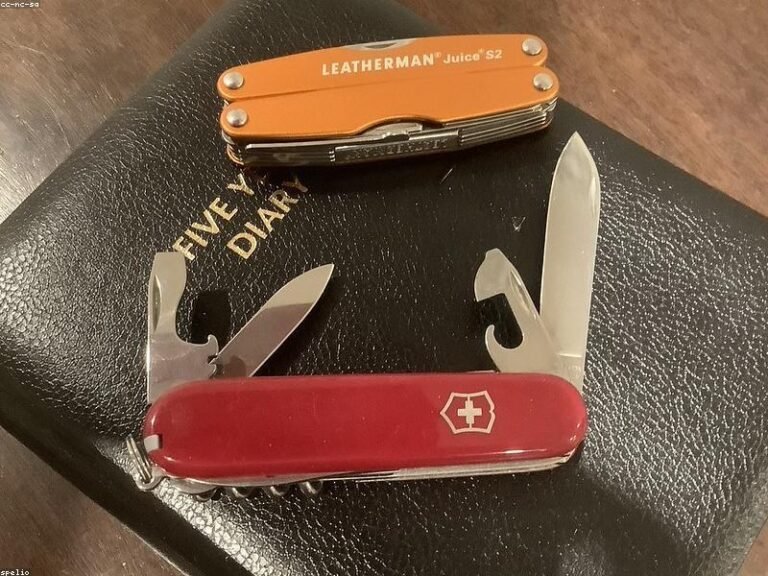
Your fixed blade does the heavy work. Your multitool handles the fine work — tightening screws on gear, precise cutting with scissors, using the pliers for splinter removal or pot handling, opening cans, sawing small branches. A Leatherman Sidekick or Wingman at around $50-60 complements your survival knife perfectly. The saw in particular saves your knife edge for tasks that actually require it.
The Priority Hierarchy — Why Your Knife Is #1
Look at this list again. Count how many of these items assume you have a knife:
Fire starting: knife spine strikes the ferro rod, knife batons the wood, knife creates the feather sticks.
Shelter: knife cuts the cordage and processes the poles.
Water: knife opens packaging, cuts materials for pre-filters.
First aid: knife cuts bandages, clothing, and tourniquet material.
Navigation: knife creates trail markers, carves walking sticks.
Your knife is the tool that creates the tools. It’s the multiplier that amplifies every other item in your kit. Strip away everything else and you still have a fighting chance with just a knife and knowledge. Take away the knife and you’re left with items you can’t fully utilize.
Picture yourself at camp, fire crackling, shelter overhead, water boiling — one reliable tool handled every task from the first branch cut to the last piece of kindling. That’s not a fantasy. That’s what happens when you prioritize correctly.
Frequently Asked Questions
How much should a survival loadout cost?
You can build a complete, reliable 10-item survival kit for under $200 if you prioritize smart budget choices. The knife is your biggest investment at $20-65. A ferro rod ($10), stainless bottle ($15), emergency bivvy ($20), paracord ($8), homemade tinder (free), basic first aid supplies ($20), headlamp ($20), map/compass ($25), and a basic multitool ($30) puts you around $180 total. Every dollar was spent on function, not brand prestige.
Should I carry a folding knife as backup to my fixed blade?
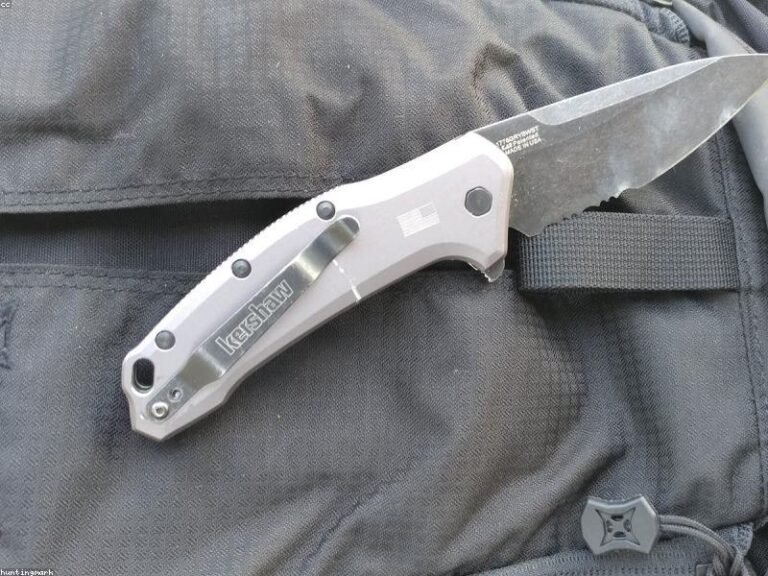
Yes. A lightweight folding knife (like an Ontario RAT II) in your pocket provides backup if your fixed blade is lost or damaged, and handles fine tasks that a 5-inch survival blade finds awkward. Redundancy in your most critical tool is never wasted weight.
What’s the one item people most commonly forget?
Tinder. Everyone remembers the ferro rod. Almost nobody remembers that ferro rods throw sparks onto nothing useful unless you have prepared tinder. Wet leaves don’t count. Your knife can create feather sticks and wood shavings, but starting them with sparks alone is an advanced skill that fails more often than YouTube makes it look. Carry dry tinder.
Disclosure: As an Amazon Associate, BladeOwl earns from qualifying purchases. Every recommendation here is based on real field testing, not affiliate commission rates.