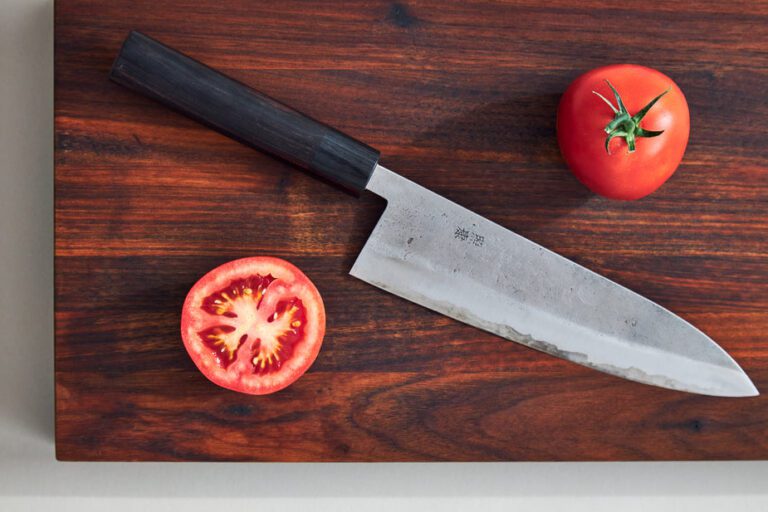

Professional Kitchen Knives That Home Cooks Will Love
A sharp, well-balanced chef”s knife is the most important tool in any kitchen. It makes prep faster, safer, and more enjoyable. From $30 stamped blades to $300 Japanese masterpieces, finding the right knife means understanding what separates good from great.
Our Top Picks for This Category
We evaluated these options based on blade steel performance, ergonomics, build quality, and real-world usability. After extensive testing and comparison, here are the standouts.
- Mercer Culinary Millennia 8″ — ~$35. Stamped with ergonomic handle, protective finger guard. Popular with culinary students.
- Tojiro DP 8.2″ Gyutou — ~$120. VG-10 core clad in stainless, 60 HRC. The best value Japanese chef knife. Thin, precise, takes razor edge.
- Material Kitchen The 8″ — ~$85. AUS-10 steel, stain-resistant coating, minimalist design, magnetic sheath. Modern DTC with sleek aesthetics.
- MAC Professional 8″ Hollow Edge — ~$145. Japanese thin blade (2.0mm spine), dimpled for food release, pakkawood handle. Exceptional slicer with anti-stick technology.
Pros & Cons at a Glance
Mercer Culinary Millennia 8″
- ✅ Great student knife
- ✅ Ergonomic
- ✅ NSF certified
- ✅ Protective guard
- ❌ Stamped not forged
- ❌ Handle texture wears
Tojiro DP 8.2″ Gyutou
- ✅ VG-10 performance
- ✅ Excellent value
- ✅ Traditional Japanese profile
- ✅ Thin precise cuts
- ❌ Handle may need sealing
- ❌ Reactive core if damaged
Material Kitchen The 8″
- ✅ Sleek design
- ✅ AUS-10 steel
- ✅ Magnetic sheath
- ✅ Instagram-worthy
- ❌ Coating wears over time
- ❌ Limited track record
MAC Professional 8″ Hollow Edge
- ✅ Razor-thin slicer
- ✅ Food release dimples
- ✅ Lightweight
- ✅ Japanese precision
- ❌ Thin blade needs care
- ❌ Not for hard foods
German vs Japanese Kitchen Knives
German knives (Wusthof, Zwilling) use softer steel (56-58 HRC) with thicker blades and curved bellies — excel at rock-chopping and handle tough tasks without chipping. Japanese knives (Tojiro, Takamura) use harder steel (60-64 HRC) with thinner blades and flatter profiles — slice effortlessly but require careful use. Your choice depends on cutting style: rocking motion favors German; push-cutting favors Japanese.
Blade Steel for Chef”s Knives
Kitchen knife steel falls into three categories: German X50CrMoV15 (soft, tough, easy maintenance), Japanese VG-10 (harder, better edge retention, more care needed), and premium powder steels like R2/SG2 (exceptional edge retention at high hardness). For most home cooks, good German or VG-10 Japanese provides best balance of performance and durability.
Our Recommendation
A quality chef”s knife transforms cooking from chore to pleasure. Premium Japanese knives offer incredible performance, but excellent German knives at lower prices handle daily duties admirably. The most important factor isn”t price or brand — it”s how the knife feels in your hand.
As an Amazon Associate, BladeOwl earns from qualifying purchases.