Best Whetstone Sets for Beginners 2026 — Start Sharpening Like a Pro
If your knives have been getting duller instead of sharper no matter how many pull-through sharpeners you’ve tried, a whetstone is the actual fix. It takes a bit more effort to learn than a gadget, but it’s the method that professional sharpeners and serious cooks rely on, and it’s a skill that keeps paying off for as long as you own knives. Here’s what beginners actually need to know before buying a set.
Grit Progression: Coarse, Medium, Fine
Whetstones are rated by grit number, and understanding the progression matters more than any single stone. Coarse stones (roughly 220–400 grit) are for repair work — fixing chips, reshaping a damaged edge, or restoring a knife that’s been badly neglected. Most sharpening sessions don’t need a coarse stone at all. Medium stones (around 1000 grit) are the workhorse grit for regular sharpening — this is where you’ll actually form and maintain the edge most of the time. Fine stones (3000 grit and up) are for polishing and refining an edge that’s already sharp, giving it a cleaner, sometimes more precise bite. A beginner set typically pairs a medium and fine stone, sometimes on two sides of the same block, which covers the vast majority of home sharpening needs.
Water Stones vs. Oil Stones vs. Diamond Stones
Water stones are soaked in or splashed with water before use and are the most common choice for kitchen knife sharpening, especially for Japanese-style blades. They cut relatively fast and give excellent results, but softer water stones wear down and dish out over time, meaning they’ll eventually need flattening.
Oil stones use honing oil instead of water, wear more slowly, but also cut more slowly, and the oil makes cleanup messier. They’re more traditional in Western knife and tool sharpening. Diamond stones use a metal plate embedded with diamond particles instead of a traditional abrasive. They cut fast, stay flat much longer since they don’t wear the way stones do, and work on almost any steel. They’re often pricier but need little maintenance, which appeals to beginners who’d rather skip flattening altogether.
Flattening Stones
Traditional water stones and oil stones wear unevenly with use, developing a dip in the middle. Sharpening on a dished-out stone actually damages your edge geometry instead of fixing it. A flattening stone (or a flattening plate) is used periodically to grind the sharpening stone back to flat. It’s an unglamorous but necessary part of owning traditional stones — budget for one if your set doesn’t include it, or lean toward diamond stones if you’d rather skip this step entirely.
Angle Guides
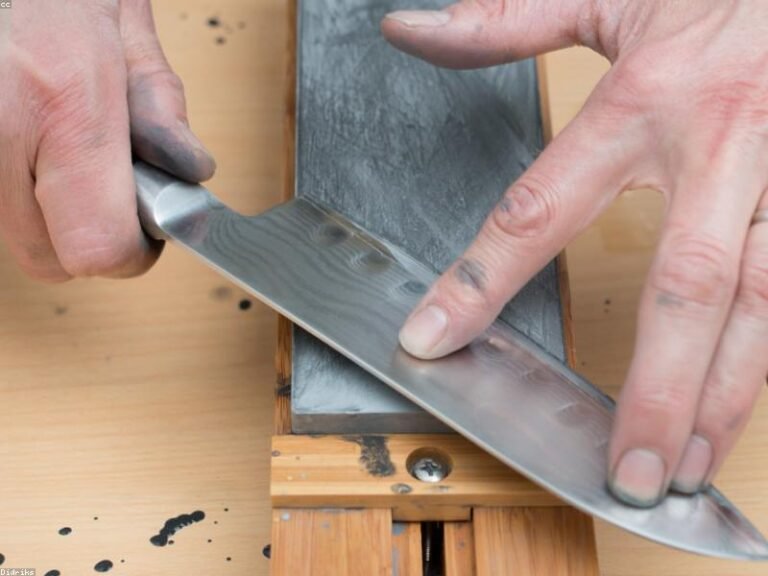
Holding a consistent angle by hand is the hardest part of sharpening for beginners, and it’s the main reason early attempts produce an uneven edge. An angle guide — a small clip-on tool that attaches to the spine of the blade — helps hold a consistent angle while you build muscle memory. Many experienced sharpeners eventually stop using a guide once they’ve internalized the angle by feel, but there’s no shame relying on one early on. Just make sure it matches the edge angle appropriate for your knife (Japanese-style knives are often sharpened narrower than thicker Western blades).
Basic Technique
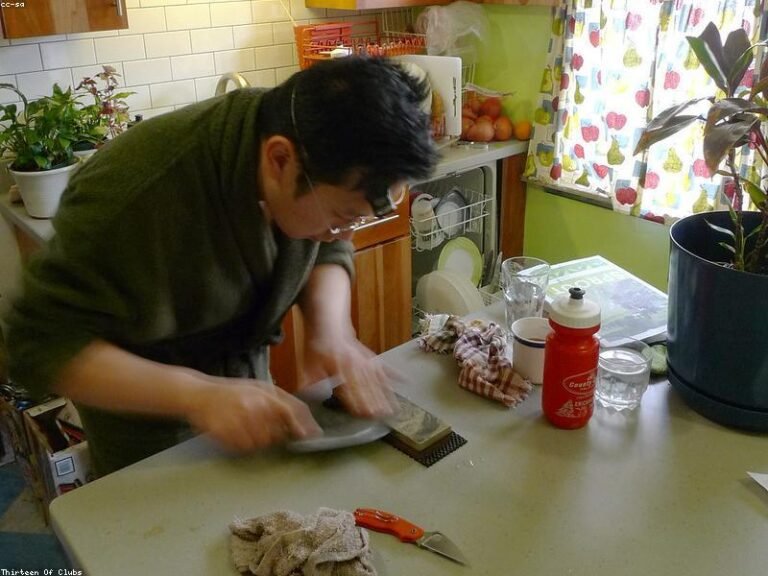
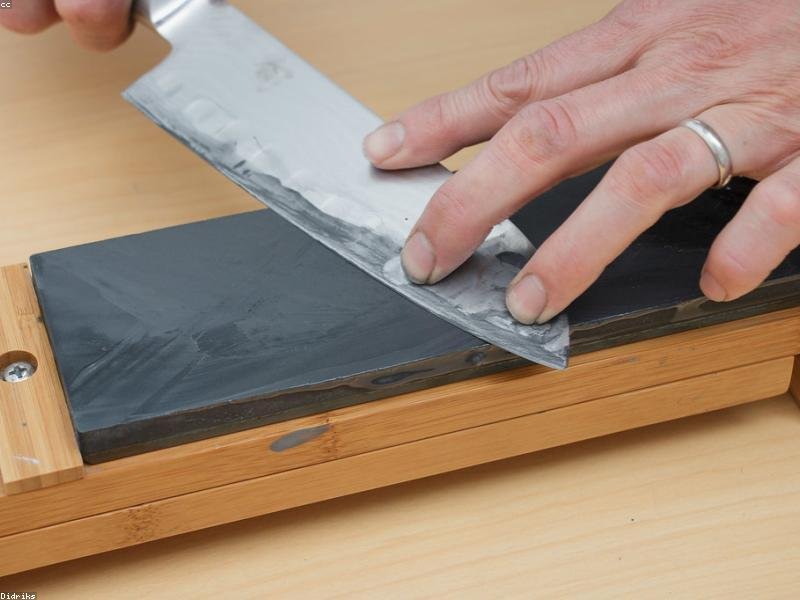
The process is consistent across stone types: soak or wet the stone as needed, hold the blade at a steady angle, and draw the edge across in smooth, controlled strokes, alternating sides evenly. You’re aiming to raise a “burr” — a thin edge of displaced metal you can feel with a fingertip — before moving to a finer grit to refine it away. It takes practice to build a feel for consistent pressure and angle, so don’t expect a razor edge on the first try. Start with an inexpensive knife before moving to your good kitchen knives.
Beginner Whetstone Sets Worth Buying
Rather than guessing at generic listings, here are four real, widely-recommended whetstone sets that come up again and again in beginner sharpening guides — spanning water stones, diamond plates, and different price points:
| Set | Price Tier | Key Differentiator | Best For |
|---|---|---|---|
| Sharp Pebble Premium 1000/6000 Combo Stone | $30–$45 | Two-sided water stone with bundled angle guide, non-slip base, and flattening stone included | First-time buyers who want a complete, no-extra-purchases starter kit |
| King KDS 1000/6000 Combination Whetstone | $35–$50 | Long-trusted Japanese water stone brand, cuts fast and predictably | Beginners who plan to stick with traditional water stones long-term |
| DMT Dia-Sharp Diamond Whetstone | $40–$70 per stone | Diamond plate that never needs flattening and stays perfectly flat for life | Beginners who want to skip stone maintenance entirely and don’t mind the higher per-stone cost |
| Naniwa Traditional 1000/3000 Whetstone | $50–$80 | Premium Japanese water stone with a finer, more refined cutting feel | Beginners who are serious about eventually sharpening Japanese-style kitchen knives |
For most people just starting out, the Sharp Pebble or King KDS combo stones are the easiest entry point — both pair a medium and fine grit on one block and won’t require a second purchase to get sharpening the same day. If flattening maintenance sounds like a hassle you’d rather avoid altogether, the DMT Dia-Sharp is worth the extra cost.
Bottom Line
For beginners, a combination stone with medium and fine grits, paired with an angle guide, covers most needs without overwhelming complexity. Water stones are the most common starting point for kitchen knives; diamond stones are worth considering if you’d rather avoid flattening maintenance. Whichever you choose, the real investment is in the technique — the stone is just the tool that lets you practice it.
This article may contain affiliate links. If you purchase a product through one of these links, Bladeowl may earn a commission at no extra cost to you. This never influences our editorial independence or which products we recommend.