Chef Knife Buying Guide: How to Find Your Perfect Kitchen Blade
The chef’s knife is the most important tool in your kitchen. It is the blade you reach for dozens of times during every cooking session — chopping, slicing, dicing, and mincing your way through meal preparation. Choosing the right chef’s knife is a personal decision that affects your cooking experience every single day. This buying guide covers everything you need to know to find your perfect kitchen blade.
Why the Chef’s Knife Matters
A great chef’s knife transforms cooking from a chore into a pleasure. A sharp, well-balanced blade glides through ingredients with minimal effort, making prep work faster and more consistent. A poorly balanced, dull, or uncomfortable knife makes every cut a struggle — and it is also more dangerous, as extra force increases the risk of slips.
The chef’s knife handles roughly 80 percent of all cutting tasks in the kitchen. It deserves the largest portion of your knife budget and the most careful consideration.
Key Factors to Consider
Blade Length
Chef’s knives typically range from 6 to 12 inches, with 8 inches being the standard home cook recommendation. Here is how to choose:
6-inch: Compact and nimble. Good for small hands, limited counter space, or cooks who prefer a shorter blade. The limited length makes it less efficient for large vegetables and proteins.
8-inch: The Goldilocks size — long enough to handle large cabbages and watermelons, but not so long that it feels unwieldy. The standard recommendation for most home cooks. If you are unsure, start here.
10-inch: Preferred by many professional chefs and large-handed cooks. The extra length provides more cutting edge for efficient prep and allows slicing larger items in a single stroke. Requires more counter space and can feel like a sword in smaller kitchens.
12-inch: Specialty size for professional use, large-scale prep, and specific techniques like slicing large roasts. Unwieldy for most home cooks.
Weight and Balance
Knife weight affects cutting technique and fatigue during extended prep:
Heavy knives (250-300g): Provide momentum for chopping. The weight does the work — you guide the blade rather than power it through. Traditional German knives like Wusthof Classic fall into this category. Better for rocking cuts and heavy-duty tasks. Can cause fatigue during long prep sessions.
Light knives (150-200g): Provide precision and reduce fatigue. You control every aspect of the cut. Japanese gyuto and French-style knives like the Mac Professional fall into this category. Better for push-cutting and detailed work. Require more deliberate technique since the blade does not power through on its own.
Balance is equally important. A well-balanced knife feels like an extension of your hand — neither blade-heavy nor handle-heavy. Hold the knife in a pinch grip (thumb and forefinger gripping the blade just in front of the handle) — this is the grip most chefs use. The knife should feel comfortable and controlled in this position.
Blade Shape and Profile
Western (German) Profile: Deep curved belly from heel to tip, designed for rocking cuts where the tip stays on the board and the blade rocks up and down. Excellent for chopping herbs and mincing garlic with a rocking motion. The pronounced curve means less of the edge makes board contact at any time, which can lead to accordion-cut vegetables if technique is not precise.
French Profile: Gentler curve with a straighter edge section near the heel. More versatile than a German profile — supports both rocking and push-cutting. The Sabatier shape is the classic example. A good compromise for cooks who use multiple cutting techniques.
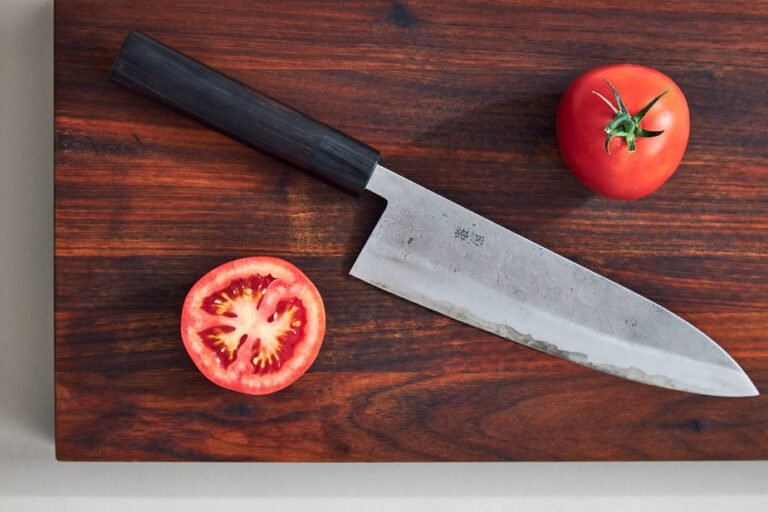
Japanese (Gyuto) Profile: Flatter edge profile with a subtle curve near the tip. Designed for push-cutting and chopping rather than rocking. The flatter profile ensures the entire edge makes board contact, eliminating accordion cuts. Many Western-market Japanese knives feature a slightly more curved profile to accommodate rocking cuts.
Steel Type
Stainless Steel: The practical choice for most home cooks. Modern stainless steels like VG-10, AUS-10, and X50CrMoV15 offer excellent corrosion resistance with good edge retention. No need to worry about rust from acidic ingredients — just wash and dry after use.
High-Carbon Stainless: Premium stainless steels like SG2 (R2), ZDP-189, and HAP-40 push edge retention to extreme levels while maintaining stainlessness. These steels hold an edge for remarkable periods but are harder to sharpen and more expensive.
Carbon Steel: Traditional choice prized for extreme sharpness and ease of sharpening. Carbon steel develops a patina over time — a darkening that many chefs find beautiful. However, it rusts easily and requires immediate drying after use. Not recommended for beginners. Blue Steel (Aogami) and White Steel (Shirogami) are the classic Japanese carbon steels.
Semi-Stainless: Steels like SKD and SLD offer a middle ground — better edge retention and hardness than stainless, better corrosion resistance than carbon steel. A niche but interesting option.
Handle Design
The handle should fit your hand comfortably in a pinch grip. Here are the main styles:
Western (Yo) Handle: Full tang with visible rivets. Contoured shape with a distinct butt end. Familiar and comfortable for most Western cooks. Usually synthetic materials like POM or Micarta. Wusthof, Zwilling, and Victorinox use this style.
Japanese (Wa) Handle: Octagonal, D-shaped, or oval wooden handle with a hidden or partial tang. Lighter than Western handles, shifting the balance point forward. Requires hand washing and occasional oiling. Feels very different — some cooks love the lightness and connection to the blade, others find it too minimal.
Integral/Full Metal: The handle and blade are one continuous piece of steel, like Global knives. Extremely hygienic and indestructible. Can be slippery when wet or greasy. The distinctive dimpled texture of Global handles helps with grip.
Edge Angle
20-22 degrees per side (Western): Durable edge that withstands contact with bones and tough ingredients. Easier to maintain with a honing rod. The standard edge angle for German knives.
15-16 degrees per side (Japanese): Sharper edge that cuts with less force. More delicate — can chip on bones and hard materials. Requires more careful technique and maintenance with whetstones rather than steels.
Some knives come with a compound bevel — a steep primary grind with a micro-bevel at a wider angle for durability. This balances sharpness and edge stability.
The Pinch Grip Test
The single most important test when buying a chef’s knife in person: hold it in a pinch grip. Pinch the blade between your thumb and forefinger just in front of the handle, wrapping your remaining three fingers around the handle. This is the grip used by virtually all professional chefs because it provides maximum control.
Does the knife feel like a natural extension of your hand, or are you fighting it? Does the spine press uncomfortably against your finger? Is the balance point where you want it? A knife that feels good in a display grip (full hand wrapped around the handle) may feel very different in a pinch grip.
If buying online, look for detailed reviews that discuss balance and ergonomics. Knives with a generous flat section behind the heel (the choil area) provide more comfort in a pinch grip.
Budget Recommendations
Under $50
Victorinox Fibrox Pro 8-Inch Chef’s Knife: The most recommended budget chef’s knife for good reason. Stamped stainless steel with a comfortable textured handle. Lightweight, sharp out of the box, and easy to maintain. Used in professional kitchens worldwide. The plastic handle is not beautiful, but the performance is outstanding for the price.
$50-$100
Tojiro DP Gyuto 8.2-Inch: A Japanese VG-10 stainless steel gyuto at an incredible price. Excellent edge retention, thin grind, and good fit and finish. The Western-style handle is functional if not luxurious. Some samples arrive needing a touch-up on the edge.
Mercer Culinary Genesis 8-Inch: Forged German steel with a comfortable Santoprene handle. The full bolster adds weight and durability. Excellent value for a forged knife.
$100-$200
MAC Professional Series MTH-80: A hybrid Japanese-Western knife with a thin, sharp blade and comfortable handle. Lightweight and nimble with excellent edge retention. Often recommended as the best all-around chef’s knife under $200.
Wusthof Classic Ikon 8-Inch: The premium version of Wusthof’s classic line with an improved handle and half-bolster design that allows full edge sharpening. Heavy, durable, and beautifully made in Solingen, Germany.
Zwilling Pro 8-Inch: The modern iteration of the Henckels classic with an innovative curved bolster that supports the pinch grip. Excellent fit and finish with the Zwilling proprietary steel.
Messermeister Meridian Elite 8-Inch: A German knife with a slightly lighter, more nimble feel than Wusthofs. The hidden bolster is fully sharpenable. Popular with chefs who want German steel with a more Japanese feel.
$200+
Misono UX10 Gyuto: A Japanese classic with Swedish stainless steel and a thin grind. Beloved by professionals for its cutting performance. The asymmetrical edge (70/30 grind) is optimized for right-handed use — left-handed versions are available.
Kramer by Zwilling: Bob Kramer’s design manufactured by Zwilling in Japan. SG2 powdered steel with a distinctive tall blade profile and gorgeous handle. Performs like a custom knife at a production price.
Custom and Artisan Knives: Once you cross the $300 threshold, you enter the world of custom and small-batch artisan knives. These are for enthusiasts who appreciate hand-forged blades, exotic handle materials, and unique designs. Research makers thoroughly before investing.
Quick Comparison: One Pick Per Budget Tier
| Knife | Price Tier | Key Differentiator | Best For |
|—|—|—|—|
| Victorinox Fibrox Pro 8-Inch | Under $50 | Stamped steel, grippy textured handle | Budget buyers and professional-kitchen backups |
| Tojiro DP Gyuto 8.2-Inch | $50-$100 | VG-10 Japanese steel, thin grind | Cooks stepping up to their first Japanese knife |
| Wusthof Classic Ikon 8-Inch | $100-$200 | Forged German steel, half-bolster | Cooks who rock-chop and want durability |
| Misono UX10 Gyuto | $200+ | Swedish stainless steel, professional-grade thin grind | Enthusiasts and professionals who want top-tier cutting performance |
Shop chef’s knives at every budget: Chef’s Knives on Amazon
Additional Considerations for Buying Online
Return Policy
A knife that feels perfect in photos may not work for your hand. Buy from retailers with generous return policies that allow you to hold the knife before committing. Many premium knife retailers offer 30 to 60-day trial periods.
Initial Sharpness
Even premium knives benefit from a final edge touch-up. The factory edge is good, but a hand-sharpened edge is better. Budget for professional sharpening or invest in whetstones if you want peak performance.
Maintenance Commitment
Be honest about your willingness to maintain your knife. A high-hardness Japanese carbon steel knife with a Wa-handle requires dedicated care — hand washing, immediate drying, regular oiling, and whetstone sharpening. If you know you will toss it in the sink and deal with it later, get a stainless Western knife with a synthetic handle.
Final Advice
Buy the best chef’s knife you can reasonably afford. A $150 knife that you love using for a decade costs far less per year than a $30 knife you replace annually. The chef’s knife is not the place to cut corners in your kitchen setup.
But more important than price is fit. An $80 knife that feels perfect in your hand will serve you better than a $400 knife that does not. If possible, visit a kitchen supply store and hold several knives before ordering. Your hands will tell you what reviews cannot.
Start your search: Best Chef’s Knives 2026
This article may contain affiliate links. If you purchase a product through one of these links, Bladeowl may earn a commission at no extra cost to you. This never influences our editorial independence or which products we recommend.