Chef’s Knife Buying Guide: How to Choose the Right Kitchen Blade for Your Cooking Style
The chef’s knife is the most important tool in your kitchen. Everything else is optional — you can peel an apple with a paring knife, slice bread with a serrated blade, and filet fish with a boning knife — but the chef’s knife handles 80% of all kitchen cutting. Choosing poorly means frustration every time you cook. Choosing well means a tool that makes cooking more enjoyable for decades. This guide helps you get it right the first time.
Blade Length: The First Decision
Chef’s knives come in lengths from 6 to 12 inches (150mm to 300mm in Japanese sizing). The right length depends on your hand size, cutting board space, and typical cooking volume.
- 6-inch (150mm): Ideal for small hands, compact kitchens, and cooks who mostly prepare meals for 1-2 people. The short blade limits efficiency for large-volume prep but offers maximum control.
- 8-inch (200-210mm): The universal recommendation. Long enough to slice a large cabbage or carve a roast, short enough to maintain precise control. This is what most cooking schools recommend and what most home cooks prefer.
- 9-10 inch (240-270mm): Professional size. The extra length improves efficiency for high-volume prep and allows single-stroke slicing through large ingredients. Requires more counter space and confidence.
When in doubt, buy an 8-inch (210mm) knife. It is the Goldilocks length for a reason.
Western vs. Japanese: The Fundamental Choice
This decision shapes your entire knife experience. The difference is not aesthetic — it affects how the knife cuts, how it feels in your hand, and how you maintain it.
Western Chef’s Knives (German/French Style)
- Steel: Softer (56-58 HRC), tougher, more forgiving
- Edge: 20-22° per side, holds edge adequately, requires frequent honing
- Weight: Heavier (240-280g), blade-forward balance
- Blade profile: Pronounced belly curve for rocking-chopping
- Maintenance: Steel honing rod before each use, sharpen every 2-4 months
- Best for: Cooks who rock-chop, want a durable workhorse, share kitchen with non-enthusiasts
Wüsthof Classic Ikon 8-Inch Chef’s Knife on Amazon →
Japanese Gyuto (Chef’s Knife)
- Steel: Harder (60-64 HRC), holds edge dramatically longer
- Edge: 12-16° per side, laser-sharp cutting feel
- Weight: Lighter (160-220g), neutral or blade-forward balance
- Blade profile: Flatter, suited to push-cutting and draw-cutting
- Maintenance: No steel rod — use ceramic rod or strop. Sharpen every 4-8 months
- Best for: Cooks who push-cut, value ultimate sharpness, willing to maintain properly
Tojiro DP Gyuto 210mm on Amazon →
Steel Type: What Actually Matters
The steel type affects edge retention, sharpenability, and rust resistance. Here is the practical guide:
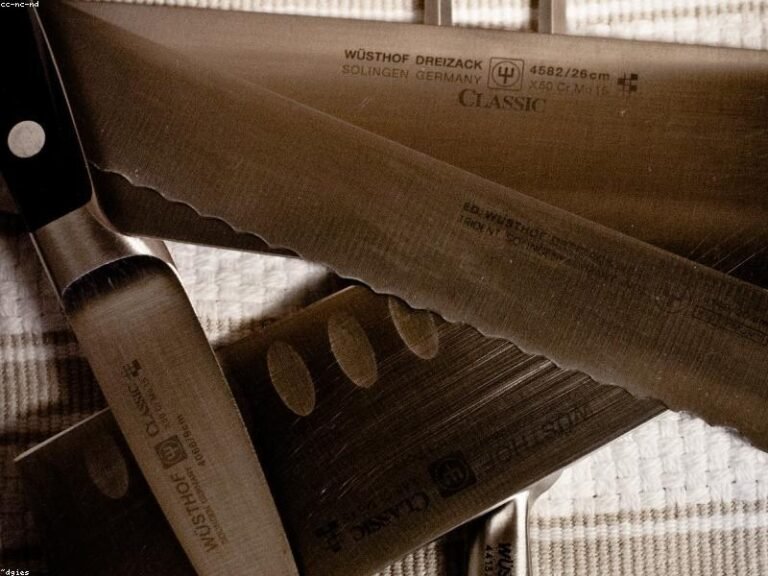
- X50CrMoV15 (German stainless): Wüsthof and Zwilling’s standard steel. Good corrosion resistance, easy to sharpen, requires frequent honing. The Honda Accord of knife steels — reliable and unexciting.
- VG-10 (Japanese stainless): Tojiro DP and Shun Classic steel. Takes a very sharp edge, holds it longer than German steel. Can micro-chip if abused. The most popular entry-level Japanese steel.
- SG2/R2 (powder metallurgy): Premium Japanese steel. Exceptional edge retention and fine grain structure. Found on higher-end Japanese knives ($150+).
- Aogami Super (carbon steel): Takes the sharpest edge of any kitchen knife steel. Requires immediate drying after use — will rust. For enthusiasts who enjoy patina and accept the maintenance trade-off.
Handle Style and Comfort
You will hold this knife for hours over its lifetime. Handle comfort is non-negotiable.
- Western handle (full tang with scales): Three rivets securing handle slabs to a full tang. Heavier, provides a secure grip. Standard on Wüsthof, Zwilling, Messermeister. The bolster (thickened metal between blade and handle) provides finger protection but makes sharpening the heel difficult.
- Japanese wa-handle: Hidden tang inserted into an oval or octagonal wooden handle. Lighter, shifts the balance forward toward the blade. Preferred by many professional chefs for extended prep sessions. The octagonal shape prevents rolling on the cutting board.
The only way to evaluate handle comfort is to hold the knife. Visit a kitchen supply store. If buying online, order from a retailer with a good return policy and test-hold the knife immediately upon arrival.
Budget Recommendations
Under $50: Victorinox Fibrox Pro 8-Inch
The Victorinox Fibrox is the most-recommended budget chef’s knife for a reason. It uses stamped (not forged) X50CrMoV15 steel with a textured thermoplastic handle that provides incredible grip even when wet. It is the knife found in more professional kitchens than any other model. The edge retention is adequate, it sharpens easily, and at this price point there is no competition. If your budget is tight, buy this knife and a whetstone — you will have a better cutting experience than someone who bought a $150 knife and never maintains it.
Victorinox Fibrox Pro 8-Inch on Amazon →
$50-100: Tojiro DP Gyuto 210mm
The Tojiro DP is the entry point to Japanese knives and represents absurd value. VG-10 stainless steel at 60 HRC, a thin blade geometry that cuts circles around German knives, and a hybrid handle design that blends Western ergonomics with Japanese blade philosophy. The fit and finish are not at the level of $200 Japanese knives — you may need to ease the spine and choil with sandpaper — but the cutting performance is genuinely excellent.
$150-200: Wüsthof Classic Ikon 8-Inch
The Classic Ikon is Wüsthof’s best chef’s knife. The half-bolster design solves the sharpening issues of the full-bolster Classic while maintaining the finger guard functionality. The contoured handle is more comfortable than the standard Classic for most hand sizes. The steel is standard Wüsthof X50CrMoV15 with excellent heat treatment. This is a knife that will last 30 years with basic maintenance.
$200+: Japanese Artisan Gyuto
At this level, you are buying from individual smiths and small workshops in Seki City, Sakai, or Sanjo. Knives from makers like Yu Kurosaki, Yoshimi Kato, Shiro Kamo, and Takeda Hamono offer steels (SG2, Aogami Super), grinds, and aesthetics that mass production cannot match. The cutting performance difference between a $200 artisan gyuto and a $100 factory gyuto is real and noticeable.
Quick Comparison: Budget-Tier Picks
Here is how the four recommended chef’s knives from this guide compare side by side.
| Knife | Price Tier | Key Differentiator | Best For |
|---|---|---|---|
| Victorinox Fibrox Pro 8-Inch | Under $50 | Stamped X50CrMoV15 steel, grippy Fibrox handle | Budget-conscious cooks and backup/beater knives |
| Tojiro DP Gyuto 210mm | $50–$100 | VG-10 stainless at 60 HRC, thin Japanese grind | Cooks ready to try a sharper, lighter Japanese blade |
| Wüsthof Classic Ikon 8-Inch | $150–$200 | Half-bolster German forged steel, 30-year durability | Cooks who rock-chop and want a heavyweight workhorse |
| Japanese Artisan Gyuto (Yu Kurosaki, Kato, etc.) | $200+ | Hand-forged SG2/Aogami Super steel from named smiths | Enthusiasts who want the best cutting performance money buys |
Final Advice
Buy the best chef’s knife you can comfortably afford. Do not compromise on the 8-inch length unless your kitchen genuinely cannot accommodate it. Handle the knife before buying if possible. And immediately buy a whetstone and learn to use it — a $150 knife maintained properly will out-cut a $400 knife that is never sharpened.
Disclosure: BladeOwl participates in the Amazon Services LLC Associates Program. As an Amazon Associate, we earn from qualifying purchases at no additional cost to you.