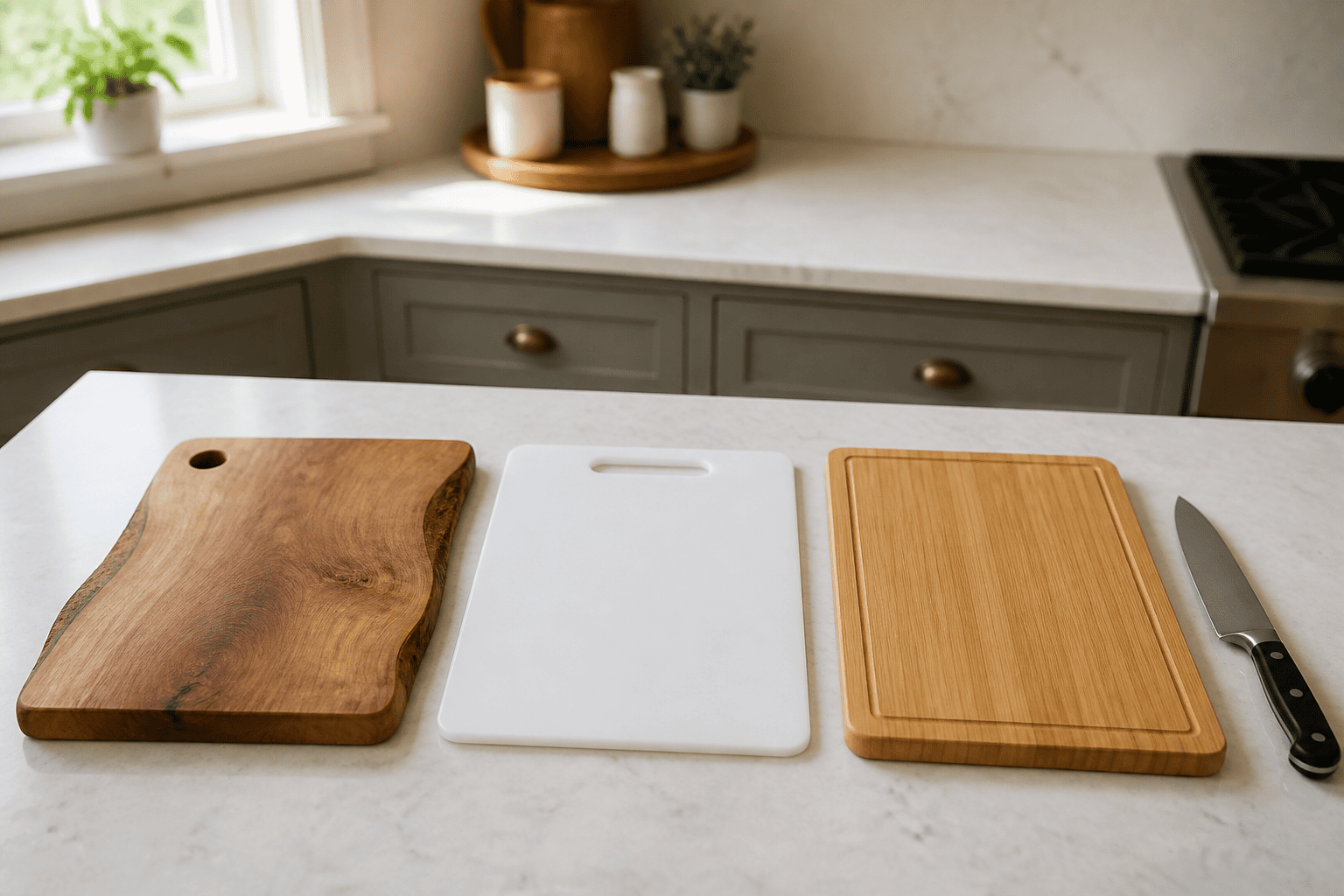
Cutting Boards and Your Knife’s Edge — Wood vs Plastic vs Bamboo (Which Actually Protects Your Blade)
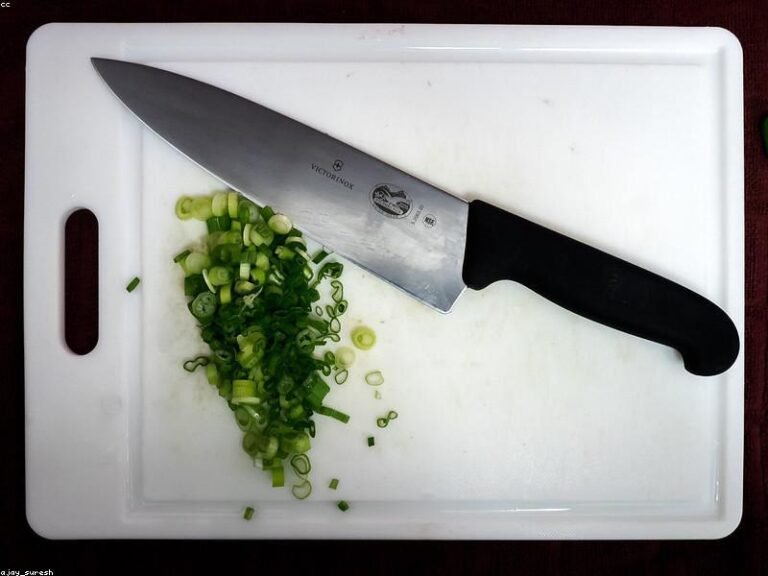
The cutting surface a knife meets every single cut has a bigger cumulative effect on edge retention than most people realize — end-grain wood is the gentlest surface available, edge-grain wood and quality plastic are a reasonable middle ground, and bamboo, glass, and stone are noticeably harder on an edge despite bamboo’s reputation as an eco-friendly, knife-safe choice.
Why end-grain wood is gentlest on an edge
End-grain cutting boards are constructed so the wood fibers stand vertically, with the cut ends of the fibers facing upward. When a blade strikes this surface, it slips between the fibers rather than cutting directly across them, which is why end-grain boards are often described as “self-healing” — small cuts close back up over time rather than accumulating as permanent grooves. This same fiber structure is what makes end-grain the least damaging surface to a knife’s edge, since the blade meets softer resistance than it does against denser materials.
Edge-grain wood and quality plastic: a reasonable middle ground
Edge-grain boards (where the wood fibers run horizontally along the cutting surface) are somewhat harder on an edge than end-grain but still meaningfully softer than plastic, bamboo, or any non-wood surface. High-density polyethylene (HDPE) plastic cutting boards are gentler on a blade than bamboo despite feeling harder to the touch, and they have the practical advantage of being dishwasher-safe and easy to sanitize — a real consideration for raw meat prep that wood boards can’t match as easily.
Bamboo: harder on an edge than its reputation suggests
Bamboo is technically a grass, not a wood, and its fiber structure is considerably denser and harder than most cutting-board woods — often harder than oak. This density is exactly why bamboo boards are durable and resistant to knife marks, but that same hardness means bamboo dulls a blade’s edge noticeably faster than a true end-grain wood board, despite bamboo’s popularity as a sustainable kitchen choice. It’s a reasonable everyday board, just not the gentlest option for a knife’s edge specifically.
Surfaces to avoid for anything but occasional use
- Glass cutting boards: among the worst surfaces for a blade edge — glass is extremely hard and offers no give at all, dulling an edge noticeably within just a few uses.
- Stone or marble boards: beautiful for serving, but similarly damaging to an edge as glass; better reserved for cheese or bread presentation than active knife work.
- Ceramic plates or countertops used as makeshift cutting surfaces: a common and easily avoided source of edge damage — a blade run directly across ceramic or stone countertop dulls dramatically faster than on any purpose-made cutting board.
Keeping a wood board in good condition also protects the edge
A wood cutting board that’s allowed to dry out and crack develops a rougher, harder surface than a well-maintained one, which in turn becomes harder on a knife’s edge over time. Periodically oiling a wood or bamboo board with food-safe mineral oil (not cooking oil, which can turn rancid) keeps the wood fibers supple and the surface consistent. A board that’s cracking, warping, or developing deep grooves has likely lost much of the fiber-give that made it gentle on an edge in the first place, and replacing it benefits both hygiene and knife longevity.
The board matters, but it doesn’t replace sharpening
Even the gentlest end-grain board won’t keep an edge sharp forever — every cutting surface causes gradual, normal edge wear, and every knife eventually needs sharpening regardless of what board it’s used on. Choosing a knife-friendly board simply extends the interval between sharpenings; it doesn’t eliminate the need for it.
When it’s time to restore the edge
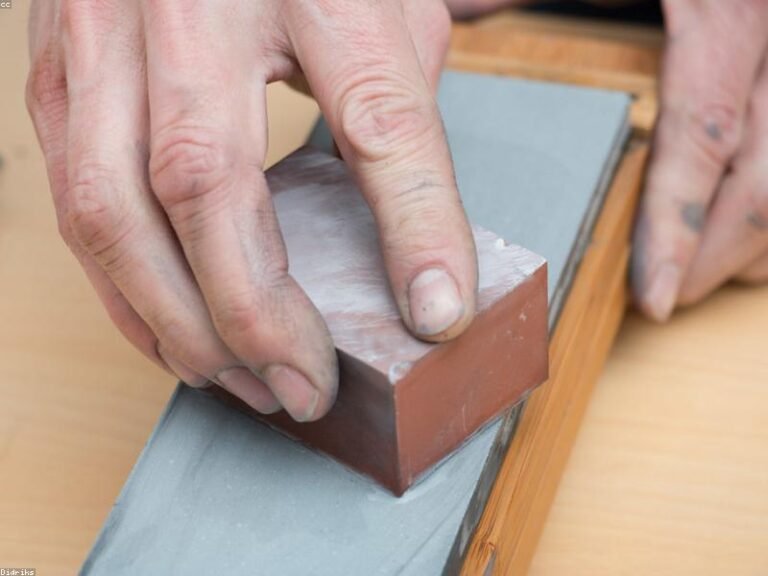
Regardless of cutting board choice, every kitchen knife eventually needs a proper sharpening rather than just honing to stay genuinely effective. The Sharpening Stones Buyer’s Guide covers the tools needed to restore an edge that’s been dulled by normal, everyday cutting-board use.