Blade Length for Chef’s Knives: 6-Inch vs 8-Inch vs 10-Inch
Blade length is the spec most people fixate on when buying a chef’s knife, usually defaulting to 8 inches because it’s the most commonly recommended size. That default is a reasonable starting point, but it isn’t universal, and the tradeoffs between 6, 8, and 10-inch blades are concrete enough that the “right” length really does depend on the hand using it and the food it’s cutting.
The 6-Inch Case: Control Over Reach
A 6-inch chef’s knife, sometimes marketed closer to a large utility knife, trades cutting capacity for maneuverability. The shorter blade is lighter overall and easier to control through detailed work – trimming fat off a small cut of meat, breaking down a single onion, or working in the tight confines of a small cutting board or apartment kitchen counter. For cooks with smaller hands, a 6-inch blade paired with a proportionally sized handle often feels balanced in a way an 8-inch knife doesn’t, since there’s less blade weight out in front of the grip. The obvious downside shows up with volume and size: a 6-inch edge covers less distance per stroke, so slicing something like a large squash or processing a big batch of vegetables takes more individual cuts and more time.
The 8-Inch Standard: Why It Became the Default
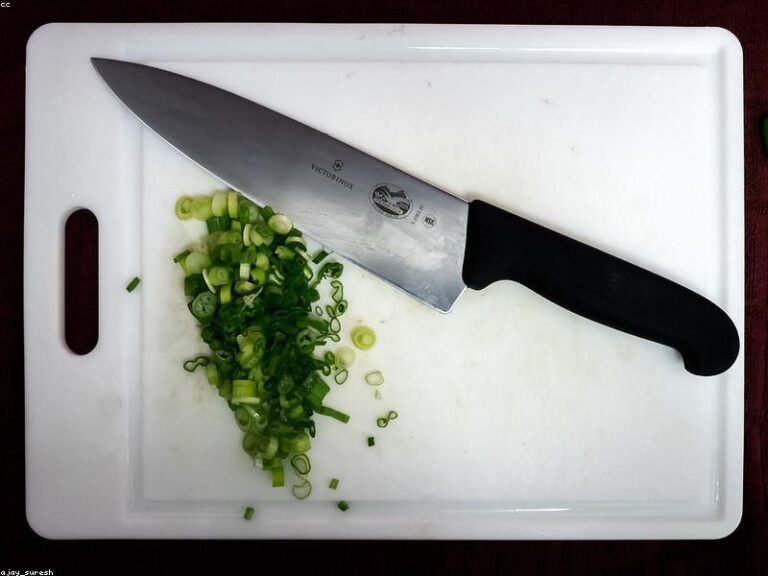
Eight inches has become the standard chef’s knife length because it sits at a genuine middle point. It’s long enough to get through most produce – a whole cabbage, a butternut squash, a chicken – in efficient single strokes, but short enough that the blade doesn’t feel unwieldy for smaller tasks like mincing shallots. It’s also the length most cutting boards, knife blocks, and sharpening tools are designed around, which is a practical convenience beyond the cutting performance itself. For a single knife meant to handle the widest range of kitchen tasks, 8 inches remains the safest recommendation for most cooks.
The 10-Inch Case: Built for Volume
A 10-inch chef’s knife exists for a specific kind of workload: large volumes of prep, oversized produce, or breaking down proteins where a longer edge means fewer total strokes. In a restaurant kitchen prepping cases of vegetables, that difference compounds fast – each cut covers more surface area, so the total motion required across a full prep list drops meaningfully. The tradeoff is weight and length management: a 10-inch blade is harder to maneuver in small motions, needs more counter and board space to use safely, and its added mass means more fatigue over a long session unless the cook has built up the wrist strength and technique to manage it.
Real Options at Each Length
To make these length differences concrete, here is one well-known chef’s knife at each size point — useful references whether you land on 6, 8, or 10 inches.
- Victorinox Fibrox Pro 6″ Utility Knife — A lightweight, stamped stainless blade that’s easy to control for detail work and smaller hands.
- Wüsthof Classic 8″ Chef’s Knife — A forged German all-rounder that fits the size of most cutting boards, blocks, and sharpening tools.
- Mercer Culinary Millennia 10″ Chef’s Knife — A longer, stamped blade built for high-volume prep and larger produce.
Matching Length to the Person, Not the Recipe
Hand size, board size, and typical batch size all matter more than any general recommendation. A home cook who mostly preps for one or two people, working on a compact board, is often better served by a 6-inch blade than by forcing an 8-inch knife into a space it doesn’t fit. Someone regularly processing large quantities of produce, on the other hand, will feel the efficiency gain of a 10-inch blade almost immediately. The 8-inch knife earned its reputation as the all-purpose choice honestly, but it’s a compromise length, not a universal one, and cooks who size their knife to their own hands and their own workload consistently end up happier with the result than those who default to the number everyone else recommends.
This article may contain affiliate links. If you purchase a product through one of these links, Bladeowl may earn a commission at no extra cost to you. This never influences our editorial independence or which products we recommend.