
Japanese vs German Kitchen Knives: Which Blade Philosophy Belongs in Your Kitchen?
Walk into any serious kitchen supply store and you’ll face a fundamental choice: German or Japanese? These two knife-making traditions represent different philosophies, different techniques, and ultimately different cooking experiences. Understanding the key differences will help you choose the right knives for your kitchen, your cooking style, and your maintenance habits.
Steel: The Fundamental Difference
German knives from makers like Wüsthof and Zwilling J.A. Henckels typically use X50CrMoV15 steel hardened to 56-58 HRC on the Rockwell scale. This relatively softer steel prioritizes toughness and stain resistance. A German knife will bend before it chips — a valuable trait when you’re working around bones, frozen foods, or hard squash. The trade-off is that softer steel requires more frequent honing and sharpening.
Japanese knives lean toward harder steels like VG-10 (HRC 60-61), SG2/R2 (HRC 62-64), and traditional carbon steels like White #2 (HRC 61-63) and Blue #2 (HRC 62-64). These harder steels can hold a finer, sharper edge for longer, and they’re a joy to sharpen on water stones. But they’re more brittle — lateral stress, twisting, or impacts that a German knife would shrug off can chip a Japanese blade. Browse VG-10 Japanese knives on Amazon.
Blade Geometry: Weight, Curve, and Cutting Feel
German chef’s knives feature a pronounced belly curve — the blade sweeps upward from heel to tip in a continuous arc. This design evolved for the rocking cut technique: keep the tip on the board and rock the blade up and down to mince herbs, garlic, and aromatics. The blade is thicker (typically 2.5-3mm at the spine above the heel) and heavier, with weight that helps power through denser ingredients. The full bolster between blade and handle adds heft and balance.
Japanese gyutou knives are flatter in profile with less belly and a more acute edge angle (typically 15 degrees per side vs. 20-22 for German knives). They’re thinner behind the edge, which means less wedging and smoother cuts through delicate foods. The flat profile favors push-cutting and tap-chopping techniques. Without a full bolster, Japanese knives are lighter overall and feel more nimble in the hand — like a sports car versus a German sedan. Explore gyutou chef’s knives on Amazon.
Construction: Forged Monosteel vs. Clad San Mai
German knives are almost universally monosteel — a single piece of steel forged, ground, and heat-treated uniformly. This produces a durable, consistent blade that’s easy to maintain and resists delamination. The visible grind line (where the blade bevel meets the flat of the blade) is a hallmark of German craftsmanship.
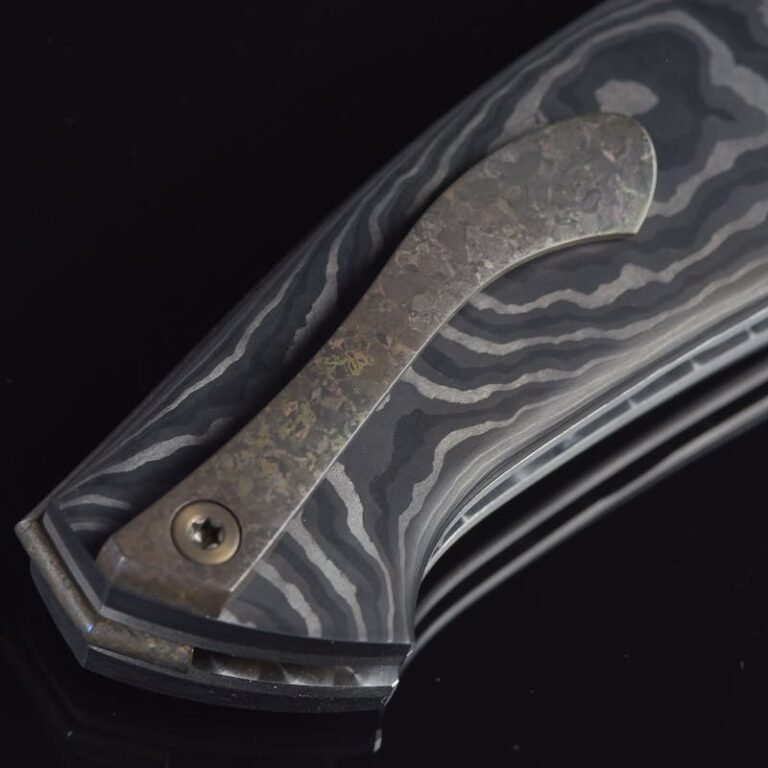
Japanese knives frequently employ san mai construction: a hard, high-carbon core steel (the cutting edge) sandwiched between layers of softer, more flexible stainless steel or iron cladding. This sandwich construction combines the edge-holding ability of hard steel with the toughness and ease-of-sharpening of softer outer layers. The visible wavy line where core meets cladding (called the “hamon” or cladding line) is both functional and beautiful. Damascus-clad knives take this further with dozens of alternating layers that create mesmerizing patterns.
Sharpening and Maintenance
This is where the two traditions diverge most dramatically in daily use. A German knife can be maintained with a honing steel — a quick few strokes before each use realigns the edge and keeps it cutting sharp for weeks. When it finally dulls, a few minutes on a medium-grit stone or a pull-through sharpener (if you must) will restore the edge.
Japanese knives should NEVER touch a honing steel (the hard steel can chip). Instead, maintain the edge with a leather strop loaded with compound, and sharpen on water stones. The reward for this extra care is an edge that cuts with almost supernatural precision. If you’re not willing to invest in stones and learn to use them, a German knife is the more forgiving choice.
Real Knives Compared: German vs. Japanese
Here’s how five well-known chef’s knives from both traditions stack up on price, steel, and who each one suits best.
| Knife | Origin | Price Tier | Key Differentiator | Best For |
|---|---|---|---|---|
| Wüsthof Classic 8-Inch | German | $$$ | Forged monosteel, full bolster, lifetime warranty | Durable, all-purpose daily driver |
| Zwilling Pro 8-Inch | German | $$$ | Precision-forged with an ergonomic, contoured handle | Cooks who want German toughness with modern ergonomics |
| Tojiro DP Gyutou 210mm | Japanese | $$ | VG-10 core clad in softer stainless steel | Budget entry into genuine Japanese cutting performance |
| Shun Classic 8-Inch | Japanese | $$$ | VG-10 core with Damascus cladding and a Pakkawood handle | Japanese edge performance with familiar Western-style ergonomics |
| Miyabi Birchwood SG2 Gyuto | Japanese | $$$$ | SG2 powder steel core with hand-finished Damascus cladding | Collectors and enthusiasts who want the sharpest edge available |
Which One Is Right for You? A Decision Guide
Choose German knives if you: Cook a wide variety of foods including tough ingredients, want a durable tool that forgives occasional abuse, prefer the rocking cut technique, value ease of maintenance, and want a knife that can go years between professional sharpenings. Shop German chef’s knives on Amazon.
Choose Japanese knives if you: Appreciate precision and sharpness above all else, enjoy the ritual of knife maintenance, use push-cutting or tap-chopping techniques, work primarily with vegetables, fish, and boneless proteins, and are willing to adapt your habits to protect a more delicate tool. Shop Japanese chef’s knives on Amazon.
The hybrid approach: Many serious home cooks (myself included) use both. A German 8-inch chef’s knife for heavy-duty tasks and a Japanese santoku or gyutou for precision work. The two traditions complement each other beautifully when you understand their strengths. Explore knife sets on Amazon.
This article may contain affiliate links. If you purchase a product through one of these links, Bladeowl may earn a commission at no extra cost to you. This never influences our editorial independence or which products we recommend.