Knife Laws Europe vs USA – What You Can Actually Carry (And Where)
In Germany, carrying a one-hand-opening locking knife can get you arrested. In Texas, you can legally carry a sword. The gap between European and American knife laws isn’t just wide — it’s a legal minefield that catches well-meaning travelers every single day. If you carry a pocket knife, understanding where the lines are drawn isn’t optional. It’s the difference between a useful tool and a criminal charge.
Knife Laws Europe vs USA — What You Can Actually Carry (And Where)
This isn’t legal advice — it’s a practical survival guide written by someone who has navigated knife laws on both continents and watched enough forum threads descend into panic to know what actually matters. Laws change. Enforcement varies wildly. But the principles below will keep you on the right side of reasonable in the vast majority of situations.
The Fundamental Difference: Intent vs. Capability
American knife law generally asks: “What are you doing with that knife?” European knife law generally asks: “Why do you even have that knife?”
This philosophical difference shapes everything. In the US, carrying a knife is presumed normal — restrictions focus on specific locations (schools, courthouses, federal buildings) and specific categories (switchblades, ballistic knives). In much of Europe, carrying a knife requires justification. The burden of proof is on you, the carrier, to demonstrate a “good reason.”
Let that sink in. The Benchmade 940 that’s perfectly legal in your pocket in Oregon could be confiscated — and you could face charges — in London, Berlin, or Copenhagen, regardless of how peacefully you were carrying it.
Germany: The Country That Loves Knives — But Doesn’t Trust You With Them
Germany is the knife enthusiast’s paradox. Solingen is the knife-making capital of the world. Böker, Puma, and Eickhorn are German institutions. And yet Germany’s knife laws — especially the 2024 reform contained in the Waffengesetz (Weapons Act) — are among Europe’s strictest.
What You CAN Carry in Germany:
- Fixed blades with a blade length up to 12 cm (4.72 inches)
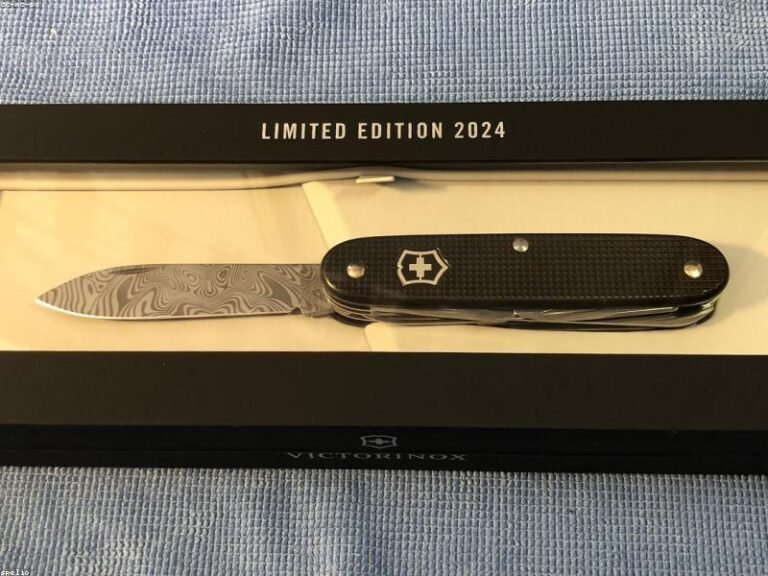
- Folding knives that require TWO hands to open and do NOT lock open (classic slipjoints like the Victorinox Pioneer Alox, ASIN: B000MLUQ4A)
What You CANNOT Carry in Germany (without a “recognized interest”):
- Any folding knife that can be opened with ONE hand (thumb stud, flipper tab, thumb hole — all count)
- Any folding knife with a locking blade — even if it requires two hands to open. A Buck 110 (ASIN: B000E8F1TY) with its lockback? Illegal to carry without specific justification.
- Fixed blades over 12 cm
- Automatic knives, OTF knives, balisongs, push daggers — flat-out prohibited, no exceptions for carry
In 2025, Germany further restricted knife carry in public transportation, long-distance trains, and at public events (festivals, markets, sporting events). Even knives that would normally be legal to carry are banned in these contexts. The practical upshot: if you’re in Germany, carry a slipjoint — or don’t carry at all.
United Kingdom: The Section 139 Trap
The UK’s Criminal Justice Act 1988, Section 139, makes it an offense to carry any article with a blade or sharp point in a public place — without good reason. The only automatic exemption is a folding pocket knife with a cutting edge of 3 inches (7.62 cm) or less, which does NOT lock open.
Read that carefully: Non-locking AND under 3 inches. A locking blade of any length is illegal to carry without good reason. A non-locking blade over 3 inches is illegal to carry without good reason. And “good reason” is not “I collect knives” or “for self-defense” (self-defense is explicitly NOT a valid reason under UK law).
The UKPK (UK Penknife) by Spyderco was literally designed for this law: a non-locking, one-hand-opening knife with a blade under 3 inches. The Spyderco UKPK line remains the gold standard for legal UK carry, and the base model sits at around $80-90. The Victorinox Pioneer (ASIN: B000MLUQ4A) also quietly passes the test at $35-45, though its 2.4-inch blade is arguably even more legally comfortable.
Regardless of the knife itself, UK police have broad discretion. If an officer decides your knife is “intended” as an offensive weapon, the technical specs become almost irrelevant. Context is everything. Carrying a UKPK in a nightclub queue at midnight carries different implications than carrying the same knife in your hiking pack on a trail.
France: Reasonable Restrictions
France classifies knives into Category D weapons. Carrying any knife in public requires a “legitimate reason” — but unlike the UK, French enforcement tends to be situational. An Opinel No. 8 (ASIN: B0001AR1Q8) in your picnic basket is fine. The same Opinel in your pocket at a protest is not. The locking Virobloc ring on the Opinel technically makes it a locking knife — but since Opinels are literally French cultural heritage, enforcement is pragmatic.
Laguiole knives, with their iconic bee emblem, enjoy similar cultural protection. But don’t push it — a tactical flipper in a Paris nightclub will get the same treatment it would in London.
Netherlands: Surprisingly Strict
The Netherlands prohibits carrying: stilettos, switchblades, balisongs, push daggers, throwing knives, and — critically — any folding knife with more than one cutting edge or longer than 28 cm when open. One-hand opening knives are legal but fall under a stricter interpretation. In practice, Dutch knife enthusiasts recommend carrying nothing more aggressive than a non-locking slipjoint in urban areas. The Victorinox Pioneer (ASIN: B000MLUQ4A) is the safest bet.
Switzerland: The Victorinox Exception
Switzerland has relatively knife-friendly laws compared to its neighbors — one-hand opening knives are legal, as are locking blades. Automatic knives and balisongs are prohibited. The cultural normalization of the Swiss Army Knife has kept knife regulation reasonable, though Swiss authorities will still prosecute carry that crosses into “weapon” territory based on context.
Austria: Blade Length Rules
Austria generally allows carry of knives under 7 cm blade length without restriction. Between 7-12 cm, context matters — a kitchen knife being transported is different from a tactical folder in a bar. Over 12 cm requires justification. One-hand opening and locking blades are legal. Switchblades, balisongs, and push daggers are prohibited. Austria is one of Europe’s more reasonable jurisdictions for knife carry, but the “context” clause means discretion is still critical.
Italy: Length and Intent
Italy prohibits carrying knives without “justified reason,” with blade length limits varying by municipality. Double-edged blades are specifically prohibited. Traditional regional knives (like Sardinian pattada or Sicilian stiletto) enjoy cultural recognition but not legal exemption. Your Opinel is probably fine at a picnic. Your Benchmade is not fine at a Florence nightclub.
Spain: Strict Enforcement
Spain prohibits carrying knives with blades over 11 cm (about 4.3 inches) without justification. Automatic knives, daggers, and double-edged blades are prohibited entirely. Spanish police are known for proactive enforcement — don’t assume cultural leniency. The Cudeman and Muela brands make beautiful Spanish knives, but carry them with the same caution you’d apply anywhere in Europe.
USA: A State-by-State Patchwork
American knife laws are the Wild West compared to Europe — but “Wild West” means both freedom and chaos. There is no federal knife carry law. Each state — and in many cases, each city — sets its own rules.
The Most Permissive States:
- Texas: In 2017, Texas removed virtually all restrictions on knife carry. Switchblades, balisongs, Bowie knives, swords — all legal for open or concealed carry. Blades over 5.5 inches are legal everywhere except specific restricted locations (schools, courts, bars, etc.). Texas is the gold standard for knife freedom in America.
- Arizona, Alaska, Kansas, New Hampshire, Montana, Idaho: Constitutional carry states that treat knives similarly — minimal restrictions, mostly location-based.
- Georgia, Oklahoma, Tennessee: Recently liberalized knife laws to allow automatic knives and remove blade length restrictions. Oklahoma specifically allows carry of any knife for any lawful purpose.
The Restrictive States:
- New York: Gravity knives were decriminalized in 2019 after years of controversial enforcement that disproportionately targeted workers who carried folding knives for their jobs. But “dangerous knife” statutes remain broad, and NYC specifically prohibits knives with blades 4 inches or longer in public. Automatic knives remain restricted.
- California: Switchblades (with blade over 2 inches) are illegal to carry, sell, or possess. Automatic knives under 2 inches are legal. Fixed blades must be carried openly in a sheath — concealed carry of a fixed blade (of any length) is illegal. Folding knives of any length are legal, but individual cities (Los Angeles, San Francisco) have blade length restrictions of 3 inches.
- Massachusetts: Carrying any knife longer than 1.5 inches with a locking blade requires a Firearm Identification Card (FID) or License to Carry (LTC). Yes, your Civivi Elementum technically requires a license in Boston.
- Delaware: Concealed carry of any “deadly weapon” (including folding knives over 3 inches) requires a CCDW permit. Open carry is legal but practically invites police interaction.
Federal Restrictions (Apply Nationwide):
- Federal buildings, courthouses, airports past security checkpoints, and schools (K-12) are absolute no-carry zones, regardless of state law. This includes the parking lots of federal facilities.
- The Federal Switchblade Act (1958, amended 2009) restricts interstate commerce of automatic knives but does not prohibit possession — enforcement focuses on import and interstate sales, not individual carry.
The International Traveler’s Cheat Sheet
If you’re traveling between Europe and the USA (or between European countries), here’s the only truly safe approach:
- Carry a non-locking, two-hand-opening slipjoint with a blade under 3 inches (7.6 cm). The Victorinox Pioneer Alox (ASIN: B000MLUQ4A) at $35-45 passes virtually every law in every Western country. The Opinel No. 6 (smaller than the No. 8, also non-locking in its smallest size) works too.
- Never carry a knife in carry-on luggage. Checked baggage only, and even then, verify airline policies — some airlines prohibit all knives, even checked.
- Never mention self-defense. In most European countries, admitting you carry a knife for protection is itself a crime. Your reason is: “I use it to open packages, cut food, and for general utility.”
- Context is everything. A knife in your camping gear is different from a knife in your pocket at a bar. The same knife can be a tool or a weapon depending entirely on where you are and what you’re doing.
- When in doubt, don’t carry. No knife is worth a criminal record.
The Bottom Line
The knife that’s legal in your home country may be illegal two hours away by train. That’s not fair, but it’s the reality. The knife community has spent decades arguing for reasonable regulations — and in many places, those arguments are winning. Texas, Oklahoma, and Georgia have all liberalized their knife laws in the last decade. But Europe isn’t moving in the same direction; if anything, Germany’s 2024-2025 reforms signal the opposite trend.
Build your collection around what you can legally carry. If you live in Germany or the UK, that means becoming an expert on slipjoints — and honestly, there’s a deep, satisfying rabbit hole there. If you live in Texas, the knife world is your oyster. If you travel frequently, the Victorinox Pioneer in your pocket will never be the coolest knife at the party — but it will never get you arrested either.
Buy the wrong knife once and regret it every time you leave your house. Buy the right knife for your jurisdiction, and you’ll carry it confidently for years. Choose accordingly.
Disclaimer: This article is for informational purposes only and does not constitute legal advice. Knife laws change regularly and enforcement varies by jurisdiction. Always verify current laws in your specific location before carrying any knife.
Disclosure: As an Amazon Associate, bladeowl.com earns from qualifying purchases.