Knife Sharpening Angles Explained — Which Angle for Which Knife
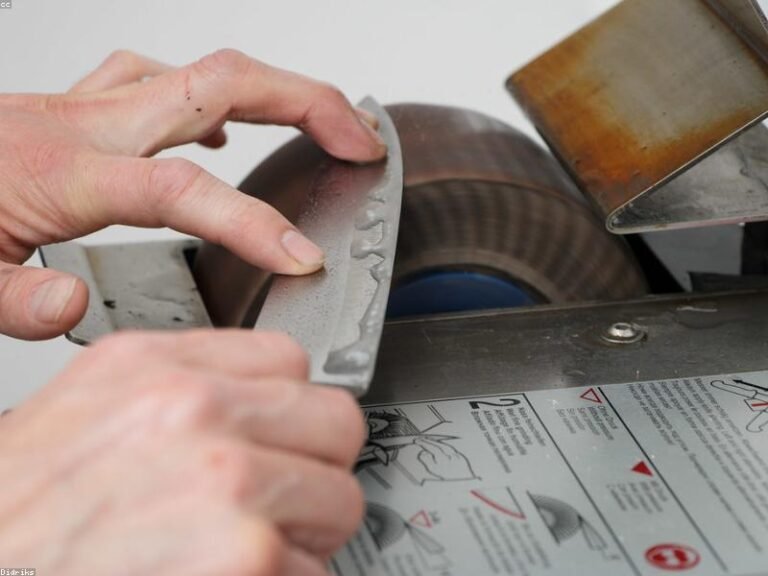
Sharpening a knife is a skill, but understanding sharpening angles is the science behind the skill. The angle at which you sharpen determines the balance between sharpness and durability — too acute and the edge folds or chips, too obtuse and the knife cuts like a butter spreader. Whether you use guided systems, whetstones, or a simple pull-through sharpener, knowing which angle to use for each type of knife transforms your results. This guide breaks down everything you need to know about knife sharpening angles.
What Is a Sharpening Angle?
The sharpening angle is the angle between the sharpening surface and the blade — specifically, it’s the angle on each side of the blade (per side). When people refer to a “20-degree edge,” they usually mean 20 degrees per side, for a total included angle of 40 degrees. The smaller the angle, the sharper the edge. But sharper edges are also more fragile — the thin apex can roll, chip, or deform under pressure. The optimal angle depends on three factors: the knife’s intended use, the blade steel, and the blade’s geometry (thickness behind the edge). Kitchen knives that slice soft foods can handle acute angles. Outdoor choppers need more robust edges.
Sharpening Angle Guide by Knife Type
- 10-15° per side (Very Acute): Straight razors, surgical scalpels, and specialty slicing knives. Exceptionally sharp but requires frequent maintenance. Only suitable for the highest-quality, hardest steels.
- 15-17° per side (Standard Kitchen): Japanese kitchen knives (Gyuto, Santoku, Nakiri), high-end Western chef’s knives. This is the sweet spot for most kitchen cutlery made from hard steels (HRC 60+). Expect exceptional slicing performance with good edge stability in HRC 61+ steels.
- 17-20° per side (General Kitchen / Light EDC): Western chef’s knives, utility knives, most modern EDC pocket knives with premium steels. A great all-around angle that balances sharpness with edge retention for most folding knives in S30V, S35VN, M390, 20CV, and similar steels.
- 20-25° per side (Hard-Use EDC / Hunting): Tactical folders, hunting knives (field dressing), work knives used for heavier cutting tasks. The extra angle adds durability when cutting through tougher materials. Common for knives in tool steels like D2, 1095, and AUS-8. Cold Steel and Zero Tolerance often ship with edges in this range.
- 25-30° per side (Heavy-Duty / Outdoors): Bushcraft knives, chopping knives, machetes, axes. These tools see impact forces that would destroy more acute edges. The thicker edge geometry withstands batoning, chopping, and hard use without rolling or chipping.
Factory Edge Angles of Popular Knife Brands
Most manufacturers sharpen to specific angles at the factory. Knowing these helps you match or adjust when re-sharpening:
- Spyderco: 15-17° per side for most models. Their full-flat-ground blades are relatively thin behind the edge.
- Benchmade: 15-18° per side for everyday folders. The LifeSharp service sharpens to factory specifications.
- Chris Reeve Knives (Sebenza): 18-20° per side. CRK recommends a convex edge finish.
- Buck Knives (110/112): 18-20° per side. Their 420HC steel is optimized for ease of sharpening at this angle.
- Cold Steel: 20-25° per side. Designed for hard use and the Tri-Ad lock’s demands.
- Wusthof / Zwilling (Western Kitchen): 20-22° per side. Softer steel (HRC 56-58) requires more obtuse angles for edge stability.
- Shun / Miyabi (Japanese Kitchen): 15-16° per side. Harder steel (HRC 60-62) supports more acute angles.
Comparison: Sharpening Angles for EDC Knife Steels
| Steel Type | Hardness (HRC) | Recommended Angle | Edge Retention | Notes |
|---|---|---|---|---|
| CPM S30V / S35VN / S45VN | 58-61 | 17-20° | Excellent | The sweet spot for performance |
| CPM M390 / 20CV / 204P | 59-62 | 17-20° | Excellent | Can hold very acute edges |
| CPM M4 / CruWear | 62-65 | 17-22° | Excellent | Very tough, can handle acute angles |
| D2 / AUS-8 / 8Cr13MoV | 57-60 | 20-25° | Moderate | Benefits from slightly obtuse angles |
| 1095 / O1 (Carbon Steel) | 56-60 | 18-22° | Moderate | Toughness allows varied angles |
| VG-10 / 154CM | 58-61 | 15-20° | Good | Versatile, easy to sharpen |
| LC200N / H1 | 58-60 | 18-22° | Moderate | Work-hardens; slightly more obtuse recommended |
Freehand vs. Guided Sharpening
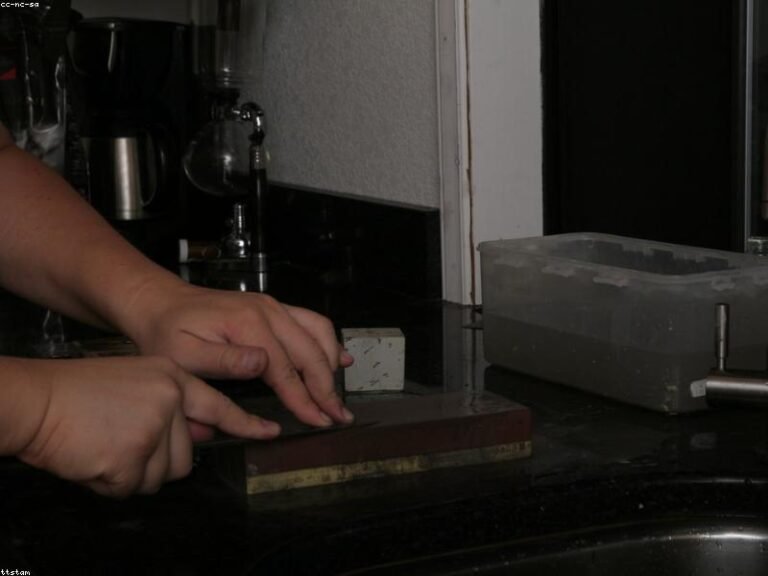
Freehand sharpening on whetstones gives you complete control but requires consistent angle maintenance — a skill that takes practice. Even experienced sharpeners struggle to maintain exactly 17° throughout a stroke. Guided systems like the Wicked Edge, KME, Edge Pro, or Work Sharp Precision Adjust eliminate the guesswork by holding the stone at a fixed angle relative to the blade. For beginners and those seeking repeatable precision, guided systems are transformative. They also make it easy to experiment with different angles and micro-bevels. The downside is cost and setup time — a good guided system runs $100-300+. Check the Work Sharp Precision Adjust on Amazon.
Micro-Bevels: The Sharpening Cheat Code
A micro-bevel is a tiny secondary bevel at a slightly more obtuse angle applied to the very edge. For example, you might sharpen the primary bevel at 15° per side and then add a micro-bevel at 20° per side with just a few strokes on a fine stone. This combines the slicing efficiency of an acute angle with the durability of a more obtuse angle at the apex. Micro-bevels are especially useful for high-hardness steels that can be chippy at acute angles. They’re also much faster to touch up — instead of re-sharpening the entire primary bevel, you just maintain the micro-bevel on a ceramic rod or strop. Many professional sharpeners and manufacturers (including Spyderco) use micro-bevels on their edges.
Frequently Asked Questions
Can I change my knife’s factory sharpening angle?
Absolutely. Re-profiling to a more acute angle takes more time (you’re removing more steel) but is entirely possible with diamond stones or coarse whetstones. Moving to a more obtuse angle is faster since you’re only refining the apex. Many users re-profile their knives to their preferred angle on the first sharpening.
Do I measure the angle per side or total?
Knife sharpening angles are conventionally discussed per side (also called “degrees per side” or DPS). A “20-degree edge” means 20 degrees on each side. The total included angle (both sides) would be 40 degrees. Most sharpening guides and systems use per-side measurements.
What happens if I sharpen at the wrong angle?
Too acute: the edge will feel razor-sharp initially but will roll, chip, or dull quickly under use. Too obtuse: the edge will be durable but won’t slice well — it will feel dull even when it’s technically sharp. Neither is dangerous or permanent; you can always re-sharpen at a different angle.
Is there a “one angle fits all” for knife maintenance?
For general EDC pocket knife users, 20 degrees per side is the safest universal angle. It provides good slicing performance with enough durability for everyday tasks. If you primarily use your knife for light cutting (opening packages, slicing paper, food prep), 17° per side offers better performance. For outdoor and hard-use, stick with 20-22°.
Do I need an angle guide for freehand sharpening?
Angle guides (small wedges you place under the spine) are helpful training wheels. They won’t make you perfect — you still need to maintain the angle throughout the stroke — but they give you a reference point. Many sharpeners use them until muscle memory develops. For precision work, guided systems are the better investment.
This article may contain affiliate links. If you purchase a product through one of these links, Bladeowl may earn a commission at no extra cost to you. This never influences our editorial independence or which products we recommend.