Belt Sander Sharpening Guide
The Fastest Edge You’ll Ever Regret
Belt sanders are the nitro fuel of the sharpening world. In 60 seconds, a 1×30 belt sander can take a butter-knife-dull blade from “won’t cut warm butter” to “shaves arm hair effortlessly.” In the wrong hands, that same 60 seconds can overheat the steel, destroy the temper, round off the tip, gouge the blade face, and permanently ruin a $200 knife beyond repair.
Belt sharpening is simultaneously the fastest, most dangerous, and most misunderstood method of edge restoration. Professional knife makers and custom sharpeners use belt grinders daily; they also spend years learning to avoid the pitfalls. This guide covers the pros, the cons, the gear, and the techniques — so you can decide whether belt sharpening belongs in your arsenal and how to use it without destroying your blades.
Why Belt Sanders Cut So Fast — And Why That’s a Double-Edged Sword
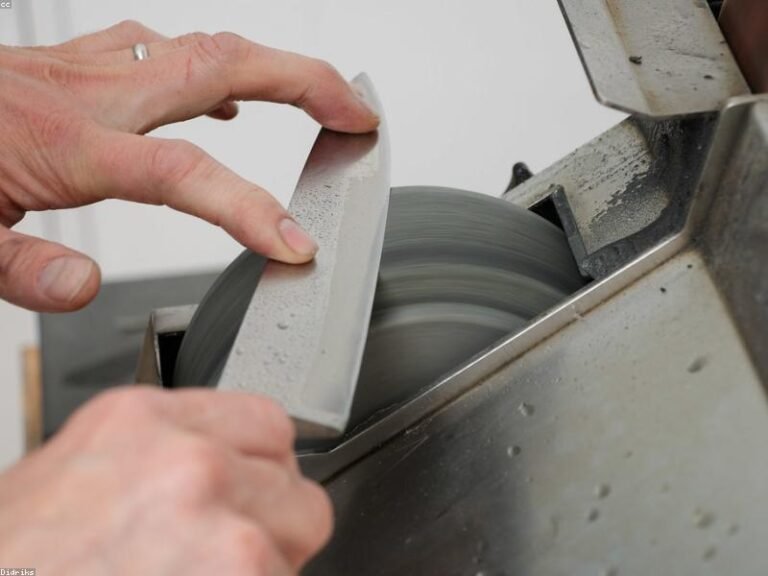
A standard 1×30 belt sander runs at roughly 3,000-3,500 surface feet per minute (SFPM). Compare that to hand sharpening on a whetstone, where even an aggressive sharpener might manage the equivalent of 10 SFPM. The belt sander is moving abrasive across your blade 300 times faster than your hands. That speed translates directly to metal removal — for better and for worse.
The good: a belt sander can reprofile a damaged edge in under a minute. Chips, rolls, broken tips — things that would take 20+ minutes on a coarse stone — disappear in seconds. If you’re restoring flea-market finds, sharpening a restaurant’s worth of knives, or working with hard-wearing super steels, belt speed is a genuine productivity multiplier.
The bad: that same speed generates friction heat. A lot of it. If the blade tip turns blue — even for a split second — the steel at the very edge has exceeded its tempering temperature, permanently softening. That spot will never hold an edge properly again. On thin blades (fillet knives, paring knives, flexible boning knives), this can happen in under two seconds of inattentive grinding.
The Gear: What You Need
The Sander: 1×30 vs Work Sharp vs 2×72
Three tiers of belt sanders are relevant for knife sharpening:
Entry-level: The 1×30 belt sander. These are the ubiquitous $50-80 units from WEN, Bucktool, Central Machinery (Harbor Freight), and similar brands. They use 1-inch-wide belts and typically run at a single, non-adjustable speed around 3,200 SFPM. They’re cheap, widely available, and perfectly adequate for sharpening with the right belts. The WEN 6515T is a solid entry point with a cast-iron base, 1/3 HP motor, and included 5-inch sanding disc — all for under $60.
Mid-range: The Work Sharp Ken Onion Edition. This is the purpose-built sharpening belt system that bridges the gap between a generic 1×30 and a serious knife grinder. Variable speed control, precise angle guides, and a compact form factor make it the safest entry into belt sharpening. The included blade grinding attachment adds a horizontal belt configuration that’s far easier to use for sharpening than a vertical 1×30. The Work Sharp Knife & Tool Sharpener (the original model, around $80) and its upgraded Ken Onion variant are the standard recommendations.
Professional: The 2×72 belt grinder. These are $1,000+ machines used by custom knife makers. Variable speed, reversible motor, 2-inch-wide belts, and the ability to run everything from ceramic to cork belts. Overkill for 99% of sharpeners, but worth mentioning as the endpoint of the belt-sharpening rabbit hole.
Belts: The Abrasive That Makes or Breaks Your Edge
The belt matters more than the sander. The stock belts that come with bargain 1×30 sanders are usually aluminum oxide in coarse grits (80-120) — fine for shaping and heavy repair, but terrible for finishing an edge. You need a progression of belts, ideally in this order:
- Ceramic 120 grit: For heavy reprofiling and chip removal. Ceramic grains fracture during use, exposing fresh sharp edges — so they cut faster and last longer than aluminum oxide. Red Label Abrasives and Norton Blaze are good sources.
- Aluminum oxide 220-400 grit: For the primary sharpening stage. Removes the deep scratches from the coarse belt and establishes the edge bevel.
- Aluminum oxide or Trizact 600-1000 grit: Refinement. The edge starts looking clean and feels sharp.
- Cork or felt belt with polishing compound: The final stage. Run a bare cork belt loaded with green chromium oxide or white aluminum oxide compound to remove the burr and create a polished, razor-sharp finish.
The grit numbers on belts follow the ANSI/CAMI scale, not JIS — so a 400-grit belt is coarser than a 400-grit Japanese water stone. Keep this in mind when planning your progression.
The Safety Rules (Read These Before You Plug Anything In)
- Heat is your enemy. Dip constantly. Keep a cup of water next to the sander. Dip the blade after every pass. If the blade is too hot to touch against your bare skin, it’s getting too hot for the steel’s temper. No exceptions.
- Edge up, never edge into the belt. The belt should move away from the edge, not into it. Running the belt into the edge creates a massive burr instantly and risks the belt catching the blade and throwing it — toward your face, your fingers, or across the room. Always sharpen with the edge trailing (belt moving away from the cutting edge).
- Wear safety glasses. Abrasive belts shed particles. Metal dust flies. Your eyeballs are not replaceable. Put on glasses.
- Secure the sander. Bench-mount your sander or clamp it down. A sander that walks across the workbench while running is a disaster waiting to happen.
- No gloves. Gloves near rotating machinery can catch and pull your hand into the danger zone. Bare hands, awareness, and frequent dipping are the correct approach.
- Remove the platen for convex edges. The platen is the flat metal plate behind the belt. For standard V-bevels, keep it on. For convex edges, remove it and let the unsupported belt curve around the blade.
Technique: How to Belt-Sharpen Without Ruining Your Knife
If you’ve made it past the safety warnings and still want to proceed, here’s the method:
Step 1: Set Up Your Angle
If you’re using a Work Sharp with angle guides, use them — they’re the primary reason to buy that system over a generic sander. If you’re using a 1×30 without guides, you’ll need to freehand the angle. Mark the edge bevel with a Sharpie, make a light pass, and check where the marker was removed. Adjust until you’re hitting the bevel consistently.
Step 2: Start Coarse, Move Fast
Begin with your coarsest belt (120-220 grit). Make light, consistent passes — one pass per side, alternating. Don’t dwell. Count your passes so both sides get equal treatment. After 5-10 passes per side, check for a burr. You’re looking for a tiny wire edge you can feel with your fingernail running from the spine toward the edge.
Step 3: Progress Through Grits
Once the burr is formed along the entire edge, switch to the next belt. The goal at each grit is to remove the scratch pattern from the previous grit completely. With belt sharpening, this happens in 3-6 passes per side at each grit — far fewer than on stones. If you see deep scratches remaining from the previous grit, go back and do a few more passes.
Step 4: Deburr on the Cork Belt
The cork belt loaded with compound is the difference between “sharp but toothy” and “scary sharp.” Make light, alternating passes with the edge trailing. The cork conforms slightly to the blade and polishes away the micro-burr without creating a new one. Three to four passes per side is usually sufficient.
Step 5: Strop (Optional but Recommended)
After the cork belt, a few passes on a leather strop loaded with compound will take the edge from “impressively sharp” to “embarrassingly sharp.” If you’re sharpening for kitchen use, a 1-micron diamond compound on leather is ideal.
The Verdict: Who Should (and Shouldn’t) Use a Belt Sander
Belt sander sharpening belongs in these toolkits:
- High-volume sharpeners: If you sharpen more than 20 knives a month, belt speed pays for itself in time saved.
- Edge repair specialists: Chips, broken tips, re-profiling — nothing beats a belt for heavy metal removal.
- Knife makers: You’re already using a belt grinder. This is just finishing work.
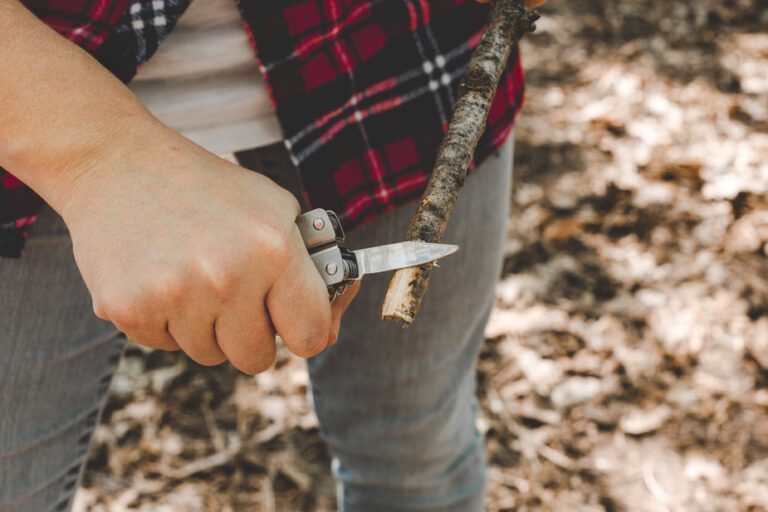
- Outdoor knife users: Hard-use blades that need frequent touch-ups benefit from belt speed, and the slightly convex edge a belt produces is tougher than a pure V-bevel.
Belt sander sharpening does not belong in these toolkits:
- Premium Japanese knife owners: Thin, hard (60+ HRC) blades are the easiest to overheat and destroy. The risk isn’t worth the time savings.
- Beginners: Learn on whetstones first. Develop angle control, burr detection, and grit progression skills before adding power tools.
- Occasional home sharpeners: A 1×30 setup with decent belts costs about the same as a high-quality whetstone set. The stone will last longer, produce a better edge, and never overheat your blade.
The Bottom Line
Belt sanders are tools, not magic. They reward skill and punish carelessness faster than any other sharpening method. If you’re methodical, heat-conscious, and willing to invest in good belts, a belt sander can be the most productive sharpening tool you own. If you’re impatient or inattentive, stick with stones — your knives will live longer.
For most readers, the Work Sharp Knife & Tool Sharpener offers the safest entry into belt sharpening with its built-in angle guides and compact design. If you already own a bench grinder or want maximum versatility, a WEN 6515T 1×30 belt sander with aftermarket belts gives you a full sharpening and grinding station for under $100 total.
Just remember: edge up, dip often, and if the blade turns blue, you’ve already gone too far.
This article may contain affiliate links. If you purchase a product through one of these links, Bladeowl may earn a commission at no extra cost to you. This never influences our editorial independence or which products we recommend.