
What Professional Kitchens Actually Look for in a Knife Lineup
Walk into a professional kitchen’s knife roll and you’ll usually find far fewer knives than a well-stocked home block, not more. That’s not a budget constraint – it’s a deliberate choice, and the reasoning behind it says a lot about what actually matters in a knife once it’s used for hours every single day rather than for a weeknight dinner.
Durability Under Constant Load
A home cook’s knife might see thirty minutes of use a few times a week. A line cook’s knife can be in near-continuous contact with cutting boards, proteins, and citrus acid for an entire shift, day after day. That level of use exposes weaknesses fast – edges that chip on bone, handles that loosen from repeated washing, and steels that corrode or discolor under acidic exposure all get found out within weeks in a professional setting rather than years in a home kitchen. Pros gravitate toward knives with a track record of holding up to that pace, which is why the same small set of trusted blade steels and constructions keeps showing up across professional kitchens rather than newer or flashier alternatives.
Resharpening Has to Be Fast and Reliable
In a home kitchen, sending a knife out for sharpening or spending twenty unhurried minutes on a whetstone is a minor inconvenience. On a line, a knife that goes dull mid-shift has to come back to a usable edge in minutes, often on whatever stone or steel is kept at the station. This pushes professional preference toward steels that sharpen up quickly and predictably rather than exotic super-steels that hold an edge longer in theory but take far more time and skill to bring back once they do dull. Ease of touch-up, not maximum edge retention on paper, is often the deciding factor.
Comfort Measured in Hours, Not Minutes
Ergonomics matter differently when a knife is in someone’s hand for six or eight hours straight rather than fifteen minutes. A handle shape or balance point that feels fine on a quick home prep task can produce real hand fatigue, blistering, or strain over a full shift. Professionals tend to settle on handle shapes and knife weights through direct trial over months of actual line work, which is why so many working cooks end up personally attached to one specific knife rather than switching between several – comfort at hour six is a much harder bar to clear than comfort in the store.
Why a Curated Set Beats a Full Block
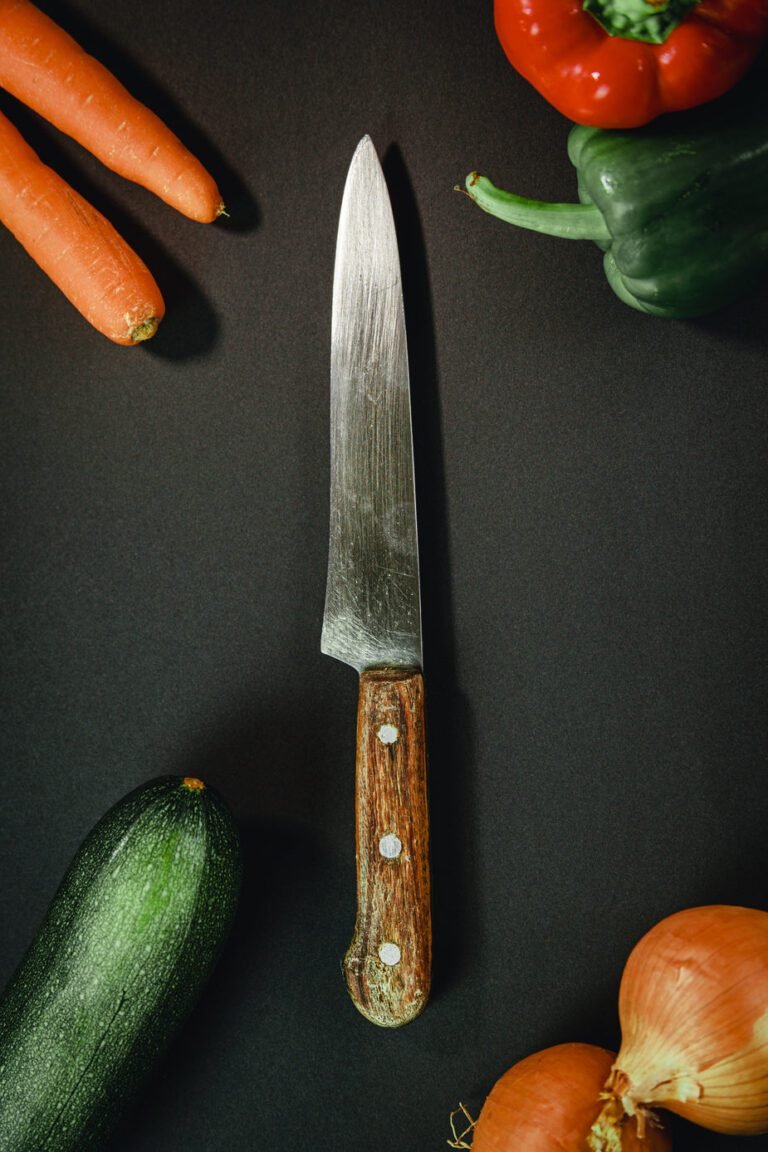
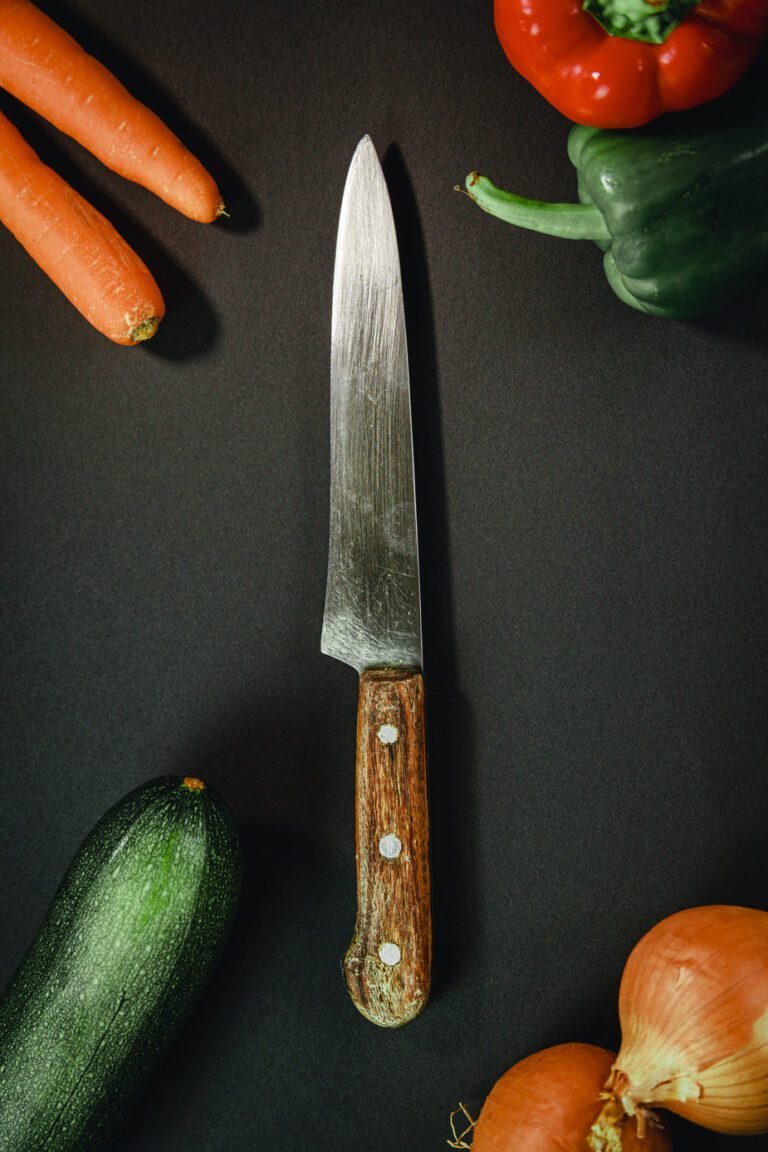
Most working cooks carry a small, personal set: typically a chef’s knife, a paring knife, and often a boning or slicing knife suited to their specific station, rather than the eight-to-fifteen piece sets common in home kitchens. Every extra knife in a roll is extra weight to carry and extra time spent deciding which tool to grab. A curated set built around the tasks a cook actually repeats all day – not a set built to cover every hypothetical task – keeps decision-making fast and keeps the knives that matter most in peak condition, since maintenance time and attention aren’t spread across tools that rarely get used.
What This Means Outside a Professional Kitchen
None of this requires replicating a chef’s exact setup at home, but the underlying priorities transfer well: choosing knives for how they’ll actually be used and maintained, rather than for a long feature list, tends to produce a smaller, more reliable set of tools that stays comfortable and sharp for far longer than a large collection ever does.
This article may contain affiliate links. If you purchase a product through one of these links, Bladeowl may earn a commission at no extra cost to you. This never influences our editorial independence or which products we recommend.