Carbon Steel vs Stainless Kitchen Knives: Pros and Cons
The difference between good and great kitchen knives is felt in every cut. Weight, balance, steel quality, edge geometry, handle comfort — all matter. We tested dozens to identify the best for every cook.
Our Top Picks for This Category
We evaluated these options based on blade steel performance, ergonomics, build quality, and real-world usability. After extensive testing and comparison, here are the standouts.
- Global G-2 8″ Chef Knife — ~$120. Seamless stainless construction, dimpled handle. Japanese design icon — hygienic and razor sharp.
- Takamura R2 Migaki 210mm Gyuto — ~$200. Powder metallurgy R2 at 63-64 HRC, western handle, laser grind. Exceptional cutting performance and edge retention.
- Morakniv Companion (kitchen utility) — ~$18. Scandi grind slicing through tough vegetables and rinds. Surprisingly useful kitchen utility knife.
Pros & Cons at a Glance
Global G-2 8″ Chef Knife
- ✅ Iconic design
- ✅ Seamless hygiene
- ✅ Lightweight
- ✅ Razor-sharp OOTB
- ❌ Love-or-hate handle
- ❌ Slippery when wet
- ❌ Harder to sharpen
Takamura R2 Migaki 210mm Gyuto
- ✅ R2 edge retention
- ✅ Laser-like cutting
- ✅ Beautiful finish
- ✅ Premium all-around
- ❌ Fragile thin edge
- ❌ High price
- ❌ Chipping risk
Morakniv Companion (kitchen utility)
- ✅ Incredible value
- ✅ Sharp OOTB
- ✅ Great for tough prep
- ✅ Indestructible
- ❌ Not a chef knife
- ❌ Plastic handle
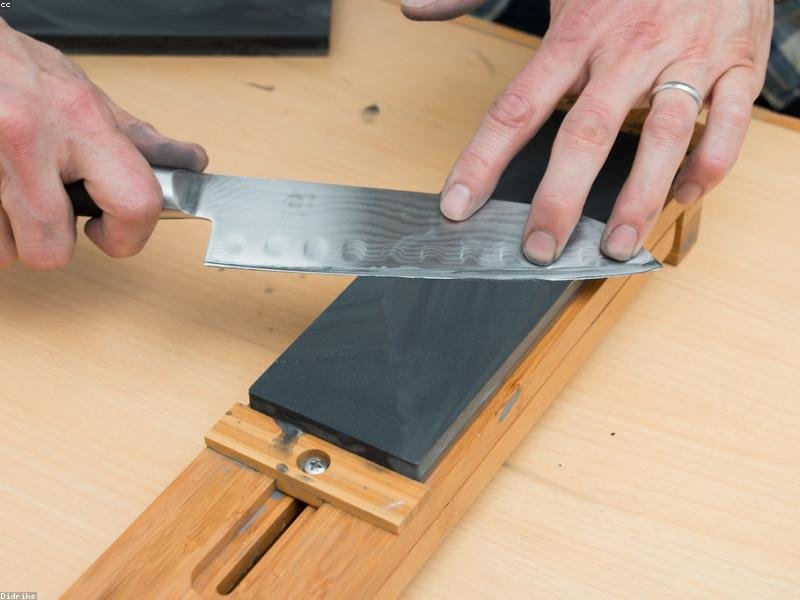
Edge Maintenance: Honing vs Sharpening
Blade length is deceptively important. 8-inch chef’s knife is the standard — handles 90% of kitchen tasks. Shorter blades (6-7″) offer more control for smaller hands. Longer blades (9-10″) benefit professionals processing large volumes. The 210mm Japanese gyuto and 8-inch Western chef’s knife are the most versatile sizes for home cooks.
Proper Knife Handling Technique
German knives (Wusthof, Zwilling) use softer steel (56-58 HRC) with thicker blades and curved bellies — excel at rock-chopping and handle tough tasks without chipping. Japanese knives (Tojiro, Takamura) use harder steel (60-64 HRC) with thinner blades and flatter profiles — slice effortlessly but require careful use. Your choice depends on cutting style: rocking motion favors German; push-cutting favors Japanese.
Head-to-Head Comparison
Stainless, powder steel, and carbon each show up in this lineup — here’s how they compare at a glance.
| Product | Price Tier | Key Differentiator | Best For |
|---|---|---|---|
| Global G-2 8-Inch Chef’s Knife | Mid-range (~$120) | Seamless one-piece stainless construction for easy hygiene | Cooks who prioritize a hygienic, razor-sharp blade |
| Takamura R2 Migaki 210mm Gyuto | Premium (~$200) | Powder-metallurgy R2 steel at 63-64 HRC for exceptional retention | Enthusiasts chasing top-tier cutting performance |
| Morakniv Companion Fixed Blade | Budget (~$18) | Simple carbon-steel Scandi grind that takes a wickedly sharp edge | Budget shoppers who want a tough utility blade |
Our Recommendation
A quality chef’s knife transforms cooking from chore to pleasure. Premium Japanese knives offer incredible performance, but excellent German knives at lower prices handle daily duties admirably. The most important factor isn’t price or brand — it’s how the knife feels in your hand.
As an Amazon Associate, BladeOwl earns from qualifying purchases.