Kitchen Knife Maintenance Guide: Honing vs Sharpening
Professional chefs agree: the chef”s knife handles 80% of all kitchen cutting tasks. Investing in the right one transforms your cooking experience. Our guide compares the best across styles, budgets, and features.
Our Top Picks for This Category
We evaluated these options based on blade steel performance, ergonomics, build quality, and real-world usability. After extensive testing and comparison, here are the standouts.
- MAC Professional 8″ Hollow Edge — ~$145. Japanese thin blade (2.0mm spine), dimpled for food release, pakkawood handle. Exceptional slicer with anti-stick technology.
- Mercer Culinary Genesis 8″ — ~$40. Forged German steel, Santoprene handle. Standard culinary school knife — performs above its price.
- Material Kitchen The 8″ — ~$85. AUS-10 steel, stain-resistant coating, minimalist design, magnetic sheath. Modern DTC with sleek aesthetics.
Pros & Cons at a Glance
MAC Professional 8″ Hollow Edge
- ✅ Razor-thin slicer
- ✅ Food release dimples
- ✅ Lightweight
- ✅ Japanese precision
- ❌ Thin blade needs care
- ❌ Not for hard foods
Mercer Culinary Genesis 8″
- ✅ Culinary school standard
- ✅ Forged at budget price
- ✅ Comfortable grip
- ✅ NSF certified
- ❌ Less refined fit
- ❌ Heavy in hand
Material Kitchen The 8″
- ✅ Sleek design
- ✅ AUS-10 steel
- ✅ Magnetic sheath
- ✅ Instagram-worthy
- ❌ Coating wears over time
- ❌ Limited track record
Blade Length and Shape Guide
Blade length is deceptively important. 8-inch chef”s knife is the standard — handles 90% of kitchen tasks. Shorter blades (6-7″) offer more control for smaller hands. Longer blades (9-10″) benefit professionals processing large volumes. The 210mm Japanese gyuto and 8-inch Western chef”s knife are the most versatile sizes for home cooks.
German vs Japanese Kitchen Knives
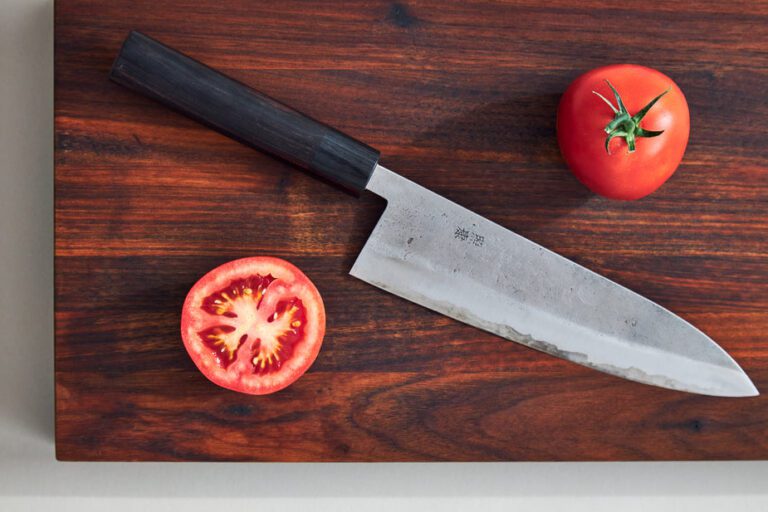
German knives (Wusthof, Zwilling) use softer steel (56-58 HRC) with thicker blades and curved bellies — excel at rock-chopping and handle tough tasks without chipping. Japanese knives (Tojiro, Takamura) use harder steel (60-64 HRC) with thinner blades and flatter profiles — slice effortlessly but require careful use. Your choice depends on cutting style: rocking motion favors German; push-cutting favors Japanese.
Head-to-Head Comparison
A quick side-by-side of the three chef’s knives covered above, so you can match the right one to your budget and cutting style.
| Product | Price Tier | Key Differentiator | Best For |
|---|---|---|---|
| MAC Professional 8-Inch Hollow Edge | Upper mid-range (~$145) | Ultra-thin 2.0mm spine with dimpled food-release grooves | Cooks who prioritize slicing precision |
| Mercer Culinary Genesis 8-Inch Chef’s Knife | Budget (~$40) | Forged German steel that outperforms its price point | Culinary students and budget-conscious cooks |
| Material Kitchen The Knife 8-Inch | Mid-range (~$85) | AUS-10 steel with a stain-resistant coating and magnetic sheath | Style-focused home cooks who want a modern look |
Our Recommendation
The best chef”s knife is the one you reach for every time you cook. No single “best” knife exists — only the best for your cooking style, hand size, and maintenance habits. Invest in the best you can afford, maintain it properly, and it serves for decades.
As an Amazon Associate, BladeOwl earns from qualifying purchases.