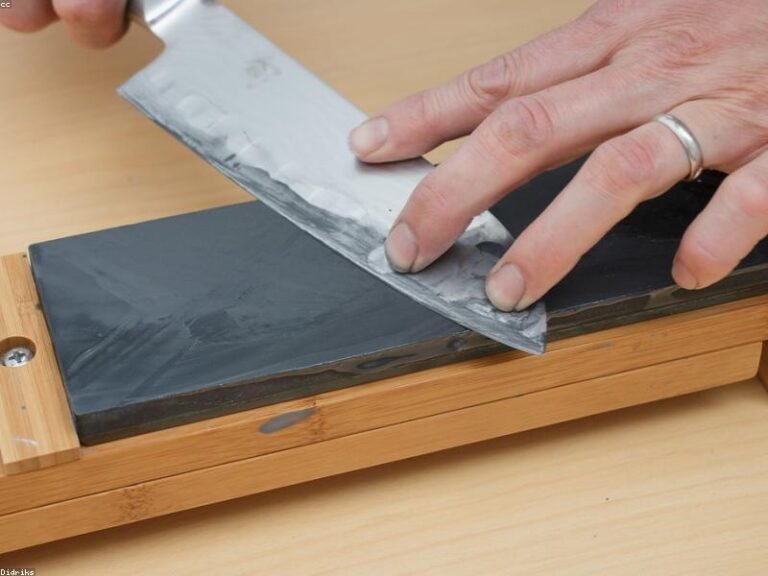

How to Sharpen a Pocket Knife Without a Sharpener
Every pocket knife eventually loses its edge, usually at the worst possible time — mid-camping trip, in the middle of a job, or just when you need it most and there’s no sharpening stone in sight. None of the methods below will replace a proper sharpening system, but they can get a working edge back well enough to finish the task at hand.
The Unglazed Ceramic Mug or Plate
Flip a ceramic coffee mug or dinner plate over and look at the rim on the bottom — most have an unglazed ring of rough, exposed ceramic where the glaze was left off during firing. That rough ring is abrasive enough to act as a makeshift sharpening stone. Hold the blade at roughly the same angle you’d use on a whetstone and draw it across the unglazed edge in short, controlled strokes, alternating sides. It won’t produce a refined edge, but it can restore enough bite to cut rope or food again.
A Smooth River Stone
Not every stone works — you want one with a naturally smooth, fine-grained surface, not a jagged or gritty rock that will chew up the edge instead of refining it. Wetting the stone helps it act more like a proper water stone, carrying away metal filings as you work. Use light, consistent pressure and the same alternating-side technique as any sharpening stone. This method is slow and imprecise, but in the backcountry it’s often the only option available.
Another Knife’s Spine
If your edge isn’t dull so much as rolled or slightly out of alignment, you can sometimes realign it the same way a honing steel would, using the smooth spine (the unsharpened back) of a second knife. Draw your edge across the spine at a shallow angle with light pressure, alternating sides. This doesn’t remove metal or truly sharpen anything — it just nudges a folded-over edge back into line, which can restore noticeable cutting performance if the blade was only mildly dulled.
Sandpaper on a Flat Surface
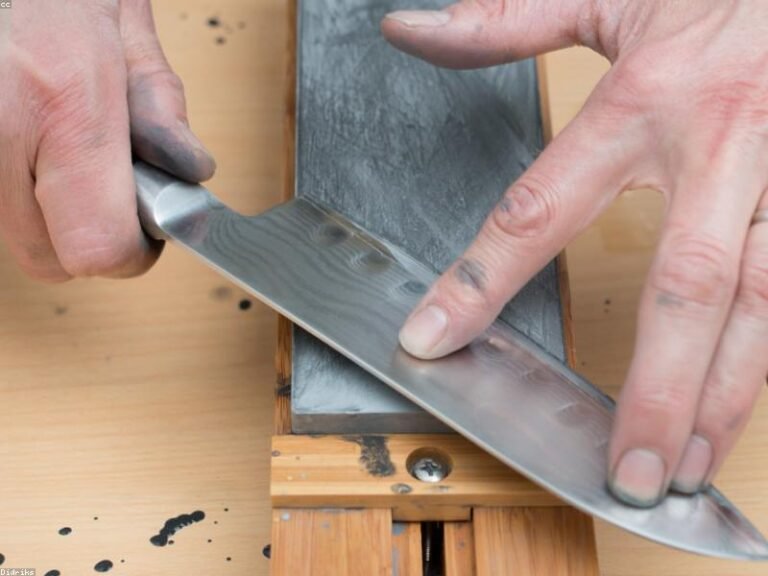
If you have sandpaper in a toolbox or repair kit, lay it flat on a hard, stable surface like a piece of wood or a smooth rock. Start with a coarser grit if the edge is very dull, then move to a finer grit to clean it up. This is effectively an improvised version of using sharpening stones and can work surprisingly well, especially if you have a couple of different grits on hand.
Stropping on Leather or Denim
A leather belt, boot, or even a folded pair of denim jeans can serve as an improvised strop. Dragging the blade backward (spine leading, edge trailing) across the material polishes and aligns the very edge, similar to the finishing pass on a proper strop. This won’t sharpen a truly dull blade, but after using one of the methods above, stropping helps refine and smooth out the edge for cleaner cutting.
Remember: These Are Field Fixes
Every technique here is a temporary, get-you-through-the-day solution, not a substitute for sharpening on proper stones or a quality sharpening system at home. Improvised methods can be inconsistent, and it’s easy to damage an edge further with the wrong angle or too much pressure. Use them to finish the task in front of you, then give your knife a real sharpening once you’re back near your regular gear.
This article may contain affiliate links. If you purchase a product through one of these links, Bladeowl may earn a commission at no extra cost to you. This never influences our editorial independence or which products we recommend.