Essential Kitchen Knives Every Home Cook Needs — The Only 4 You Really Need
bladeowl is reader-supported. When you buy through our links, we may earn a small commission at no extra cost to you.
This doesn’t affect our recommendations — we only recommend gear we’d use in our own kitchen.
Essential Kitchen Knives Every Home Cook Needs
The Only 4 You Really Need
Walk into any kitchen store and you’ll find walls lined with blades —
santokus, nakiris, boning knives, carving knives, cleavers, tomato knives, and thirty-piece blocks
that cost more than your rent. It’s overwhelming by design. The knife industry wants you to believe
you need a dedicated blade for every single task.
You don’t.
After years in professional kitchens and countless hours testing blades at every price point,
I can tell you this with confidence: four knives will handle 99% of what a home
cook ever needs to do. Not fourteen. Not forty. Four. The rest is marketing — and clutter you’ll
never use.
Here are the only four kitchen knives worth your money, why each one earns its place, and which
specific models deliver the best value at every budget.
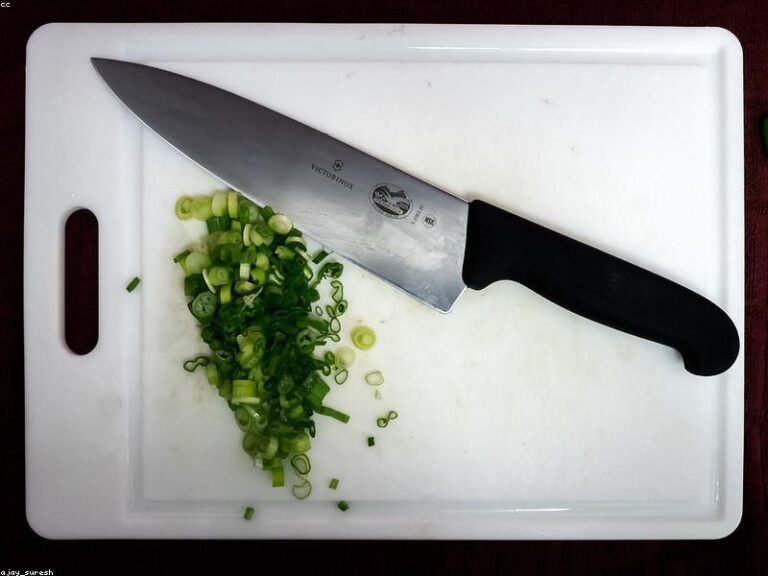
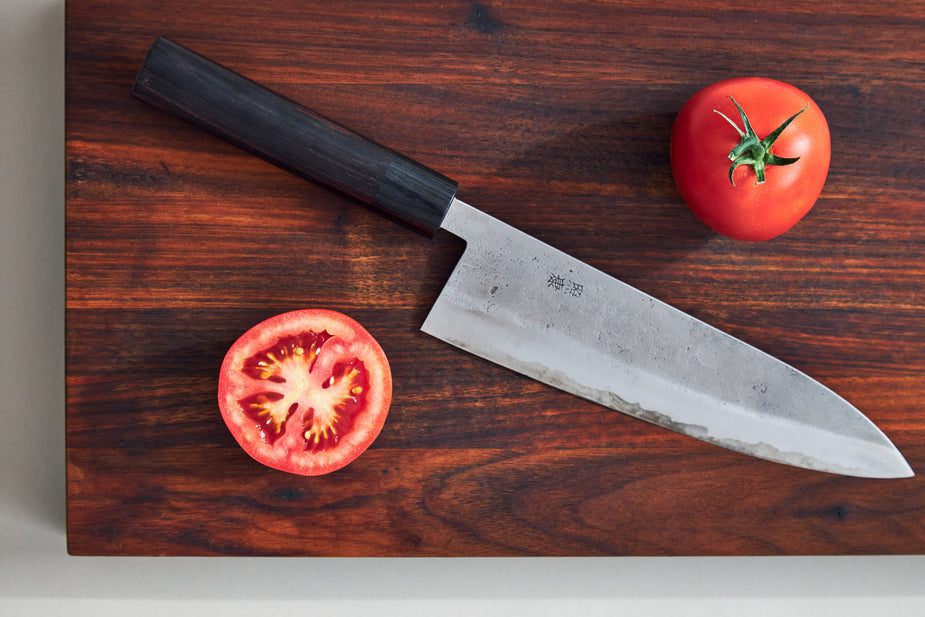
Chef’s Knife
If you own exactly one good knife, make it this one. A proper chef’s knife handles roughly
80% of all kitchen cutting tasks: dicing onions, mincing garlic, slicing meat, chopping
herbs, breaking down poultry, even smashing cloves under the flat of the blade.
Eight inches is the sweet spot — long enough to slice through a cabbage or a roast, short
enough to feel nimble on the board. Go 10-inch only if you’re tall with large hands; go 6-inch
only if you have a tiny cutting board and zero counter space.
Western-style blades (German, French) have more belly for rocking cuts. Japanese gyutos are
lighter, harder steel, with a flatter profile — they stay sharp longer but require more care.
Either style works; what matters is that it feels right in your hand.
~55–61 HRC
Stainless or carbon
Dice · Slice · Chop · Mince
Paring Knife
The chef’s knife can’t do everything. When you’re coring an apple, hulling strawberries,
deveining shrimp, peeling shallots, or doing any fine in-hand work, the paring knife is
what you reach for.
A good paring knife feels like an extension of your fingers. Short blade, pointed tip,
lightweight — it gives you the precision you simply can’t get from an 8-inch blade.
You don’t need to spend a fortune here; even a $10 paring knife will serve you well for years
if you keep it sharp.
Look for a blade between 3 and 4 inches with a comfortable handle. The classic spear-point
shape is most versatile. Avoid gimmicky crved “bird’s beak” paring knives unless you do a
lot of tournée cuts (you don’t).
Spear point
In-hand work
Peel · Core · Detail
Bread Knife
Yes, it saws through crusty sourdough without crushing it. But a good serrated bread knife
does so much more: slicing ripe tomatoes without tearing the skin, cutting delicate cake layers,
portioning melons and pineapples, even trimming pastry dough.
The key is the offset design — the handle sits higher than the blade, keeping your
knuckles off the cutting board. Look for deep, pointed serrations (not the wavy “scalloped”
kind, which dull faster). And no, you can’t really sharpen a serrated knife at home — but a
quality one will last a decade before it needs professional attention.
Don’t overspend here. A $20–40 bread knife from a reputable brand will outperform a $150
artisan blade in real kitchen use.
Pointed serrations
Offset handle
Bread · Tomato · Pastry
Utility / Petty Knife
This is the knife people skip — and then wish they hadn’t. A 5–6 inch utility knife (called a
petty in Japanese kitchens) bridges the gap between your chef’s knife and paring knife.
It’s perfect for mid-sized tasks: slicing a single chicken breast, trimming silver skin off a
pork tenderloin, segmenting citrus, or prepping a small batch of vegetables when dragging out
the big chef’s knife feels like overkill.
In a Japanese-style kit, the petty often replaces the paring knife entirely, handling both
in-hand and on-board work. Western cooks tend to keep both — and having the option is genuinely
useful if you cook daily.
If you’re on a tight budget and can only buy three knives, skip this one. But if you’re building
a complete four-knife kit, the utility/petty earns its drawer space every week.
Petty or utility
Mid-size tasks
Trim · Segment · Slice
Knives You Don’t Need
Kitchen stores and Instagram ads will try to convince you otherwise. Here are the blades that
gather dust in 90% of home kitchens — and what you already own that does the same job.
Santoku
A santoku is essentially a shorter, flatter chef’s knife. It’s not wrong — if you
prefer it over a western chef’s knife, go for it. But you don’t need both. Pick one
and move on.
Boning Knife
Unless you’re breaking down whole animals weekly, your chef’s knife and paring knife handle
the occasional chicken breakdown or trimming just fine. A boning knife is a pro tool for
butchers — not a home kitchen essential.
Carving / Slicing Knife
The long, thin slicing knife looks impressive at Thanksgiving. But your bread knife already
slices brisket and roast beautifully — the serrations glide through crust and meat alike.
A dedicated slicer is a once-a-year tool.
Cleaver
Unless you’re splitting pork bones or cracking coconuts, a heavy cleaver is theatrical
overkill. For light bone work (spatchcocking chicken), the spine of your chef’s knife
does the job.
Nakiri
A Japanese vegetable cleaver with a straight, rectangular blade. Beautiful? Yes. Practical?
Only if you prep massive amounts of vegetables daily. Your chef’s knife already
excels at this.
Tomato Knife
A serrated knife specifically for tomatoes. This is peak “single-tasker” absurdity. Your
bread knife slices tomatoes flawlessly — and costs the same as a dedicated tomato knife while
doing twenty other things.
Cheese Knife Set
Soft cheese knife, hard cheese knife, parmesan chisel… You have a chef’s knife and a paring
knife. They cut cheese. The end.
Steak Knives (as Kitchen Tools)
Steak knives belong at the dinner table, not in your prep kit. They’re too short, too
flexible, and usually too dull for any serious kitchen work. Keep them in the dining room
drawer.
Starter Set vs. Buying Individual — What Should You Do?
This is one of the most common questions I get. The short answer: buy individual knives.
But let’s break it down honestly.
Knife Block Sets
- Convenient — one purchase, done
- Often include 3–6 knives you’ll never use
- Quality of included knives is usually mediocre
- The block itself takes up counter space
- Harder to upgrade one piece later
- $100–300 for a set, but per-knife quality lags
Verdict: Only worth it if you find a set that’s
genuinely 3–4 high-quality pieces (rare) and you value convenience above all else.
Buying Individual Knives


- Every dollar goes toward quality, not filler
- You can mix brands — Victorinox chef’s + Wüsthof paring = perfectly fine
- Build your kit gradually as budget allows
- Replace or upgrade one knife at a time
- Choose a handle that fits your hand for each knife
- $80–120 total gets you a genuinely excellent 4-knife kit
Verdict: This is the smarter path for 95% of home
cooks. Start with a chef’s knife, add a paring knife, then fill in the bread and utility
knives as you notice the gaps.
My recommended order:
Chef’s Knife Paring Knife Bread Knife Utility/Petty.
That first $40 chef’s knife will change your cooking more than a $300 block set ever could.