The Only 4 Kitchen Knives You Actually Need — A Professional Chef’s Paradox
Walk into Williams-Sonoma and you’ll find knife blocks with 17 pieces. Seventeen! A “tomato knife.” A “bagel knife.” A “grapefruit knife” — for the six grapefruits you eat per year.
Here’s what nobody tells you: professional chefs use fewer knives than most home cooks. They just use better ones.
The Kitchen Counter Confession
I once asked a French-trained chef what knives he keeps at home. He laughed and opened a single drawer. Four knives. That’s it. Four knives that had seen more action than most 17-piece blocks ever will.
“Everything else is marketing,” he said, slicing through an onion with the kind of automatic precision that comes from 20 years on the line. “A good cook needs four knives. After that, you’re just collecting.”
The Holy Quad: Four Knives, Infinite Meals


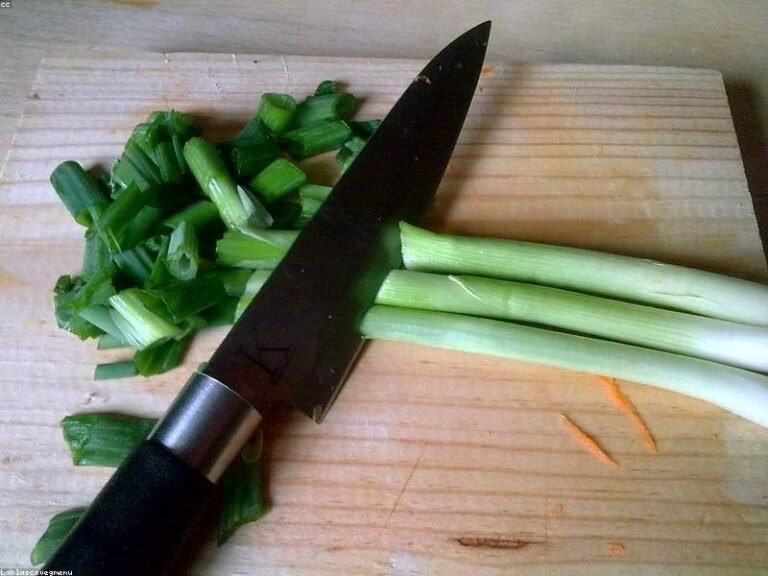
This is not negotiable. An 8-inch chef’s knife handles 85% of all kitchen cutting tasks. Vegetables, meat, herbs, even cracking garlic cloves with the flat of the blade.
German style (Wüsthof, Zwilling): Curved belly for rocking cuts, heavier, more durable, easier to maintain. The workhorse.
Japanese style (Shun, Global, MAC): Flatter profile for push cuts, lighter, harder steel that holds an edge longer but chips more easily. The scalpel.
My pick: The Wüsthof Classic 8-Inch Chef’s Knife is the gold standard for a reason. German steel, full tang, perfect balance. It’ll outlive you if you treat it right. For budget-conscious cooks, the Victorinox Fibrox Pro performs at 85% of the Wüsthof for about a third of the price.
2. The Paring Knife (3-4 inch) — Precision’s Best Friend
Everything the chef’s knife can’t do: peeling, coring, deveining shrimp, hulling strawberries, scoring, and any cut that needs fingertip control. Skip the fancy ones — a $10 Victorinox paring knife outperforms $80 designer versions.
3. The Serrated Bread Knife (8-10 inch) — Not Just For Bread
Yes, it saws through crusty sourdough without crushing it. But here’s the secret: a serrated knife is also the best tool for tomatoes, citrus, melons, angel food cake, and anything with a tough exterior and delicate interior. Pro tip: The longer the blade, the fewer sawing motions you’ll need. Go 10 inches.
4. The Boning/Fillet Knife (6-7 inch) — The Protein Specialist
If you cook meat or fish more than once a month, this knife earns its spot. The thin, flexible blade follows bones and skin contours that your chef’s knife can’t. Breaking down a whole chicken without one is a wrestling match. With one, it’s a 90-second operation.
The Knives You Can Skip (And Why)
| “Specialty” Knife | What Actually Does The Job |
|---|---|
| Santoku | Chef’s knife (the Santoku is just a shorter, flatter chef’s knife) |
| Tomato knife | Sharp chef’s knife or serrated bread knife |
| Cheese knife set | Paring knife for hard cheese, butter knife for soft |
| Cleaver | Chef’s knife for 99% of tasks (unless you break down whole carcasses) |
| Nakiri | Chef’s knife (or get one if you’re a vegetable-only household) |
| Carving knife & fork | Bread knife for turkey skin, chef’s knife for slicing |
German vs Japanese: A Framework, Not a War
The internet loves to pit German and Japanese knives against each other like they’re rival sports teams. The reality:
- Go German if you’re hard on your knives, cook a lot of hearty food, want something that sharpens easily, or just want one knife that does everything.
- Go Japanese if you value precision, cook a lot of vegetables and fish, enjoy the ritual of knife maintenance, and don’t mind a learning curve.
- Or do what most pros do: German chef’s knife for heavy work, Japanese petty/utility knife for fine work. Best of both worlds.
The Maintenance Reality Check
A $200 knife that’s dull is outperformed by a $30 knife that’s sharp. Period. Here’s the maintenance routine that keeps your blades performing like new:
- Daily: Hand wash and dry immediately. Never dishwasher. Never.
- Weekly: Honing steel — 3-4 passes before cooking. This realigns the edge, doesn’t sharpen.
- Monthly: Quick strop or fine stone touch-up if you cook daily.
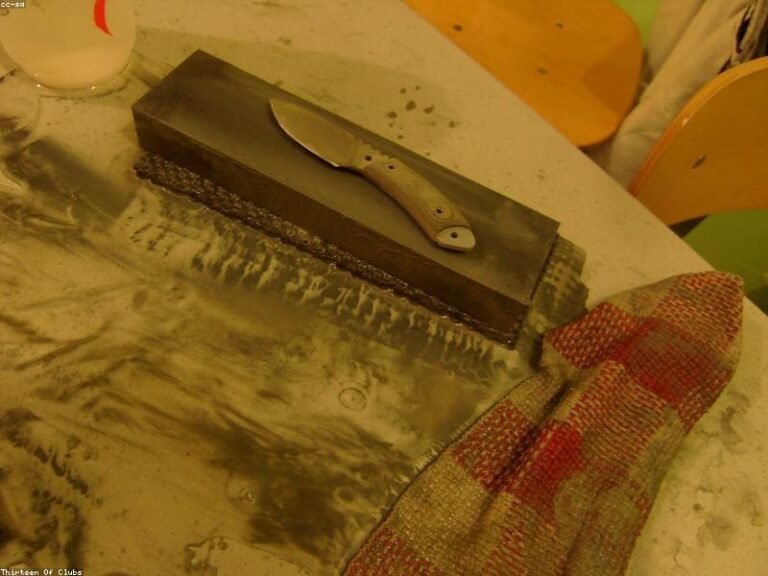
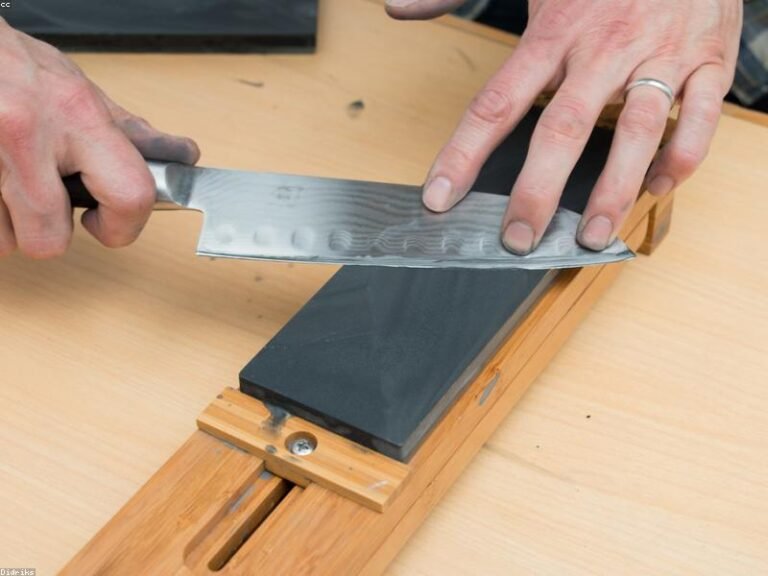
- Quarterly: Full sharpening session with a whetstone or guided system.
The big secret: it’s better to do 5 minutes of maintenance every week than 45 minutes of restoration every 6 months. Your knives will stay sharper, longer, with less effort. Think of it like dental hygiene — little habits beat dramatic interventions.
The $100 vs $200 Question
Is a $200 chef’s knife twice as good as a $100 one? No. The law of diminishing returns hits hard in kitchen knives. The jump from $20 to $100 is massive (better steel, better balance, better edge retention). The jump from $100 to $200 is noticeable but subtle (fit and finish, handle materials, brand prestige). Above $200, you’re paying for artistry, not performance.
My honest advice: Spend your budget on the chef’s knife. That’s where the quality matters most. The paring knife, bread knife, and boning knife can each be under $30 and still perform beautifully — as long as the chef’s knife is excellent.
Disclosure: As an Amazon Associate I earn from qualifying purchases. Your price stays the same, and I only recommend gear I trust in my own kitchen.