Knife Maintenance Guide — How to Keep Your Blades Sharp, Clean, and Rust-Free
Your knife is only as good as the care you give it. Whether you’re carrying a $30 EDC folder or a $200 Japanese chef’s knife, neglect turns a precision tool into a dull, rusted paperweight faster than you’d think. This knife maintenance guide covers everything you need to keep your blades sharp, clean, and rust-free — broken down into simple, actionable steps.
Why Knife Maintenance Matters
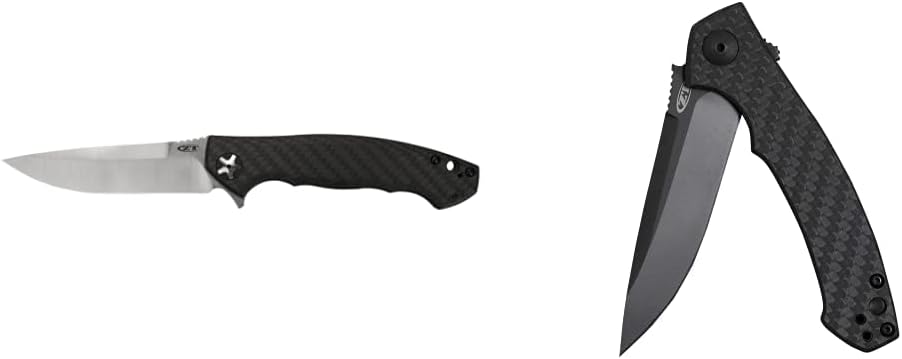
Dull knives are dangerous knives. A blade that slides instead of bites forces you to push harder, increasing the chance of slipping. Dirt, moisture, and food residue accelerate corrosion — even “stainless” steels pit if ignored. Good maintenance does three things: extends blade life, keeps you safe, and preserves cutting performance. Best part? It takes minutes, not hours.
1. Cleaning Your Knife
- Hand wash only — never the dishwasher. Dishwasher detergent is abrasive and corrosive. Heat and moisture warp handles and ruin edges.
- Warm water + mild dish soap. Use a soft sponge or microfiber cloth. Avoid metal scrub pads — they scratch finishes and promote rust.
- Wipe spine-to-edge. Always wipe away from the cutting edge. For folders, open fully and clean the pivot with a cotton swab.
- Dry immediately. Water left for minutes can spot carbon steel. Bone-dry before storage — pivot, liners, crevices included.
For heavy grime: Isopropyl alcohol (70%+) on a cloth cuts through sap, tape residue, and adhesives. Follow with a light oil coat — alcohol strips protective oils.
2. Oiling & Rust Prevention
- For blade steel: Food-grade mineral oil is the gold standard — cheap, non-toxic, won’t go rancid. Apply a thin coat after cleaning. View food-grade mineral oil on Amazon
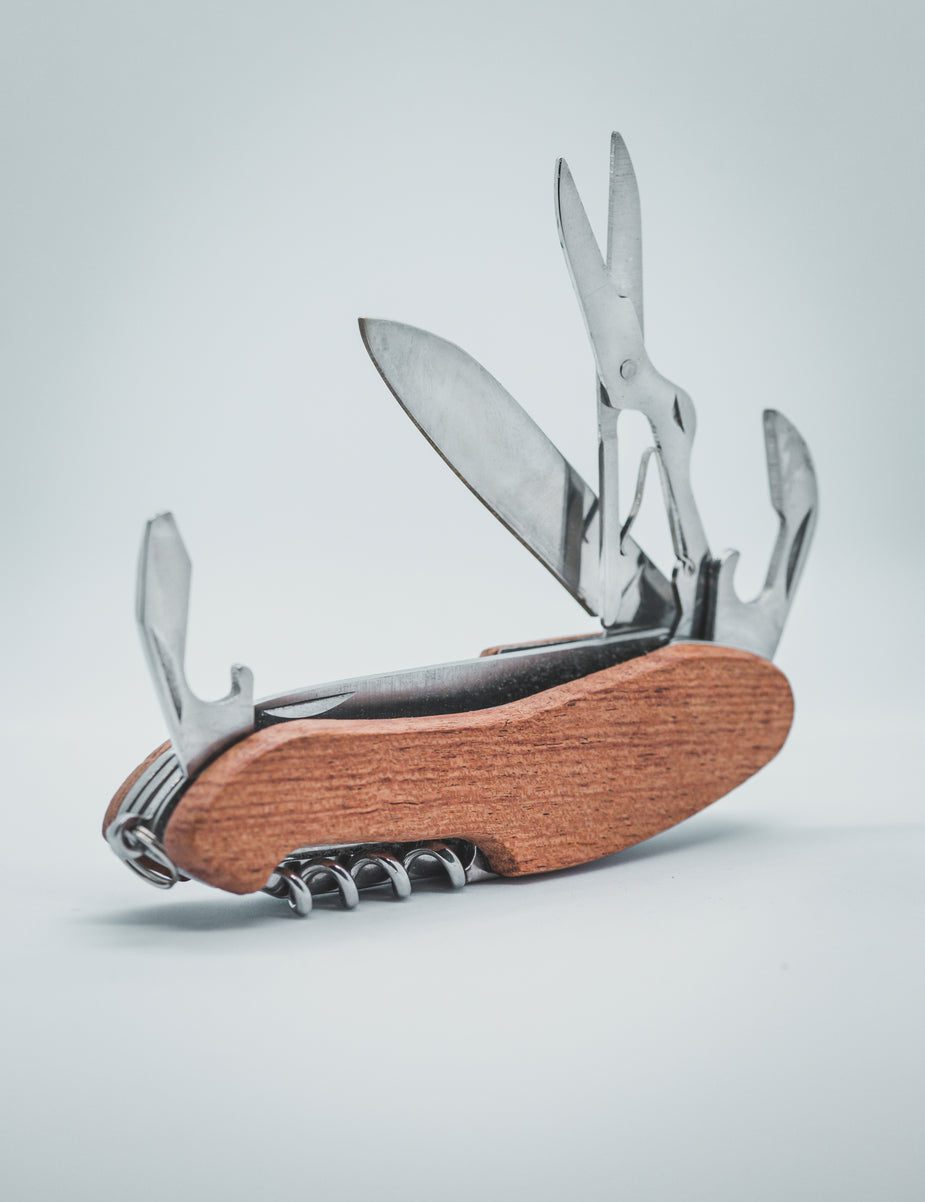
- For pivots (folders): One drop of pivot oil per side, work the blade open/closed a dozen times, wipe excess. Keeps action smooth and prevents internal rust.
- For handles: Wood handles need occasional mineral oil or beeswax conditioning. Micarta and G10 just need a wipe-down. Never store knives in leather sheaths long-term — leather traps moisture.
Rust spots? Catch them early: a pencil eraser or dab of metal polish removes light surface rust. For deeper spots, 0000 steel wool with oil, rub gently in one direction. Re-oil immediately.
3. Sharpening Basics

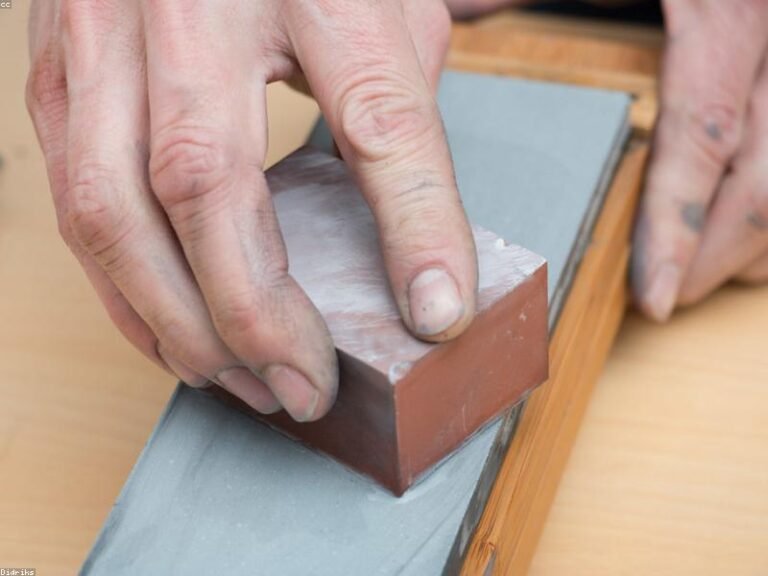
- Hone first, sharpen second. A strop or honing rod realigns a slightly rolled edge. Try this before stones — you might not need to sharpen at all.
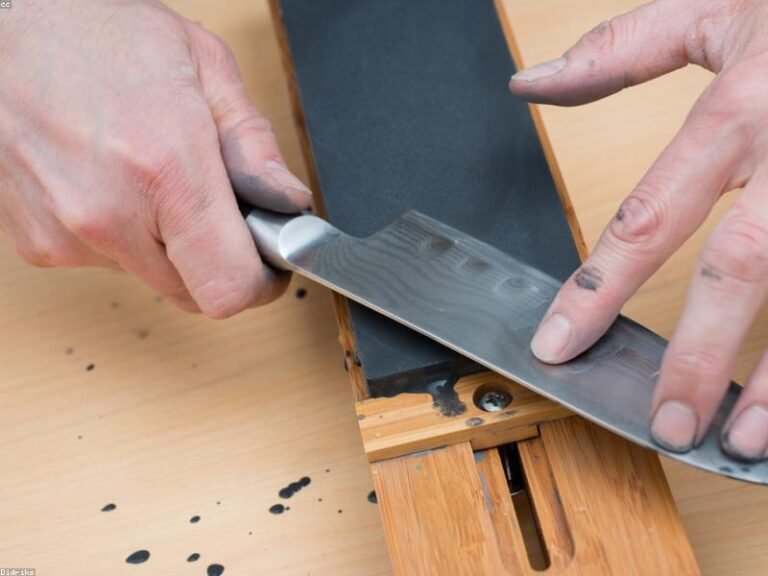
- Match the angle. Western knives: ~20° per side. Japanese: ~15°. Stick with manufacturer specs unless you’re intentionally reprofiling.
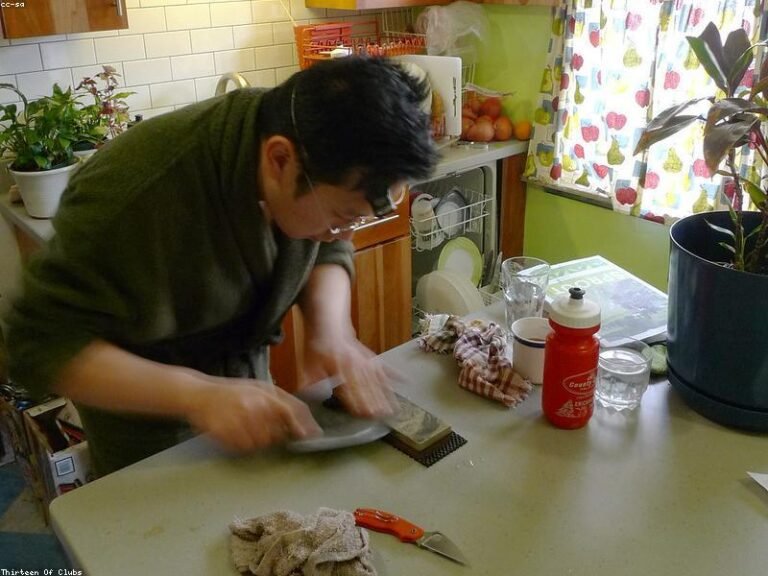
- Start coarse, finish fine. Dull blade? Start ~400 grit — 800—1000 — 3000+. Never start too fine — you’ll waste time polishing a dull edge.
- Consistent angle is everything. Sharpening removes steel evenly at a fixed angle. Wobbling just 2—3° rounds your apex. Use a guide if you’re new to freehand.
Recommended tool: The Work Sharp Guided Field Sharpener packs diamond plates, ceramic rod, and a leather strop into a pocketable unit — ideal for home, camp, or on-the-job touch-ups.
4. Storage Tips
- Keep them dry. Never store knives in damp basements or near sinks. Silica gel packets in your storage area are cheap insurance.
- Protect the edge. Don’t toss knives loose in a drawer. Use blade covers (sayas), magnetic strips for kitchen knives, or a dedicated knife storage case for folders.
- Separate your blades. Edge-on-edge contact chips knives. Each blade should have its own space — no stacking, no pile-ups.
- Climate control. If you live in a humid area, consider a small dehumidifier or anti-rust VCI paper in your storage. Carbon steel knives especially benefit.
5. Common Mistakes to Avoid
- Using the knife as a screwdriver or pry bar. Knives cut. Tools pry. Respect the difference unless you want a snapped tip.
- Cutting on glass, granite, or ceramic. These surfaces destroy edges instantly. Wood or soft plastic cutting boards only.
- Storing wet. Even stainless steel can develop water spots. Always dry before putting away.
- Over-oiling. Excess oil attracts dust and pocket lint, gumming up locks and pivots. A thin film is plenty.
- Sharpening at the wrong angle. The biggest beginner mistake. If you’re unsure, use an angle guide until muscle memory kicks in.
Final Word: Make It a Habit
Knife maintenance isn’t a once-a-year project — it’s a quick routine. Wipe after use. Oil monthly (or after wet conditions). Hone weekly. Sharpen when the edge stops performing. Five minutes a week keeps even budget knives performing for decades.
The tools are cheap, the skills are simple, and the payoff is a blade that’s always ready when you need it. Start today — your knives will thank you.
Disclosure: As an Amazon Associate, bladeowl.com earns from qualifying purchases. This doesn’t affect our recommendations.