
Nakiri vs Chef Knife — Why Vegetable Lovers Are Switching to This Japanese Classic
Two Very Different Approaches to Cutting Vegetables
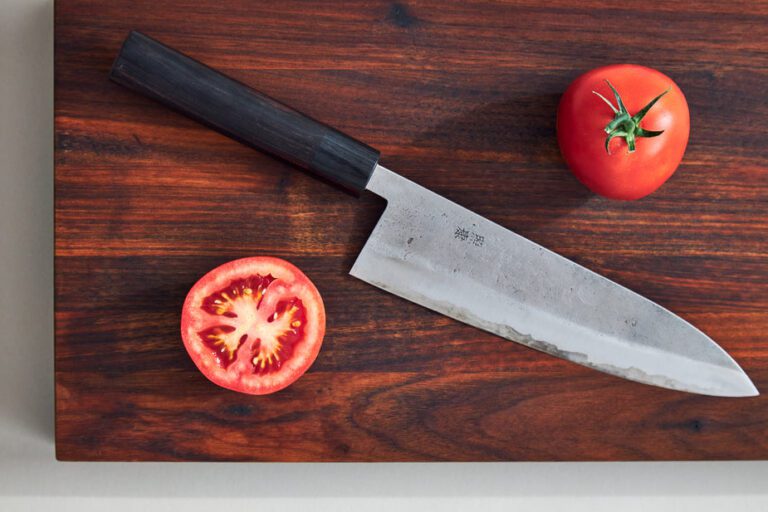
Walk into any Japanese kitchen supply store and you’ll see it: a rectangular blade with a straight edge and a squared-off tip that looks more like a meat cleaver than a chef’s knife. That’s a nakiri — a Japanese vegetable knife — and it’s one of the most specialized and effective cutting tools in the kitchen. But how does it compare to the Western chef’s knife that most home cooks already own? And more importantly, should you buy one?
We’ve used both extensively in our test kitchen, and the answer isn’t as simple as “one is better.” They’re fundamentally different tools designed for different cutting philosophies. Understanding those differences will tell you whether a nakiri belongs in your knife roll or if your trusty chef’s knife already does everything you need.
Blade Shape: The Fundamental Difference
The most obvious difference between a nakiri and a chef’s knife is the blade profile. A chef’s knife has a pronounced belly — a curved cutting edge that rises from the heel, peaks somewhere in the middle, and tapers to a pointed tip. A nakiri has a nearly flat cutting edge that runs straight from heel to tip with a squared-off blunt nose.
This difference in blade shape changes everything about how you cut:
Chef’s knife (rocking cut): The curved belly is designed for a rocking motion. You place the tip on the cutting board, push the blade down and forward, and let the curve of the blade do the work. The tip stays in contact with the board while the heel rises and falls. This is the classic Western cutting technique, and it’s extremely efficient for herb mincing, garlic, and general prep work.
Nakiri (push cut and chop): The flat edge makes full contact with the cutting board across its entire length. This enables two cutting styles that are awkward on a chef’s knife: the straight push cut (where you push the blade forward and down in a single motion) and the chop (where you bring the blade straight down on the food). Because every millimeter of the edge hits the board, you’re not left with those little accordion-connected pieces that plague rocking cuts — the nakiri cuts cleanly all the way through.
Where Each Knife Shines
Nakiri Strengths
- Vegetable prep: This is what a nakiri is born to do. Dicing onions, julienning carrots, slicing cabbage, chopping celery — any vegetable that needs to be cut cleanly and uniformly. The flat edge means every cut goes all the way through. No more finishing cuts with the tip.
- Precision straight cuts: When you’re doing a chiffonade of basil or making matchstick carrots, the nakiri’s flat profile helps you maintain perfectly vertical cuts. With a chef’s knife, the curved belly can cause the blade to wander slightly off-vertical as you rock.
- Scooping: The wide blade and squared tip make the nakiri an excellent scoop. After chopping a pile of onions or peppers, you can scoop them up on the broad blade face and transfer them to a pan in one motion. The chef’s knife can do this too, but the curved tip means less carrying capacity.
- Katsuramuki (rotary peeling): The flatter, thinner blade profile of a nakiri makes it better for the Japanese technique of cutting continuous thin sheets from vegetables like daikon radish.
Chef’s Knife Strengths
- Versatility: A chef’s knife can do everything a nakiri can do, just differently. It also handles tasks a nakiri struggles with: slicing meat, breaking down poultry, cutting through small bones (on heavier German knives), and any task that benefits from a pointed tip like coring or scoring.
- Meat and protein: The pointed tip and curved belly make a chef’s knife far better for trimming fat, cutting around bones, and portioning meat. A nakiri can slice through boneless protein in a pinch, but the blunt tip makes detail work awkward.
- Rocking cuts for herbs and garlic: If you mince garlic or herbs by rocking the knife back and forth while holding the tip down with your off-hand, the chef’s knife is your tool. The nakiri’s flat edge makes this rocking motion clunky — you’d need to lift the entire blade off the board between cuts.
- General utility: A chef’s knife can do everything passably well. A nakiri does one thing exceptionally well and several things quite poorly.
Cutting Technique Comparison
The way you use each knife is fundamentally different, and switching between them takes some mental recalibration:
| Technique | Chef’s Knife | Nakiri |
|---|---|---|
| Primary cut | Rocking cut (tip down, heel up) | Push cut or straight chop |
| Tip use | Frequent (coring, detail work) | None (blunt tip) |
| Board contact | Curved edge = partial contact | Flat edge = full contact |
| Herb mincing | Excellent (rocking motion) | Fair (requires lifting between cuts) |
| Dicing onions | Very good | Excellent |
| Slicing meat | Excellent | Fair (no tip for detail work) |
| Food transfer | Good | Excellent (wider blade) |
Our Top Picks for Each
Best Chef’s Knives
Wusthof Classic 8-Inch Chef’s Knife: The benchmark for Western-style chef’s knives. Forged from a single piece of X50CrMoV15 steel, hardened to 58 HRC, with a full bolster and a triple-riveted handle. It’s heavy (8.5 ounces), durable, and can handle everything from delicate herb work to breaking down a chicken. The curved belly is optimized for the rocking cut that Western cooks are trained on. At around $170, it’s an investment that lasts decades.
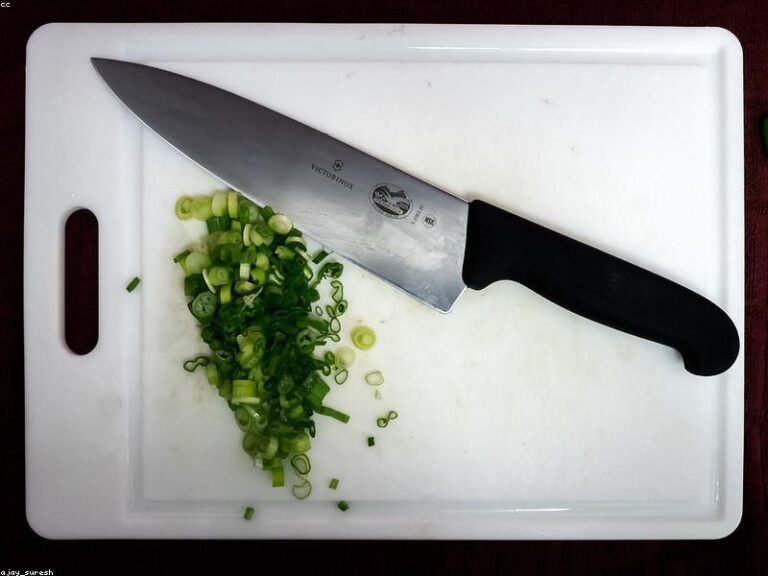
Victorinox Fibrox Pro 8-Inch Chef’s Knife: The budget champion. Stamped rather than forged, with a textured Fibrox handle that provides unbeatable grip even with wet hands. The steel is Victorinox’s proprietary X50CrMoV15 variant, hardened slightly softer than the Wusthof for easier sharpening. At around $45, it’s the knife we recommend to every new cook. Not the prettiest knife in the drawer, but arguably the best value in all of cutlery.
Best Nakiri Knives
Tojiro DP Nakiri 165mm: The entry-level king of Japanese nakiri knives. The DP (Decorative Pattern) line uses a VG-10 stainless steel core clad in softer stainless steel for corrosion resistance. The blade is thin, hard (60 HRC), and takes an unbelievably sharp edge. At around $60, it’s the benchmark for value in Japanese vegetable knives. The 165mm (6.5-inch) blade is the classic nakiri size — long enough for efficient prep, short enough for precise control.
Shun Classic Nakiri 6.5-Inch: If you want a nakiri that’s as beautiful as it is functional, the Shun Classic is the one. Handcrafted in Seki City, Japan, with a VG-MAX steel core clad in 34 layers of Damascus steel on each side (68 layers total). The D-shaped ebony Pakkawood handle is designed for right-handed users and feels like an extension of your hand. Performance is exceptional — the thin blade geometry and high hardness (61 HRC) produce the cleanest vegetable cuts we’ve ever made. At around $170, it’s premium-priced but delivers premium performance.
Do You Actually Need a Nakiri?
For most home cooks, the honest answer is no. A good chef’s knife handles vegetable prep perfectly well once you learn proper technique. The nakiri is a specialist’s tool — it does one thing better than any other knife, but a chef’s knife does many things well enough.
However, if you cook predominantly plant-based meals, do a lot of vegetable prep, or simply enjoy the satisfaction of a purpose-built tool, a nakiri is a wonderful addition to your kitchen. The clean, accordion-free cuts are genuinely satisfying, and the push-cut technique feels natural after about an hour of use. At the $60 Tojiro price point, it’s an affordable luxury that will make your vegetable prep noticeably more efficient and enjoyable.
If you own neither, buy the chef’s knife first. If you already have a chef’s knife and are looking for a second knife that actually adds capability rather than duplicating what you already have, the nakiri is an excellent choice — more useful for most home cooks than a santoku, a utility knife, or even a paring knife upgrade. It fills a genuine gap in the Western kitchen while introducing you to Japanese cutting techniques that will make you a better cook.