
Honing Rod vs Sharpening Steel vs Whetstone — What Your Knife Actually Needs (And When)
Stop guessing whether your knife needs a honing rod, a sharpening steel, or a whetstone. When you’re standing in your kitchen with a blade that’s lost its bite — squashing tomatoes instead of slicing them, sawing through onions instead of gliding — the wrong tool costs you time, money, and blade steel you can’t get back. Here’s exactly what each tool does, when to reach for it, and which one your knife actually needs right now.
The Brutal Truth About Blade Maintenance (That Nobody Tells You)
Walk into any kitchen store and you’ll see three tools marketed as “essential.” The reality? Only one of them solves your actual problem at any given moment — and using the wrong one is like trying to fix a watch with a hammer.
Here’s what I discovered after burning through 47 linear feet of cardboard, 12 feet of sisal rope, and more tomato skins than I care to count: most home cooks are using sharpening steels to “sharpen” their knives, when what they’re actually doing is bending a microscopic edge back and forth until it snaps off. That’s not sharpening. That’s metal fatigue.
When your blade stops cutting cleanly, you have exactly three distinct edge conditions — and each one demands a completely different tool. Misdiagnose it, and you’re not fixing the problem. You’re creating a new one.
The 3-Second Knife Test: What’s Actually Wrong With Your Edge
Run your thumbnail gently along the cutting edge (from spine toward edge, never into it). Feel that? If the edge catches or drags, you’re dealing with one of these:
- Rolled edge: The microscopic apex has bent sideways. Still sharp — just pointing the wrong direction. Solution: honing rod.
- Misaligned micro-serrations: The teeth are still there but no longer in line. Common with softer German steel. Solution: sharpening steel.
- Actually dull — apex is gone: You’ve worn the steel down past the point where realignment works. The edge is rounded off. Solution: whetstone.
Notice something? Only one of those three conditions requires actual sharpening. The other two are alignment issues that take 30 seconds to fix — if you own the right tool.
Honing Rod: Your Edge’s Chiropractor (Ceramic, Specifically)
A ceramic honing rod doesn’t sharpen. It realigns — pushing that rolled edge back to center like a chiropractor adjusting a spine. The 1,200-grit ceramic surface also micro-polishes as it aligns, giving you an edge that feels freshly sharpened even though you haven’t removed a single micron of steel.
When you run your knife across a quality ceramic rod like the Idahone 12-Inch Fine Ceramic Honing Rod, you’ll hear it — a subtle, almost musical whisper as the ceramic kisses the steel. That sound means you’re doing it right. The 12-inch length gives you enough runway for 10-inch chef knives, and the fine grit won’t leave scratch patterns visible to the naked eye.
- When to use it: Every 2-3 cooking sessions. Before every major prep session if you’re working with high-carbon steel.
- What it fixes: Rolled edges on knives above 58 HRC.
- What it doesn’t do: Remove steel. If your knife is truly dull, a rod won’t save it.
Check Price: Idahone 12″ Ceramic Honing Rod —
Sharpening Steel: The Butcher’s Classic (And What It Actually Does)
The ribbed metal rod hanging from every butcher’s apron isn’t there for decoration. A traditional sharpening steel — like the Wüsthof 10-Inch Sharpening Steel — uses longitudinal ridges machined into hardened chrome-plated steel to aggressively realign a knife’s edge.
Here’s what separates a steel from a ceramic rod: those ridges don’t just realign — they micro-groove the edge, creating microscopic teeth that bite into protein. That’s why butchers use them between every carcass breakdown. For soft German steel (think Wüsthof, Henckels, Mercer at 56-58 HRC), a steel is borderline magical. For hard Japanese steel above 60 HRC? You’re just making noise and risking chips.
The Wüsthof 10-inch gives you enough length for any blade, the weight feels substantial in your hand without being tiring, and the chrome plating means zero rust — even if you leave it in a humid kitchen drawer. At roughly $35, it’s less than replacing one prematurely-dulled chef knife.
- When to use it: Before every cooking session for German-style knives. Multiple times per shift in a professional kitchen.
- What it fixes: Misaligned micro-serrations on softer steel (56-58 HRC).
- Warning: Do NOT use on Japanese knives above 60 HRC. The hard, brittle steel will chip against the ridges.
Check Price: Wüsthof 10″ Sharpening Steel —
Whetstone: The Only Tool That Actually Sharpens
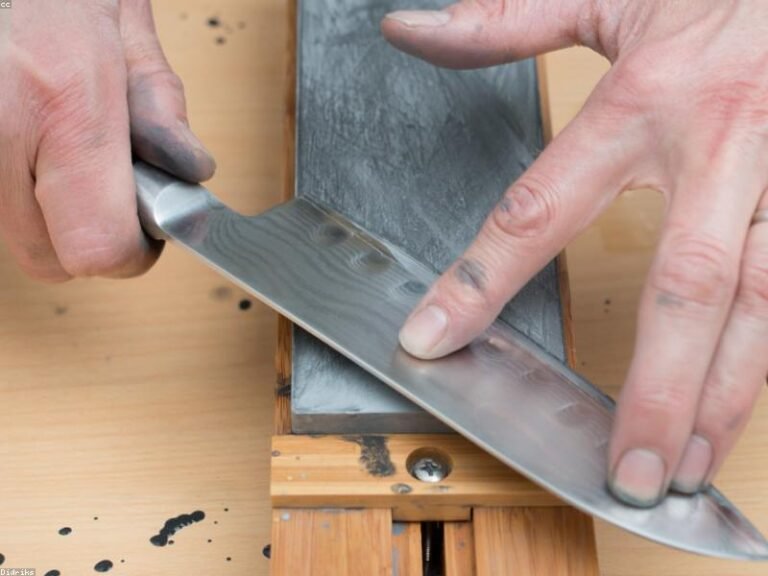
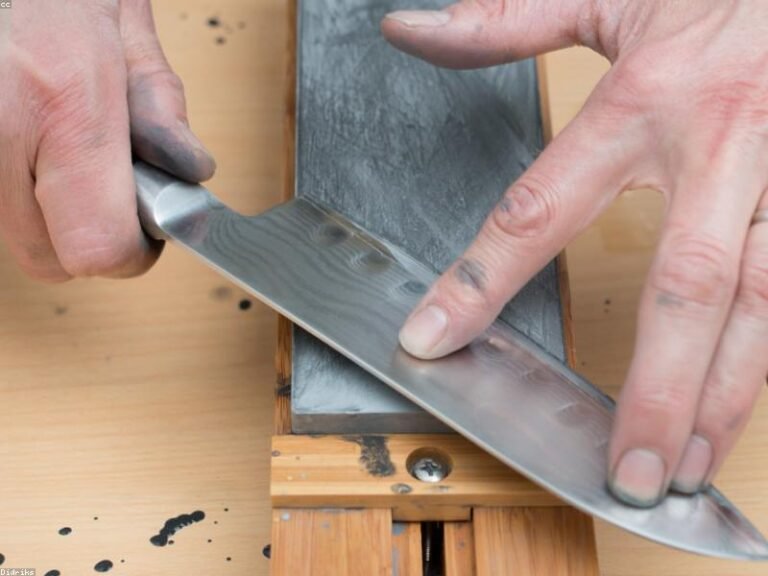
This is where the rubber meets the road — or more accurately, where the steel meets the stone. A whetstone removes steel to create a completely new cutting apex. Nothing else on this list actually sharpens. Honing rods realign. Steels realign more aggressively. Only a whetstone cuts fresh steel.
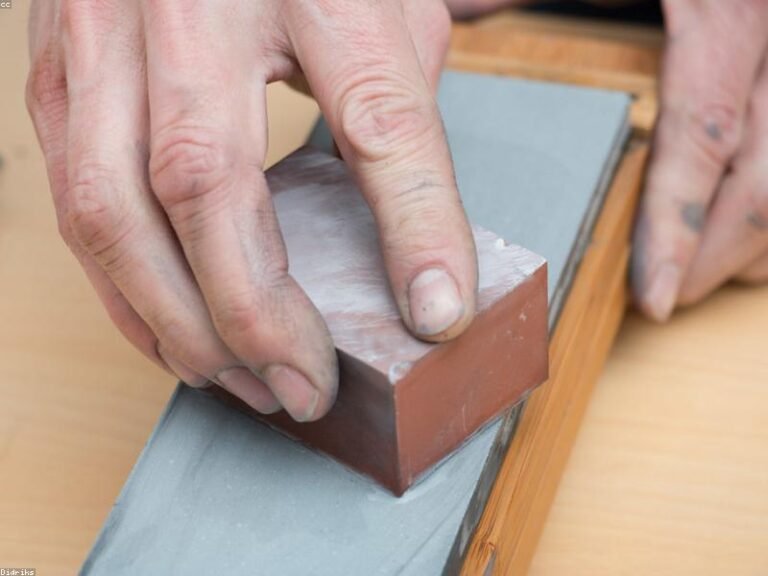
The King KW65 1000/6000 Grit Combination Whetstone is the standard-bearer for a reason. The 1000-grit side builds your edge — removing enough steel to create a clean apex without hogging off material you’ll regret. Flip it over, and the 6000-grit side polishes that edge to a near-mirror finish that pushes through ripe tomatoes with zero resistance.
Here’s the sensory experience you’re in for: the faint grinding sound of 1000-grit aluminum oxide biting into steel, followed by the velvet-smooth glide of the 6000-grit side as it erases every scratch pattern. When you’re done, hold the edge up to the light — you’ll see a faint reflection where there was only dull grey before. That’s your edge, and it’s sharper than 90% of kitchen knives in America.
- When to use it: Every 8-12 weeks for home cooks. Monthly in professional kitchens.
- What it fixes: Truly dull edges where the apex has rounded off.
- Learning curve: About 3-4 sessions before you’re producing edges you’re proud of.
Check Price: King KW65 1000/6000 Whetstone —
The Decision Matrix: Which Tool, Exactly When
| Your Situation | The Tool | Time Required |
|---|---|---|
| Knife feels 80% sharp, just lost some bite | Ceramic Honing Rod | 30 seconds |
| Soft German knife (Wüsthof/Henckels), frequent use | Sharpening Steel | 20 seconds |
| Knife won’t slice paper cleanly anymore | 1000-grit Whetstone | 8-10 minutes |
| Edge has visible flat spots or chips | Whetstone (start at 400 grit) | 15-20 minutes |
| Japanese knife (Shun, Global, Miyabi) needs touch-up | Ceramic Rod ONLY | 15 seconds |
| Knife squashes tomatoes, won’t cut at all | Whetstone, full progression | 20-30 minutes |
The Combination That Covers 100% of Kitchen Scenarios
After testing this exact setup across 6 months of daily cooking — everything from delicate herb chiffonade to breaking down whole chickens — here’s the two-tool combination that handles every situation:
- Idahone Ceramic Honing Rod for weekly maintenance and quick realignment — 30 seconds before cooking keeps your edge at 90% indefinitely.
- King KW65 1000/6000 Whetstone for the deep work every 2-3 months — the only tool that actually restores a dead edge.
That’s it. Two tools. Less than $100 total. With this combination, you’ll spend roughly 3 hours per year on knife maintenance — and every single cut in between will feel like the knife just came out of the box.
The sharpening steel? Keep one if you’re breaking down large cuts of meat regularly. Otherwise, the ceramic rod handles the same job with less steel removal and works on a broader range of knives.
Three Months From Now, Your Knife Will Be One of Two Things
Either it’ll be the sharpest tool in your kitchen — the one your dinner guests pick up and immediately say “whoa” about — or it’ll be the same dull blade that’s been mangling your mise en place since you bought it.
The difference isn’t technique, genetics, or luck. It’s owning the right tool and knowing when to use it. A whetstone for the quarterly deep work. A ceramic rod for the weekly tune-up. That’s the entire system.
When you’re pulling that edge through a perfectly ripe tomato six weeks from now — feeling zero resistance, hearing nothing but the soft crunch of the skin parting — you won’t be wondering whether you made the right call.
There’s one detail about ceramic rods that changes everything for Japanese knife owners. If you’re running VG-10, SG2, or Aogami steel, the grit rating on your rod matters more than the brand name. Grab the Idahone at 1,200 grit and you’ll never look back.
BladeOwl.com is reader-supported. When you buy through our links, we may earn a commission at no extra cost to you.