Kitchen Knife Handle Ergonomics — Why Your Hand Cramps and Which Handle Shape Fixes It
When Your Knife Becomes a Pain in the Hand
You’re halfway through prepping dinner and your hand starts cramping. Your index finger has a red indent from the spine of the blade. Your wrist aches. You blame your technique — or worse, you blame yourself. But here’s what’s actually happening: your knife handle doesn’t fit your hand.
Knife ergonomics is the most under-discussed topic in home cooking. We obsess over blade steel, sharpness, and edge retention while ignoring the one part of the knife we actually hold for hours. A poorly matched handle can cause fatigue, reduce control, and even lead to repetitive strain injuries over time. The good news? Once you understand handle shapes and grip styles, finding a knife that feels like an extension of your hand becomes straightforward. Let’s fix your grip.
Western vs. Japanese (Wa) Handles: The Fundamental Divide
Kitchen knife handles fall into two broad families, and the differences go far beyond aesthetics:
| Feature | Western Handle | Japanese (Wa) Handle |
|---|---|---|
| Shape | Contoured with curves and a belly | Straight, octagonal or D-shaped |
| Weight | Heavier, often full tang | Lighter, often hidden tang |
| Balance point | In the handle or at the bolster | Blade-forward / neutral |
| Grip style | Encourages handle grip | Encourages pinch grip |
| Materials | Synthetic, wood, pakkawood | Wood (magnolia, rosewood, ebony) |
| Best for | Rocking cuts, heavy work | Push cuts, precision work |
Western handles (Wusthof, Zwilling, Victorinox) are contoured to fill your palm. They’re heavier and shift the balance point toward the handle, making rocking cuts feel natural. Japanese Wa handles (Tojiro, MAC, Shun) are straight and lightweight, shifting the balance forward toward the blade. This blade-forward balance is preferred for push-cutting and precision work.
The Bolster Problem (And Why Full Bolsters Hurt)
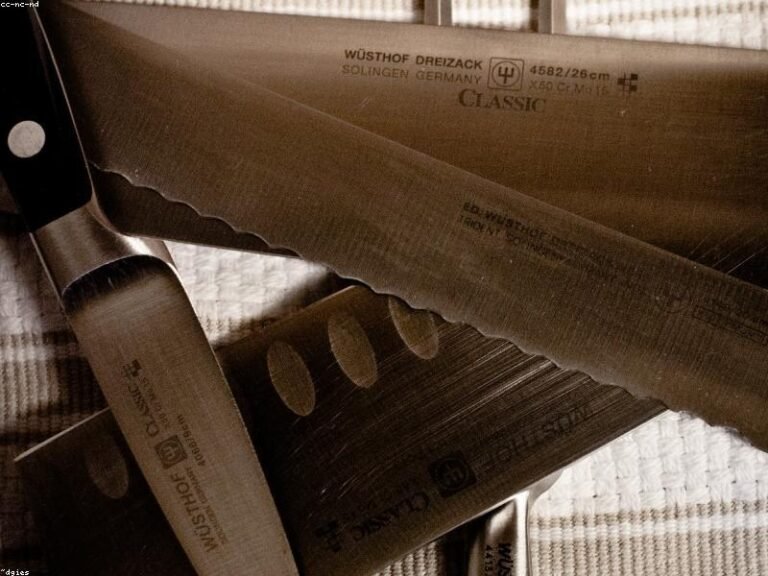
A bolster is the thick metal collar between the blade and handle. Traditional German knives — like the Wusthof Classic Ikon — feature a full bolster that extends all the way to the edge. This adds weight, protects your finger from slipping forward, and looks impressive. But it comes with three serious ergonomic downsides:
- Pinch grip interference: The full bolster sits exactly where your thumb and index finger want to pinch the blade. Over time, the hard metal edge digs into your fingers.
- Sharpening nightmare: A full bolster prevents you from sharpening the heel of the blade. Over time, a “recurve” forms where the blade curves inward near the bolster, making the knife useless for chopping.
- Added weight: The bolster shifts the balance point backward, making the knife feel handle-heavy.
Modern alternatives like the Wusthof Classic Ikon use a half-bolster — the metal doesn’t extend to the edge — solving the pinch grip and sharpening issues while retaining finger protection. If you love German knives but hate the hand cramps, a half-bolster design is the fix.
The Pinch Grip vs. Handle Grip Debate
There are two ways to hold a chef’s knife, and they favor completely different handle designs:
- Pinch grip: You pinch the blade between your thumb and the side of your index finger, with the rest of your hand loosely curled around the handle. This gives maximum control and is the standard grip taught in culinary schools. Japanese Wa handles are designed for this grip — the straight profile lets your palm make light contact while your pinch controls the blade.
- Handle grip: You wrap all four fingers around the handle, with your thumb resting on the spine or side. This feels more natural to beginners and provides a sense of security. Western contoured handles are designed for this grip, filling the palm and providing a defined position for each finger.
If you use a pinch grip on a heavily contoured Western handle, the curves fight your hand position. If you use a handle grip on a thin Wa handle, it feels like holding a pencil. The key is matching grip style to handle design.
Handle Shapes Compared: Which One Fits You?
| Handle Type | Example | Grip Style | Hand Size | Key Benefit |
|---|---|---|---|---|
| Contoured Western | Wusthof Classic Ikon | Handle grip | Medium-Large | Secure, familiar feel |
| Textured synthetic | Victorinox Fibrox | Either | All | Non-slip in wet conditions |
| Octagonal Wa | Tojiro DP | Pinch grip | All | Precision, blade-forward balance |
| D-shaped Wa | Shun Classic | Pinch grip | Right-handed | Handed comfort, traditional feel |
| Hybrid | MAC MTH-80 | Either | Small-Medium | Best of both worlds |
Wusthof Classic Ikon — The Refined Western Handle
The Wusthof Classic Ikon represents the apex of Western handle design. The contoured synthetic handle has gentle curves that accommodate a natural hand position without forcing fingers into pre-defined grooves. The half-bolster eliminates the pinch-grip interference of the traditional Classic line. The balance point sits just behind the bolster, giving the knife a reassuring heft without feeling handle-heavy.
If you have medium to large hands and prefer a traditional Western grip, the Classic Ikon handle is as good as it gets. It’s comfortable for extended prep sessions and provides the secure, locked-in feeling that Western-knife users expect.
Tojiro DP — The Wa Handle for Everyone
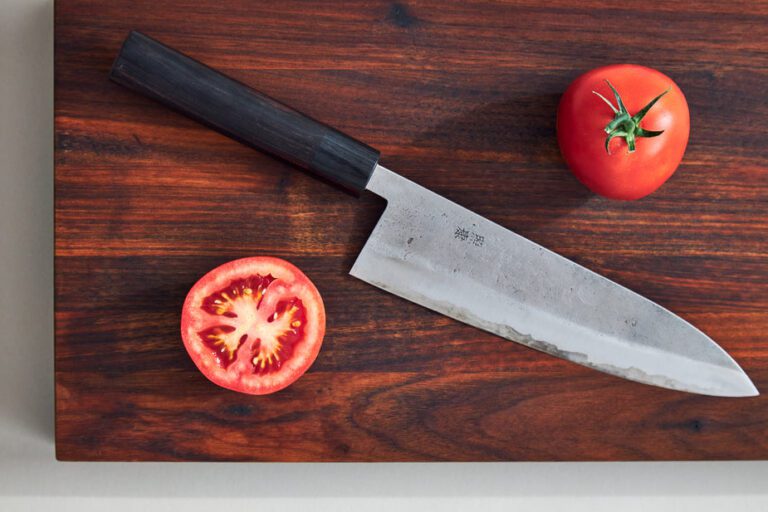
Tojiro DP Chef’s Knife features a traditional Japanese octagonal Wa handle — eight flat sides that provide secure indexing without dictating a specific hand position. The magnolia wood handle is lightweight, shifting the balance point forward toward the blade. This blade-forward balance makes the knife feel nimble and precise.
The octagonal shape works equally well for left- and right-handed users (unlike D-shaped handles that favor right-handers). The smooth wood feels warm and natural in hand, though it provides less grip in wet conditions than synthetic handles. At around $100, the Tojiro DP is often the knife that Western cooks use to discover they prefer Wa handles.
MAC MTH-80 — The Hybrid That Solves Everything
The MAC MTH-80 Professional Chef’s Knife is the Wirecutter-recommended gold standard for a reason. Its handle is a hybrid: a Western-style profile (contoured, fills the palm) made from lightweight pakkawood, with no bolster at all. The result is a knife that works beautifully with both pinch grip and handle grip, weighs about the same as a Japanese knife, but fits the hand like a Western one.
The MTH-80 is particularly good for cooks with smaller hands. Many German knives feel oversized and unwieldy to smaller-handed users; the MAC’s slim profile and lighter weight solve that problem without sacrificing blade length. At around $100-120, it’s more expensive than budget options but represents the best handle design for cooks who can’t decide between Western and Japanese.
Victorinox Fibrox — The Safe Bet
The Victorinox Fibrox Pro handle deserves special mention for its unique approach. It’s neither Western-contoured nor Japanese-straight — it’s a textured, slightly oval thermoplastic grip that works surprisingly well with both grip styles. The Fibrox material remains grippy even when coated in oil or water, making it the safest handle in slippery conditions.
The one downside: the seam where the two handle halves meet can be felt under the fingers on some units. It’s a minor flaw, but if you’re sensitive to texture variations, the seamless Swiss Classic handle might be the better Victorinox option.
How to Find Your Perfect Handle
You can’t truly judge a knife handle from a website photo. Here’s a practical process for finding the handle that fits your hand:
- Identify your grip style: Hold a knife the way you naturally cook. Are you pinching the blade? Wrapping the handle? Your answer determines whether you lean Western or Japanese.
- Measure your hand: From the base of your palm to the tip of your middle finger. If it’s under 7 inches, avoid large German handles (Wusthof Classic, Zwilling Pro) and look at MAC, Tojiro, or Victorinox.
- Test in person if possible: A knife that feels uncomfortable after 30 seconds in a store will be unbearable after 30 minutes of prep.
- Check the bolster: If you pinch grip, you want no bolster or a half-bolster. Full bolsters will dig into your fingers.
- Consider your environment: If your hands are frequently wet or greasy, prioritize textured synthetic handles (Victorinox Fibrox) over smooth wood.
The Bottom Line: Comfort Is Performance
Your hand shouldn’t hurt after chopping an onion. If it does, the problem probably isn’t your technique or your endurance — it’s the handle. The best knife in the world, used with a handle that doesn’t fit, will cause fatigue and sloppy cuts. The right handle, matched to your grip and hand size, can make a $40 knife feel better than a $200 one that fights your hand.
For maximum versatility, the MAC MTH-80 offers the best compromise between Western comfort and Japanese precision. If you prefer a traditional Western feel, the Wusthof Classic Ikon with its half-bolster fixes the ergonomic issues of most German knives. And if you’re ready to try a Wa handle, the Tojiro DP will show you why Japanese chefs have preferred this design for centuries.
This article may contain affiliate links. If you purchase a product through one of these links, Bladeowl may earn a commission at no extra cost to you. This never influences our editorial independence or which products we recommend.